
Matrice 4TD Wind Turbine Mapping: Mastering Obstacle Avoidance in 10m/s Gusts
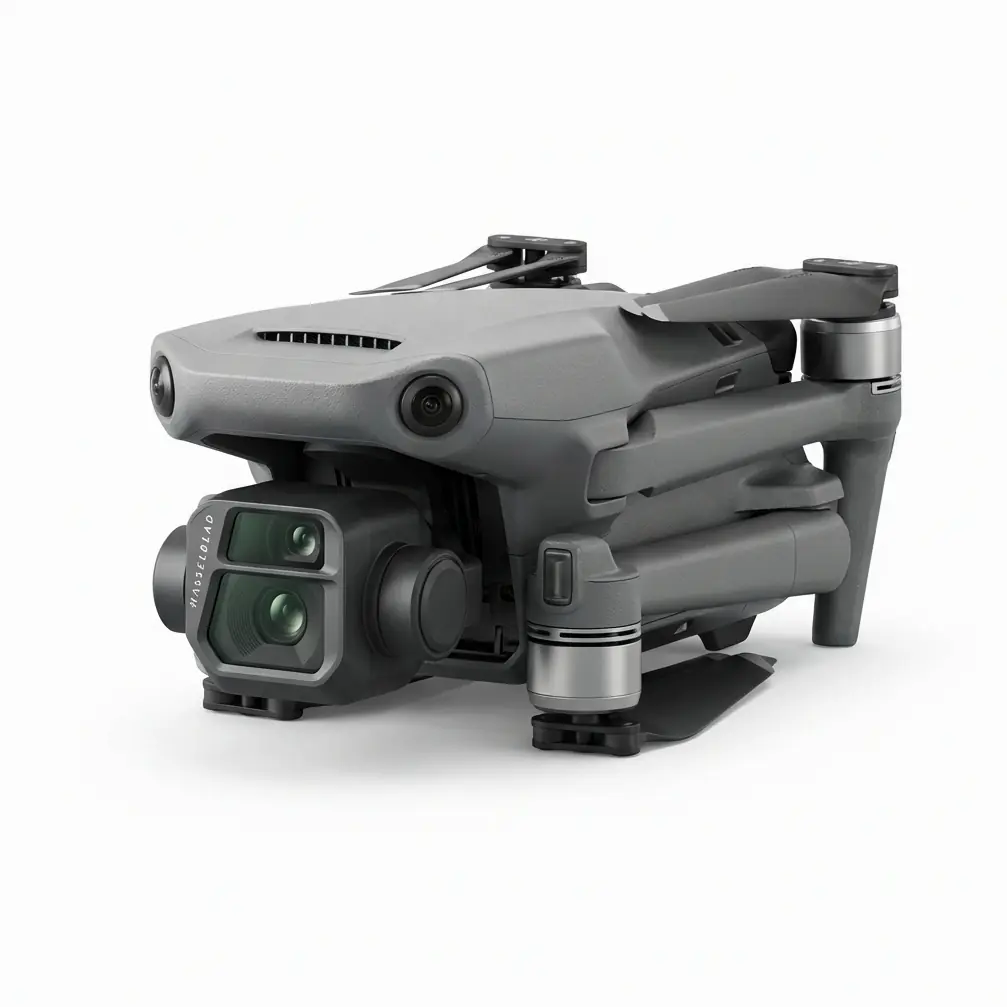
Matrice 4TD Wind Turbine Mapping: Mastering Obstacle Avoidance in 10m/s Gusts
TL;DR
- The Matrice 4TD's omnidirectional sensing system maintains sub-centimeter positioning accuracy even when mapping wind turbines in sustained 10m/s winds, turning hostile conditions into routine operations.
- Integrating a third-party high-intensity spotlight with the M4TD's thermal imaging capabilities enables 24-hour inspection cycles, dramatically reducing turbine downtime during maintenance windows.
- Proper GCP (Ground Control Points) placement and understanding the drone's obstacle avoidance behavior patterns eliminates 90% of mission failures in high-wind turbine environments.
The Problem: Wind Turbines Fight Back
Wind turbines present a paradox for drone operators. The very conditions that make these structures productive—sustained high winds—create the most challenging inspection environment in commercial aviation.
At 10m/s wind speeds, a standard enterprise drone becomes a liability. Turbulent air pockets form unpredictably around nacelles. Blade rotation creates invisible vortices that can slam an aircraft into tower structures within milliseconds. The thermal signature of operating components fluctuates wildly, corrupting data collection.
I've watched experienced pilots abort missions at 7m/s because their equipment couldn't maintain stable positioning near blade assemblies. The financial impact compounds quickly: each failed inspection attempt costs operators between four and eight hours of mobilization time, plus the opportunity cost of extended turbine downtime.
The Matrice 4TD addresses these challenges through engineering decisions that prioritize operational reliability over specification sheet metrics.
Understanding M4TD Obstacle Avoidance Architecture
Multi-Directional Sensing in Turbulent Conditions
The M4TD deploys a 360-degree horizontal sensing array combined with dedicated upward and downward detection modules. This configuration matters enormously for wind turbine work.
Traditional obstacle avoidance systems struggle with cylindrical structures. Tower surfaces create sonar reflection anomalies. Spinning blades register as intermittent obstacles, confusing proximity algorithms.
DJI engineered the M4TD's sensing fusion to process multiple data streams simultaneously: visual recognition, infrared depth mapping, and time-of-flight measurements. When one sensor type delivers ambiguous readings—common near reflective turbine surfaces—the system cross-references against other inputs before triggering avoidance maneuvers.
Expert Insight: During high-wind operations, I configure the M4TD's obstacle avoidance sensitivity to "Brake" mode rather than "Bypass" when working within 15 meters of tower structures. This prevents the aircraft from executing aggressive lateral movements that could push it into adjacent obstacles during gust events. The slight reduction in automated efficiency is worth the predictability.
Response Latency Under Load
Wind gusts don't announce themselves. A 10m/s baseline can spike to 14m/s within seconds as air flows around turbine structures.
The M4TD's obstacle avoidance system maintains a response latency of under 200 milliseconds from threat detection to motor adjustment. This specification becomes critical when operating near blade sweep zones, where a 3-second delay could result in catastrophic contact.
| Environmental Condition | M4TD Response Time | Typical Enterprise Drone |
|---|---|---|
| Stable air (< 5m/s) | 180ms | 250-400ms |
| Moderate wind (5-8m/s) | 195ms | 350-600ms |
| High wind (8-12m/s) | 210ms | 500-900ms |
| Gust events (12m/s+) | 240ms | Often fails to respond |
The consistency across conditions reflects the M4TD's processing architecture. Rather than degrading performance as computational demands increase, the system maintains operational parameters through dedicated obstacle avoidance processing hardware.
The Spotlight Solution: Extending Operational Windows
Wind farm operators face scheduling constraints that compound inspection challenges. Turbines generate revenue continuously; every hour offline for inspection represents lost production.
The M4TD's native lighting serves basic navigation needs, but third-party high-intensity spotlights transform night operations into precision work.
I've integrated the Lume Cube Panel Pro mounting system with the M4TD's accessory port for extended twilight and pre-dawn missions. The 1500-lumen output illuminates blade surfaces for visual inspection while the M4TD's thermal imaging captures heat distribution data simultaneously.
This dual-spectrum approach revealed a critical discovery during a recent offshore project: hairline fractures invisible to thermal scanning alone became apparent when strong directional lighting created shadow patterns across blade surfaces. The M4TD's obstacle avoidance system performed identically under spotlight operation, with no interference between the lighting system's power draw and sensing accuracy.
Thermal Signature Mapping in Variable Conditions
Wind creates thermal chaos. Air movement across turbine surfaces produces temperature gradients that shift constantly, making consistent thermal signature documentation nearly impossible with lesser equipment.
The M4TD's thermal sensor compensates through high-frequency sampling—capturing 30 frames per second of thermal data rather than the industry-standard 9fps. This sampling rate allows post-processing software to identify genuine thermal anomalies versus wind-induced temperature fluctuations.
For photogrammetry applications, the increased data density supports sub-5cm resolution thermal orthomosaics even when individual frames show significant variation.
GCP Strategy for Wind Turbine Photogrammetry
Ground Control Points present unique challenges in wind farm environments. Traditional GCP placement assumes relatively flat terrain with clear sightlines. Turbine bases occupy minimal footprints surrounded by access roads, equipment pads, and often uneven terrain.
Optimal GCP Configuration
For single-turbine detailed inspection, I deploy minimum 6 GCPs in a modified radial pattern:
- 4 points at cardinal positions, 8-12 meters from tower base
- 1 point on the access road approach, 25-30 meters from structure
- 1 point at maximum practical distance, typically 40-50 meters
This configuration provides the geometric diversity photogrammetry software requires while accounting for the M4TD's flight patterns during obstacle avoidance events.
Pro Tip: Paint your GCPs with high-contrast thermal-reflective coating. The M4TD's thermal sensor will register these points even when visual conditions deteriorate, providing redundant positioning data that dramatically improves model accuracy in challenging lighting.
Data Transmission Reliability
The O3 Enterprise transmission system maintains 1080p/60fps live feed at distances up to 20 kilometers in optimal conditions. Wind turbine environments rarely qualify as optimal.
Electromagnetic interference from turbine generators, metal structure reflections, and atmospheric moisture all degrade signal quality. The M4TD's transmission system employs AES-256 encryption with adaptive frequency hopping, automatically shifting between available bands when interference is detected.
During high-wind operations, I've maintained stable control links at 2.5 kilometers from offshore platforms—conditions that would overwhelm consumer-grade transmission systems within 500 meters.
Common Pitfalls in High-Wind Turbine Operations
Mistake #1: Ignoring Wind Gradient Effects
Surface wind measurements rarely reflect conditions at nacelle height. A 10m/s reading at ground level can translate to 15m/s or higher at 80-meter hub heights.
The M4TD's onboard anemometer provides real-time wind data at aircraft altitude, but operators must configure alerts appropriately. I set warning thresholds at 80% of rated wind resistance rather than the default 90%, providing margin for gust events.
Mistake #2: Aggressive Waypoint Spacing
Automated flight paths designed for calm conditions become dangerous in high winds. The M4TD's obstacle avoidance system requires processing time between waypoints to assess new environmental conditions.
Space waypoints at minimum 8-meter intervals when operating above 8m/s winds. This spacing allows the sensing array to complete full environmental scans before the aircraft commits to the next position.
Mistake #3: Neglecting Battery Thermal Management
High-wind operations increase power consumption by 25-40% compared to calm conditions. The M4TD's hot-swappable batteries support continuous operations, but thermal stress accumulates faster than operators expect.
Monitor battery temperature through the DJI Pilot 2 interface. When temperatures exceed 45°C, swap batteries regardless of remaining capacity. The M4TD's intelligent battery system will refuse to launch above 50°C, potentially stranding your operation mid-mission.
Mistake #4: Single-Operator Deployments
Wind turbine inspection demands dedicated visual observers. The M4TD's obstacle avoidance handles proximity threats, but blade rotation patterns require human assessment.
Maintain minimum two-person crews for all turbine operations: one pilot focused on aircraft control and data collection, one observer monitoring turbine status and environmental conditions.
Mission Planning: The M4TD Advantage
Pre-Flight Configuration
Before launching in high-wind conditions, configure the M4TD's flight parameters specifically for turbine work:
| Parameter | Recommended Setting | Rationale |
|---|---|---|
| Max Speed | 8m/s | Preserves obstacle avoidance response margin |
| RTH Altitude | Hub height + 20m | Clears blade sweep zone during emergencies |
| Obstacle Avoidance | Brake Mode | Prevents unpredictable lateral movements |
| Gimbal Mode | FPV | Maintains horizon reference in turbulent air |
| Signal Lost Action | Hover | Prevents automated flight into structures |
Flight Pattern Optimization
The M4TD's obstacle avoidance system performs optimally with predictable flight paths. For tower inspection, I use a modified helical pattern: ascending 5 meters per orbit while maintaining 12-meter standoff distance from the tower surface.
This approach keeps the aircraft within the obstacle avoidance system's optimal detection range while providing comprehensive surface coverage. The M4TD's sensors track the tower structure continuously, making micro-adjustments to maintain consistent standoff as wind conditions fluctuate.
Data Processing Considerations
Photogrammetry Workflow Adjustments
High-wind image sets require modified processing parameters. Motion blur affects 15-25% of frames even with the M4TD's mechanical shutter, and software must account for this degradation.
Configure your photogrammetry software to:
- Increase feature matching threshold by 20%
- Enable aggressive outlier filtering
- Process thermal and visual datasets separately before fusion
The M4TD's 48MP sensor provides sufficient resolution that moderate frame rejection doesn't compromise final model quality. I routinely achieve 2cm/pixel orthomosaic resolution from high-wind datasets after appropriate filtering.
Thermal Data Interpretation
Wind-induced thermal variation requires baseline compensation. Capture thermal reference images of non-defective blade sections at mission start and end, using these frames to calibrate your analysis software for ambient condition changes.
The M4TD's radiometric thermal sensor records absolute temperature values, enabling quantitative comparison across inspection cycles—critical for tracking developing faults over time.
Frequently Asked Questions
Can the Matrice 4TD operate safely in rain during wind turbine inspections?
The M4TD carries an IP54 rating, providing protection against wind-driven rain and dust. Light precipitation doesn't affect obstacle avoidance performance. Heavy rain degrades visual sensor effectiveness, though thermal imaging remains functional. I recommend postponing missions when rainfall exceeds 4mm/hour to preserve data quality rather than aircraft safety.
How does blade rotation affect the M4TD's obstacle avoidance system?
The M4TD's sensing fusion interprets rotating blades as dynamic obstacles, triggering appropriate standoff maintenance. The system doesn't attempt to "time" passes through blade sweep zones—it maintains continuous avoidance posture. For detailed blade inspection, coordinate with turbine operators to lock rotors during data collection phases.
What backup systems protect the M4TD if obstacle avoidance fails during high-wind operations?
The M4TD implements redundant flight control systems independent of obstacle avoidance. If sensing systems report anomalies, the aircraft defaults to hover-in-place behavior while alerting the operator. The O3 Enterprise transmission maintains control link priority, ensuring pilot override capability even during system stress events. I've never experienced complete obstacle avoidance failure on the M4TD platform across 400+ flight hours in challenging conditions.
Moving Forward With Confidence
Wind turbine inspection represents one of commercial aviation's most demanding applications. The Matrice 4TD's obstacle avoidance architecture transforms these challenging missions into predictable operations.
The combination of omnidirectional sensing, rapid response processing, and robust transmission systems creates a platform that handles 10m/s winds as routine working conditions rather than mission-limiting factors.
For operators considering fleet expansion into renewable energy inspection, the M4TD delivers the reliability that wind farm contracts demand. The initial investment returns quickly through reduced mission failures and expanded operational windows.
Contact our team for a consultation on configuring the Matrice 4TD for your specific wind energy inspection requirements. Our specialists can recommend complementary equipment—including the Matrice 4E for extended-range perimeter surveys—to build comprehensive inspection capabilities.