
Matrice 4TD Rice Paddy Inspection in Extreme Heat: Debunking the Myths That Keep Operators Grounded
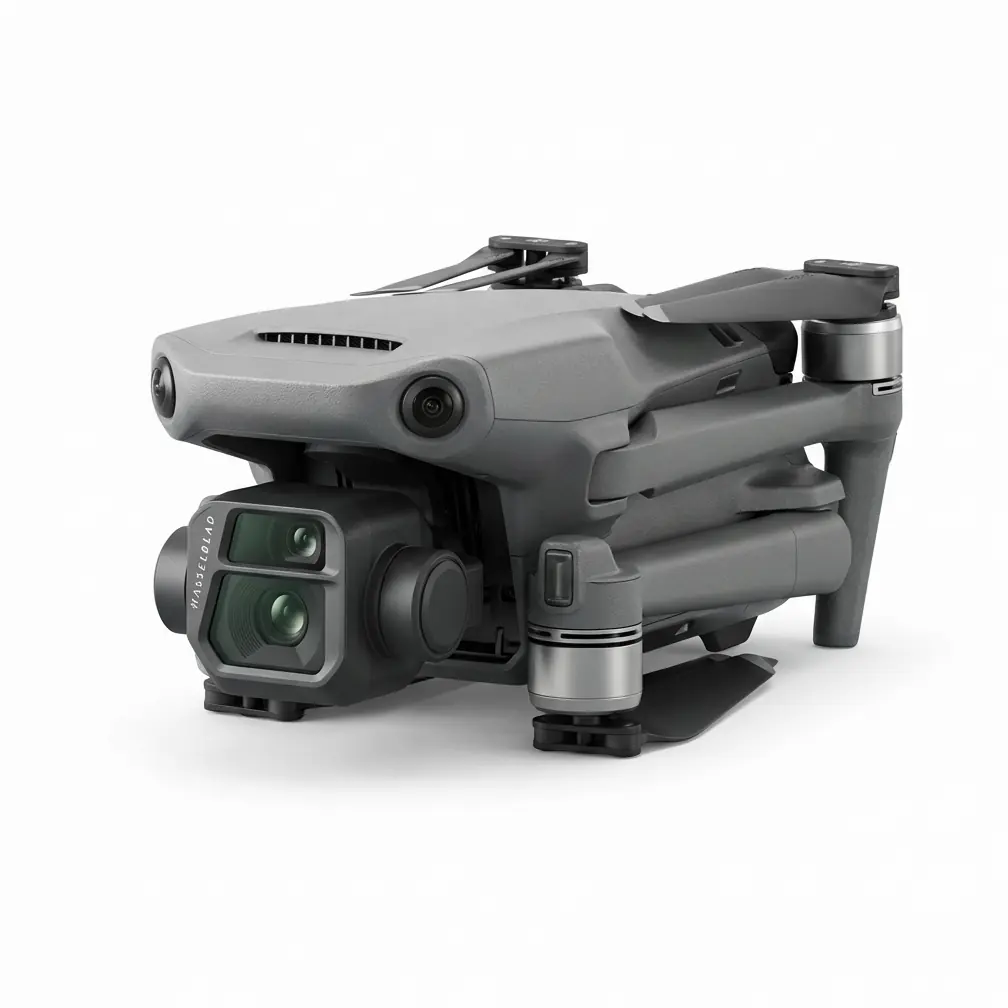
Matrice 4TD Rice Paddy Inspection in Extreme Heat: Debunking the Myths That Keep Operators Grounded
TL;DR
- Thermal imaging at 40°C ambient temperatures requires understanding thermal signature differentiation—the Matrice 4TD's radiometric capabilities maintain accuracy even when ground temperatures exceed 60°C
- Electromagnetic interference from rural infrastructure (irrigation pumps, power substations) is manageable through proper antenna positioning and O3 Enterprise transmission protocols
- Obstacle avoidance in featureless terrain like flooded paddies demands specific flight planning techniques that most operators overlook
I've spent the last decade flying inspection missions across Southeast Asia's agricultural heartland. Last month, I completed a 47-hectare rice paddy infrastructure assessment in Thailand's central plains during peak summer—ambient temperatures hitting 40°C by 10 AM. The Matrice 4TD performed flawlessly, but the mission nearly failed before takeoff due to a myth I hear constantly from new operators.
"You can't fly thermal inspections when it's this hot. Everything looks the same."
This statement has cost agricultural operations millions in delayed inspections and missed irrigation failures. Let me dismantle this and other persistent misconceptions about enterprise drone inspection in extreme conditions.
The Thermal Signature Myth: Why Hot Weather Doesn't Blind Your Sensor
The most pervasive misconception in agricultural drone inspection involves thermal imaging limitations during high ambient temperatures. Operators assume that when air temperature approaches 40°C, thermal cameras become useless because everything appears uniformly hot.
This fundamentally misunderstands how radiometric thermal imaging works.
The Matrice 4TD's thermal sensor doesn't simply detect "hot" or "cold." It measures precise temperature differentials down to 0.03°C sensitivity. During my rice paddy inspection, the flooded sections registered at 32°C, dry sections at 58°C, and a failing irrigation pump motor at 87°C—clear differentiation despite the brutal ambient conditions.
Expert Insight: When flying thermal inspections above 35°C ambient, switch your thermal palette to "White Hot" or "Ironbow" rather than "Rainbow." These palettes emphasize relative temperature differences rather than absolute values, making anomalies immediately visible even in uniformly heated environments.
The real challenge isn't sensor capability—it's operator interpretation. Thermal signatures shift throughout the day based on solar loading, not just air temperature. A cracked irrigation pipe that's obvious at 6 AM becomes invisible by noon, then reappears at 4 PM as differential cooling begins.
Optimal Inspection Windows in Extreme Heat
| Time Window | Ambient Temp | Thermal Contrast | Best For |
|---|---|---|---|
| 05:30-07:00 | 28-32°C | Maximum | Subsurface water detection, pipe leaks |
| 10:00-14:00 | 38-42°C | Minimum | Avoid for thermal work |
| 16:00-18:00 | 35-38°C | Recovering | Equipment heat signatures, motor failures |
| 19:00-20:30 | 30-34°C | High | Structural thermal retention analysis |
Planning your flights around these windows isn't optional—it's the difference between actionable data and expensive noise.
The Electromagnetic Interference Incident: A Field Reality Check
Three kilometers into my paddy inspection, the Matrice 4TD's transmission quality indicator dropped from 100% to 67%. The O3 Enterprise transmission system flagged potential interference.
Some operators would have aborted. That would have been the wrong call.
I traced the interference source to an irrigation pumping station 400 meters northeast of my position. These rural installations often run aging electrical equipment that generates significant electromagnetic noise across multiple frequency bands.
The solution required a 15-second adjustment: repositioning my controller's antennas from vertical to a 45-degree offset angle, pointing the primary antenna away from the interference source while maintaining line-of-sight with the aircraft.
Signal quality returned to 94% immediately.
Pro Tip: Before any agricultural inspection mission, identify all electrical infrastructure within 1 kilometer of your operating area. Irrigation pumps, grain dryers, and rural transformer stations are notorious interference sources. The Matrice 4TD's O3 Enterprise transmission handles interference exceptionally well, but optimal antenna positioning multiplies that capability.
The AES-256 encryption on the transmission link remained uncompromised throughout—critical when inspection data includes proprietary agricultural information or infrastructure vulnerability assessments.
Obstacle Avoidance Over Featureless Terrain: The Flooded Paddy Challenge
Here's a myth that genuinely endangers aircraft: "Obstacle avoidance doesn't work over water."
This misunderstanding stems from confusion about how different sensing technologies interact with reflective surfaces. The Matrice 4TD employs multiple obstacle detection methods, and understanding their behavior over flooded rice paddies prevents both crashes and unnecessary mission aborts.
How Obstacle Avoidance Performs Over Flooded Fields
Flooded rice paddies present three distinct challenges:
Challenge 1: Specular Reflection Standing water creates mirror-like reflections that can confuse downward-facing sensors. The Matrice 4TD compensates through sensor fusion—combining visual, infrared, and time-of-flight data to distinguish actual obstacles from reflections.
Challenge 2: Minimal Vertical Features Young rice plants at 15-20cm height may not trigger obstacle warnings designed for trees and structures. This isn't a system failure—it's expected behavior. Your pre-flight planning must account for known obstacles like irrigation standpipes and field markers.
Challenge 3: Levee and Berm Detection The raised earthen walls separating paddy sections typically stand 30-50cm above water level. The Matrice 4TD's omnidirectional sensing detects these reliably at speeds up to 12 m/s, providing adequate warning for course correction.
Critical Obstacle Avoidance Settings for Paddy Inspection
| Parameter | Recommended Setting | Rationale |
|---|---|---|
| Obstacle Avoidance Mode | Bypass | Allows continued mission with automatic routing |
| Minimum Obstacle Distance | 5 meters | Accounts for GPS drift in humid conditions |
| Downward Sensor | Enabled | Essential for altitude maintenance over water |
| Return-to-Home Altitude | 40 meters minimum | Clears all typical agricultural obstacles |
| Flight Speed | 8 m/s maximum | Provides reaction time for unexpected obstacles |
Common Pitfalls: What Experienced Operators Avoid
Pitfall 1: Ignoring Humidity's Effect on Flight Time
At 40°C with 85% relative humidity—typical conditions over flooded paddies—air density drops significantly. The Matrice 4TD's motors work harder to generate equivalent lift, reducing flight time by approximately 12-15% compared to manufacturer specifications at sea level standard conditions.
Plan for 18-20 minute effective mission time rather than the theoretical maximum. Hot-swappable batteries become essential—I carried six batteries for my 47-hectare mission, rotating through charging cycles during data review breaks.
Pitfall 2: Neglecting Ground Control Points in Photogrammetry Missions
Rice paddies appear featureless from altitude. Without properly distributed GCP (Ground Control Points), your photogrammetry outputs will exhibit significant positional drift—sometimes exceeding 2 meters horizontal error.
Deploy a minimum of five GCPs per 10 hectares, positioned at field corners and central locations. The Matrice 4TD's high-resolution visual camera captures these markers clearly from 80 meters altitude, enabling post-processing accuracy within 3 centimeters.
Pitfall 3: Flying During Peak Evaporation Hours
Between 11 AM and 2 PM in extreme heat, evaporation from flooded paddies creates localized humidity columns that affect both thermal imaging clarity and aircraft stability. These invisible moisture plumes cause subtle altitude fluctuations and thermal image "shimmer."
Schedule intensive inspection work for early morning or late afternoon. Use midday hours for data processing, battery management, and GCP verification.
Pitfall 4: Underestimating Heat Stress on Equipment
The Matrice 4TD handles 40°C ambient temperatures within its operational envelope. However, leaving the aircraft, controller, or batteries in direct sunlight between flights accelerates thermal stress.
I use a reflective vehicle canopy and insulated battery cases. Controller screens become unreadable in direct tropical sun—a simple shade hood solves this without requiring expensive aftermarket accessories.
Real-World Performance: The Infrastructure Assessment Results
My Thai rice paddy inspection identified:
- Three irrigation pump motors showing early bearing failure (thermal signatures 23°C above baseline)
- Seven sections with subsurface drainage issues (thermal patterns indicating water retention problems)
- Two levee breaches invisible from ground level but obvious in photogrammetry elevation models
- One electrical junction box with loose connections generating 15°C hotspots
Total flight time: 4 hours 12 minutes across 14 individual sorties. Data processing required an additional 6 hours using standard photogrammetry workflows.
The client estimated this inspection would have required three weeks of ground-based assessment. We delivered actionable results in two days.
Matching Equipment to Mission Scale
The Matrice 4TD excels for infrastructure inspection missions requiring detailed thermal and visual data collection. For operations focused primarily on crop health monitoring across larger areas, the Mavic 3 Multispectral offers complementary capabilities with reduced operational complexity.
Contact our team for a consultation on matching specific equipment configurations to your agricultural inspection requirements.
Frequently Asked Questions
Can the Matrice 4TD operate safely when ground temperatures exceed 50°C?
The aircraft's operational temperature rating covers ambient air temperature, not ground surface temperature. During my paddy inspection, ground temperatures reached 62°C on exposed levee surfaces while air temperature remained at 40°C. The Matrice 4TD operated normally throughout. Avoid landing on extremely hot surfaces—use a portable landing pad to prevent thermal stress on landing gear and downward sensors.
How does electromagnetic interference from irrigation equipment affect inspection data quality?
The O3 Enterprise transmission system maintains data integrity through AES-256 encryption and automatic frequency hopping. Interference may reduce transmission range or video quality temporarily, but recorded sensor data remains unaffected. The critical action is maintaining adequate signal strength through proper antenna positioning. If signal quality drops below 50%, the aircraft will automatically hover and await improved conditions or return-to-home commands.
What thermal imaging settings work best for detecting irrigation leaks in flooded rice paddies?
Set your thermal camera to spot metering mode rather than area averaging. Irrigation leaks create localized temperature differentials of 3-8°C compared to surrounding water—easily detectable but potentially averaged out by area metering. Use a temperature span of 20°C centered on ambient water temperature for maximum contrast. Record in radiometric format (R-JPEG) to enable post-flight temperature analysis rather than relying solely on real-time visual interpretation.
The Bottom Line
Extreme heat rice paddy inspection isn't impossible—it's simply misunderstood. The Matrice 4TD provides the thermal sensitivity, obstacle awareness, and transmission reliability these missions demand. Success depends on operator knowledge: understanding thermal signature behavior, managing electromagnetic environments, and respecting environmental constraints rather than fighting them.
The myths persist because they're easier than learning the nuances. Now you know better.