
Mavic 3 Pro Guide: Tracking Forests in Remote Areas
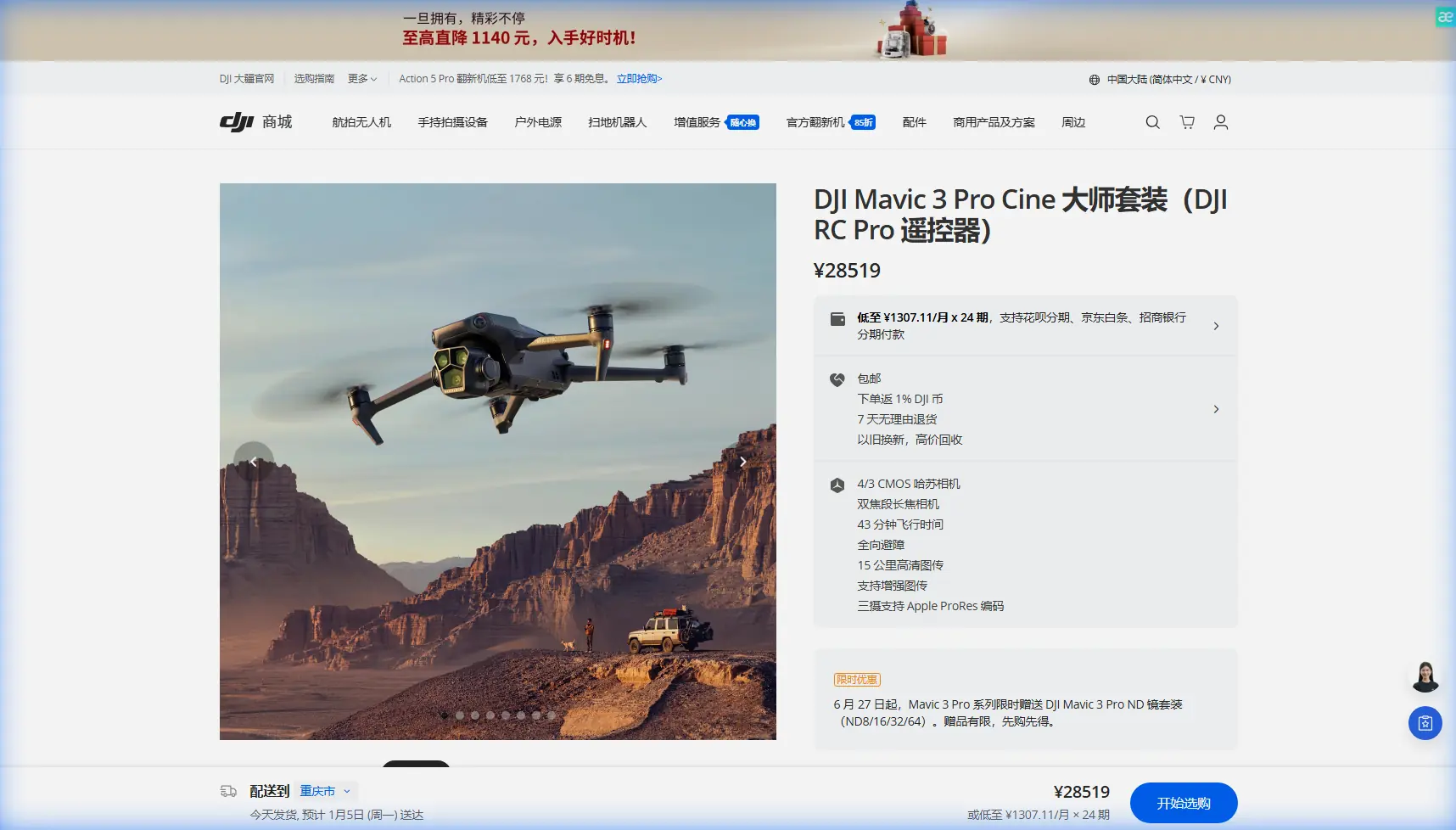
Mavic 3 Pro Guide: Tracking Forests in Remote Areas
META: Master forest tracking with the Mavic 3 Pro. Learn expert techniques for obstacle avoidance, ActiveTrack settings, and handling interference in remote wilderness.
TL;DR
- Triple-camera system enables precise canopy tracking even in dense forest environments
- Omnidirectional obstacle avoidance prevents collisions with branches and tree trunks during autonomous flights
- Antenna positioning techniques overcome electromagnetic interference common in remote wilderness areas
- D-Log color profile captures maximum dynamic range for post-processing forest footage
Remote forest tracking presents unique challenges that separate professional drone operators from hobbyists. The Mavic 3 Pro's Hasselblad triple-camera system combined with advanced ActiveTrack 5.0 makes it the definitive tool for wildlife researchers, forestry managers, and documentary filmmakers working in wilderness environments—but only when configured correctly for these demanding conditions.
Understanding Forest Tracking Challenges
Dense forest canopies create a hostile environment for drone operations. GPS signals weaken beneath tree cover, magnetic interference from mineral deposits disrupts compass readings, and countless obstacles threaten your aircraft from every direction.
The Mavic 3 Pro addresses these challenges through its APAS 5.0 obstacle avoidance system, which uses eight sensors to create a three-dimensional awareness bubble around the aircraft. In forest environments, this system becomes your primary defense against costly crashes.
Signal Degradation in Wilderness Areas
Remote forests often sit far from cellular infrastructure, which actually benefits drone operations by reducing radio frequency interference. However, natural sources of electromagnetic interference become more prominent:
- Iron-rich soil deposits affecting compass calibration
- Dense vegetation absorbing GPS signals
- Atmospheric moisture creating signal attenuation
- Wildlife tracking collars operating on similar frequencies
Expert Insight: Before launching in a new forest location, always perform a compass calibration in an open clearing at least 50 meters from your intended flight zone. This establishes a clean magnetic baseline before entering areas with potential interference.
Configuring ActiveTrack for Forest Environments
The Mavic 3 Pro's ActiveTrack 5.0 uses machine learning to identify and follow subjects through complex environments. For forest tracking, specific settings dramatically improve performance.
Optimal ActiveTrack Settings
Navigate to your controller settings and adjust these parameters:
- Tracking Sensitivity: Set to Medium-High for wildlife, Low for slow-moving subjects like hikers
- Obstacle Avoidance Behavior: Select Bypass rather than Brake to maintain tracking continuity
- Maximum Tracking Speed: Limit to 8 m/s in dense forests to allow adequate obstacle response time
- Subject Recognition: Enable Continuous mode for subjects that may temporarily disappear behind trees
Subject Tracking Through Canopy Gaps
Forest canopies create intermittent visibility challenges. The Mavic 3 Pro's 70mm telephoto lens becomes invaluable here, allowing you to maintain tracking distance while the subject moves through clearings.
When your subject enters dense cover:
- Increase altitude to maintain line-of-sight through canopy gaps
- Switch to telephoto view for better subject identification
- Reduce forward speed to allow the tracking algorithm time to reacquire
- Use waypoint mode as a backup if ActiveTrack loses the subject
Handling Electromagnetic Interference with Antenna Adjustment
Electromagnetic interference in remote forests often manifests as erratic compass behavior, weakened video transmission, or complete signal loss. The Mavic 3 Pro's O3+ transmission system provides 15km of theoretical range, but forest conditions can reduce this to under 2km without proper antenna management.
Antenna Positioning Techniques
Your RC Pro or standard controller antennas must maintain optimal orientation relative to the aircraft:
- Flat-top position: Point antenna tips toward the drone's location
- Perpendicular alignment: Keep antennas at 90-degree angles to each other for polarization diversity
- Body positioning: Face the drone directly; your body absorbs signal when positioned between controller and aircraft
Pro Tip: In areas with suspected magnetic interference, enable ATTI mode awareness in your settings. This prepares you for potential GPS loss and allows smoother transitions to manual control if the compass becomes unreliable.
Interference Mitigation Strategies
When you detect interference through warning messages or erratic behavior:
- Immediately gain altitude—interference sources are typically ground-based
- Reduce distance between controller and aircraft
- Avoid hovering near power lines, mineral outcrops, or metal structures
- Switch to Manual flight mode if compass errors persist
- Land in the nearest clearing if warnings continue
Leveraging QuickShots and Hyperlapse in Forest Settings
Automated flight modes produce cinematic results in forest environments when configured for the specific challenges of woodland flying.
QuickShots Configuration
| QuickShot Mode | Forest Suitability | Recommended Settings |
|---|---|---|
| Dronie | High | Limit distance to 30m, enable obstacle sensing |
| Helix | Medium | Reduce radius to 10m, increase altitude offset |
| Rocket | High | Ideal for canopy reveals, no horizontal obstacles |
| Boomerang | Low | Requires large clearing, disable in dense areas |
| Asteroid | Medium | Start from clearing, verify return path |
Hyperlapse for Forest Documentation
Forest Hyperlapse captures stunning time-compressed footage of canopy movement, wildlife activity, or changing light conditions. The Mavic 3 Pro supports 8K Hyperlapse recording, though 4K provides better low-light performance under forest shade.
Optimal Hyperlapse settings for forests:
- Interval: 3-5 seconds for cloud/shadow movement, 10+ seconds for subtle changes
- Duration: Minimum 30 minutes of capture for usable sequences
- Path: Use Waypoint mode for complex movements, Free for stationary timelapses
- Storage: Record to internal 8GB SSD for faster write speeds during long captures
Mastering D-Log for Forest Footage
Forest environments present extreme dynamic range challenges. Bright sky visible through canopy gaps contrasts sharply with deep shadows beneath tree cover. The Mavic 3 Pro's D-Log M color profile captures 12.8 stops of dynamic range, preserving detail in both highlights and shadows.
D-Log Configuration
Access camera settings and configure:
- Color Profile: D-Log M for maximum flexibility
- ISO: Keep at 100-400 to minimize noise in shadows
- Shutter Speed: Use ND filters to maintain 1/50s at 24fps or 1/100s at 50fps
- White Balance: Set manually to 5600K for consistent grading
Essential ND Filter Selection
| Light Condition | Recommended ND | Resulting Exposure |
|---|---|---|
| Open canopy, midday | ND64 | Proper motion blur |
| Partial shade | ND16 | Balanced exposure |
| Dense canopy | ND4 or none | Adequate light capture |
| Golden hour | ND8 | Cinematic motion |
Common Mistakes to Avoid
Launching beneath tree cover: Always take off from clearings to establish strong GPS lock and compass calibration before entering challenging airspace.
Ignoring battery temperature: Forest shade keeps batteries cool, reducing available capacity by up to 15% in cold conditions. Monitor voltage rather than percentage for accurate remaining flight time.
Over-relying on obstacle avoidance: Thin branches and leaves may not register on sensors. Maintain visual line of sight and manual override readiness at all times.
Neglecting return-to-home altitude: Set RTH altitude 20 meters above the tallest trees in your operating area. Default settings often prove insufficient for forest operations.
Forgetting about wildlife: Sudden drone movements can startle animals, creating unpredictable situations. Approach subjects slowly and maintain ethical distances, particularly during nesting seasons.
Frequently Asked Questions
How does the Mavic 3 Pro handle GPS loss under dense forest canopy?
The Mavic 3 Pro switches to ATTI mode when GPS signal becomes unreliable, using barometric altitude hold and visual positioning when available. The aircraft remains flyable but loses position hold capability. Practice ATTI flying in open areas before attempting forest operations to build muscle memory for these situations.
What is the minimum clearing size needed for safe forest takeoffs?
A clearing of at least 10 meters diameter provides adequate space for takeoff and initial GPS lock acquisition. The Mavic 3 Pro's omnidirectional sensing helps during ascent, but vertical clearance of 30+ meters above the launch point ensures safe transition to forward flight.
Can ActiveTrack follow subjects through complete visual obstruction?
ActiveTrack 5.0 can reacquire subjects after brief obstructions lasting 3-5 seconds if the subject maintains consistent movement direction. For longer obstructions, the system enters search mode, circling the last known position. Setting a Spotlight lock rather than full tracking maintains camera orientation without autonomous movement during these gaps.
Ready for your own Mavic 3 Pro? Contact our team for expert consultation.