
Mavic 3 Pro Guide: Tracking Fields in Dusty Conditions
Mavic 3 Pro Guide: Tracking Fields in Dusty Conditions
META: Master field tracking with your Mavic 3 Pro in dusty environments. Learn antenna adjustments, ActiveTrack settings, and pro techniques for flawless footage.
TL;DR
- Electromagnetic interference in agricultural settings requires specific antenna positioning and channel selection to maintain reliable subject tracking
- ActiveTrack 5.0 combined with obstacle avoidance settings needs adjustment for dusty environments where sensors may struggle
- D-Log color profile captures maximum dynamic range in high-contrast field conditions, preserving detail in both shadows and highlights
- Proper pre-flight calibration and gimbal protection extend equipment life when operating near particulate matter
Why Dusty Field Tracking Challenges Your Mavic 3 Pro
Dust particles wreak havoc on drone operations. Your Mavic 3 Pro's vision sensors, designed for obstacle avoidance and subject tracking, interpret airborne particulates as potential obstacles. This creates erratic flight behavior, lost tracking locks, and frustrating footage gaps.
Agricultural fields present a unique combination of challenges: electromagnetic interference from irrigation systems and power lines, reflective surfaces from equipment, and constantly shifting dust clouds that confuse the omnidirectional obstacle sensing system.
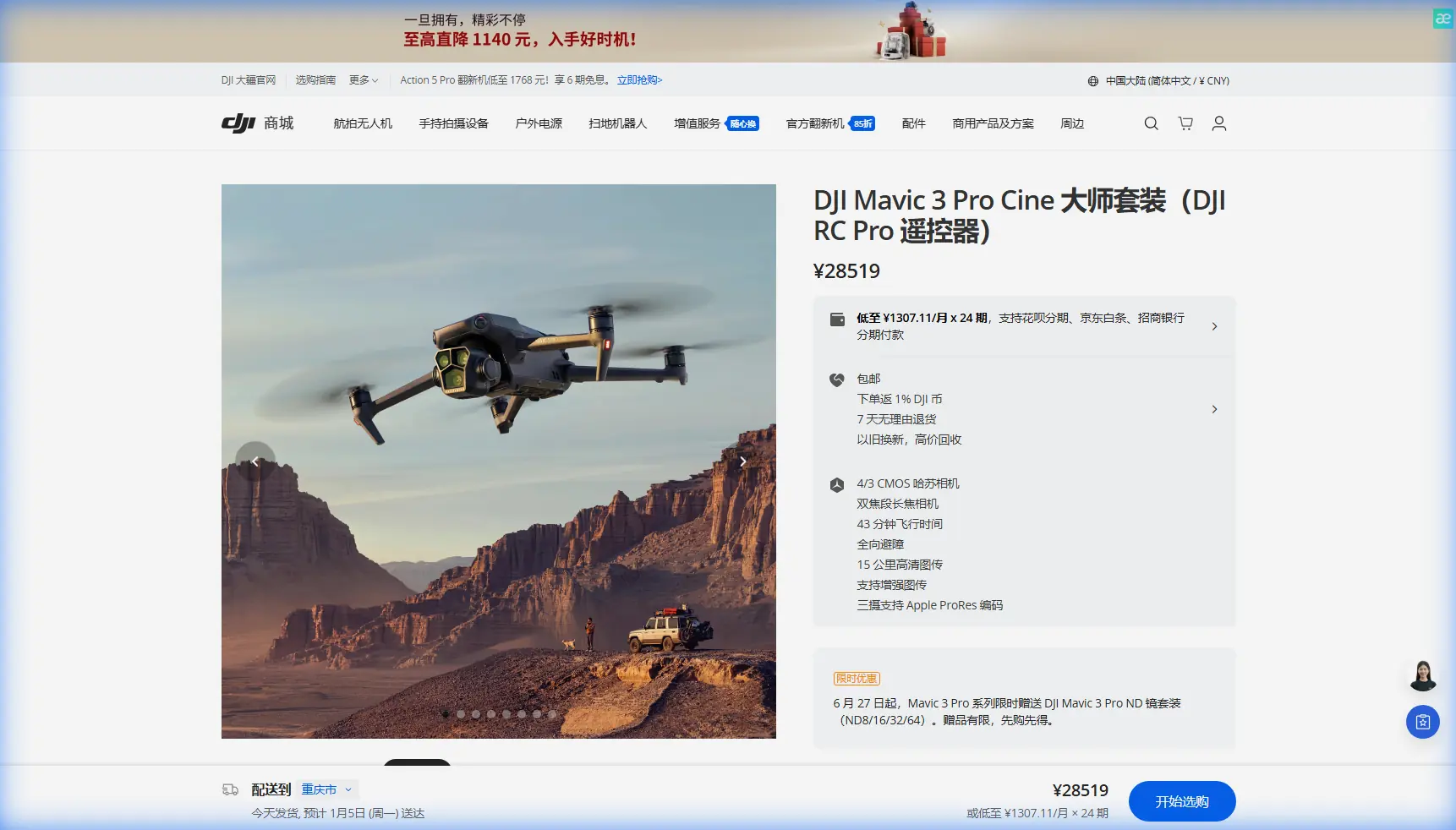
The good news? With proper configuration, your Mavic 3 Pro handles these conditions remarkably well. The tri-camera Hasselblad system with its 4/3 CMOS sensor captures stunning field footage when you understand how to work with—not against—environmental factors.
Handling Electromagnetic Interference with Antenna Adjustment
Power lines crisscrossing agricultural land generate electromagnetic fields that interfere with your controller's signal. I discovered this the hard way during a wheat field shoot when my Mavic 3 Pro suddenly lost connection 800 meters out—directly over high-tension lines.
Optimal Antenna Positioning
The DJI RC Pro controller's antennas aren't decorative. Their orientation directly impacts signal strength and interference rejection.
For maximum signal integrity:
- Position antennas perpendicular to the ground, not angled toward the drone
- Keep the flat face of each antenna pointed at your aircraft
- Maintain antenna separation at the full 90-degree spread
- Avoid crossing antennas, which creates signal cancellation zones
Channel Selection Strategy
Manual channel selection outperforms auto-switching in interference-heavy environments. Navigate to Transmission Settings and:
- Switch from Auto to Manual channel selection
- Use the spectrum analyzer to identify the cleanest frequency band
- Select channels showing the lowest interference bars
- Monitor signal strength throughout your flight
Expert Insight: Agricultural areas often have cleaner signals in the 5.8GHz band because farm equipment typically operates on lower frequencies. However, 5.8GHz has reduced range compared to 2.4GHz—stay within 4 kilometers for reliable control in dusty conditions.
Configuring ActiveTrack for Field Operations
ActiveTrack 5.0 represents a significant leap in subject tracking capability, but dusty environments expose its limitations. The system relies on visual recognition algorithms that struggle when your subject becomes partially obscured by dust clouds.
Pre-Flight Tracking Optimization
Before launching, configure these settings in the DJI Fly app:
- Tracking Sensitivity: Set to Medium rather than High—aggressive tracking causes overcorrection when dust temporarily obscures your subject
- Obstacle Avoidance Behavior: Select Bypass instead of Brake to maintain tracking momentum
- Maximum Tracking Speed: Limit to 40 km/h for agricultural vehicles to prevent the gimbal from struggling with sudden movements
- Tracking Height: Lock altitude rather than allowing dynamic adjustment, preventing the drone from descending into dust clouds
Subject Selection Techniques
Tap-to-track works best when you select high-contrast portions of your subject:
- Target the cab or operator area of tractors rather than dusty body panels
- Select wheel wells or dark components that maintain visibility
- Avoid selecting areas that match the surrounding field color
- Use Spotlight mode for subjects that frequently change orientation
Obstacle Avoidance Settings for Particulate Environments
The Mavic 3 Pro's omnidirectional obstacle sensing uses vision sensors and a time-of-flight sensor to detect objects. Dust particles trigger false positives, causing unnecessary braking or altitude changes.
Recommended Avoidance Configuration
| Setting | Standard Environment | Dusty Field Environment |
|---|---|---|
| Forward Sensing | On | On |
| Backward Sensing | On | On |
| Lateral Sensing | On | Off |
| Upward Sensing | On | On |
| Downward Sensing | On | Altitude Lock |
| Braking Distance | 5m | 8m |
| APAS 5.0 | Active | Bypass Only |
Disabling lateral sensing prevents the drone from reacting to dust clouds passing beside it during crosswind conditions. The increased braking distance provides buffer time for the system to distinguish between actual obstacles and particulate matter.
Pro Tip: Enable Aircraft LEDs to maximum brightness even during daylight operations. The strobes help you maintain visual contact when dust reduces visibility, and they assist the Return to Home function in locating the takeoff point.
Capturing Cinematic Field Footage with QuickShots
QuickShots automate complex camera movements, but they require adaptation for field work. The Dronie, Helix, and Rocket modes produce the most reliable results in agricultural settings.
QuickShots Performance Comparison
| QuickShot Mode | Dust Reliability | Best Use Case | Recommended Distance |
|---|---|---|---|
| Dronie | Excellent | Equipment reveals | 40-80m |
| Helix | Good | Field pattern showcases | 30-60m |
| Rocket | Excellent | Vertical scale shots | 50-120m |
| Circle | Poor | Avoid in dust | N/A |
| Boomerang | Moderate | Clear conditions only | 20-40m |
| Asteroid | Poor | Post-processing issues | N/A |
Circle and Asteroid modes struggle because they require consistent subject tracking throughout 360-degree movement. Dust interference during any portion of the arc ruins the entire shot.
Hyperlapse Techniques for Agricultural Documentation
Hyperlapse captures the passage of time across working fields—tractors moving through rows, irrigation systems cycling, or harvest progress. The Mavic 3 Pro offers four Hyperlapse modes: Free, Circle, Course Lock, and Waypoint.
Optimal Hyperlapse Settings for Fields
Configure your Hyperlapse with these parameters:
- Interval: Set to 3 seconds for vehicle movement, 10 seconds for static field changes
- Duration: Calculate based on desired output length—a 10-second final video at 30fps requires 300 photos
- Resolution: Shoot at 4K minimum; the crop flexibility saves shots affected by dust spots
- Format: Select JPEG+RAW for maximum post-processing latitude
Course Lock Hyperlapse works exceptionally well for tracking equipment across fields. Set your heading, and the camera maintains orientation while the drone follows your subject.
Mastering D-Log for High-Contrast Field Conditions
Midday agricultural shoots present extreme dynamic range challenges. Bright sky, reflective equipment, and shadowed furrows exceed the capability of standard color profiles. D-Log captures over 12 stops of dynamic range, preserving detail across the entire tonal range.
D-Log Configuration
Access D-Log through Camera Settings > Color:
- Select D-Log M for the best balance between dynamic range and noise performance
- Set ISO to 100-400 range—D-Log amplifies noise at higher sensitivities
- Adjust exposure to protect highlights; shadows recover better than blown highlights
- Enable Histogram and Zebras at 95% to monitor exposure
Essential D-Log Workflow
D-Log footage appears flat and desaturated straight from the camera. Plan for color grading:
- Apply a LUT (Look-Up Table) as your starting point
- DJI provides official D-Log to Rec.709 LUTs for accurate color transformation
- Adjust contrast curve to taste after LUT application
- Use secondary color correction to enhance specific elements like crop colors
Common Mistakes to Avoid
Launching into active dust clouds: Wait for equipment to pass or position upwind. Dust ingestion damages motors and gimbal mechanisms faster than any other environmental factor.
Ignoring compass calibration warnings: Agricultural fields often contain buried irrigation pipes and equipment that affect magnetic readings. Always calibrate when prompted, moving at least 50 meters from metal structures.
Relying solely on automated tracking: ActiveTrack loses subjects in dust. Maintain manual control readiness and practice quick transitions between tracking and manual modes.
Neglecting ND filters: Bright field conditions require ND16 or ND32 filters to maintain proper shutter speed for cinematic motion blur. Without filtration, you'll capture jittery footage with excessive sharpness.
Forgetting sensor cleaning: Dust accumulates on vision sensors within minutes of field operation. Carry microfiber cloths and clean sensors between flights—dirty sensors degrade obstacle avoidance reliability.
Frequently Asked Questions
How do I protect my Mavic 3 Pro gimbal from dust damage?
Install a gimbal cover during transport and between flights. When operating, keep the drone above 15 meters AGL to stay clear of ground-level dust. After each session, use a rocket blower (never compressed air) to remove particles from the gimbal mechanism. Store the drone in a sealed case with silica gel packets to prevent moisture from binding dust to components.
What's the maximum wind speed for reliable field tracking?
The Mavic 3 Pro handles winds up to 12 m/s in standard conditions, but dusty environments reduce this practical limit to 8-9 m/s. Higher winds lift more particulates, overwhelming obstacle sensors and degrading tracking accuracy. Check wind forecasts at your planned flight altitude, not just ground level—conditions often differ significantly.
Can I use subject tracking near power lines?
Maintain a minimum 30-meter horizontal distance from power lines when using ActiveTrack. Electromagnetic interference affects both the tracking algorithms and your control link. If you must film near power infrastructure, switch to manual flight mode and use Spotlight to keep your subject framed while you maintain direct control of the aircraft's position.
Ready for your own Mavic 3 Pro? Contact our team for expert consultation.