
Mavic 3 Pro: Surveying Vineyards in Coastal Terrain
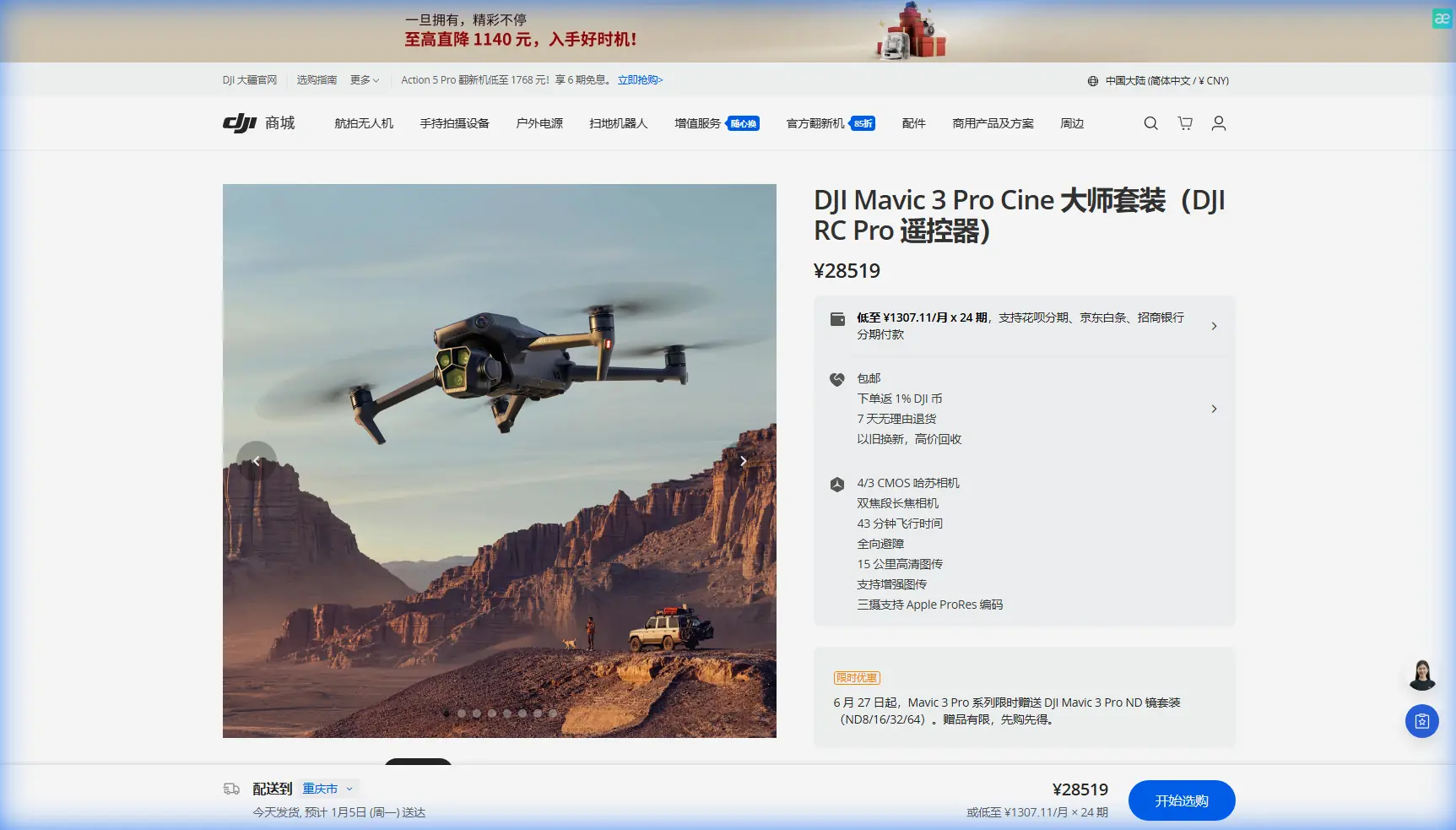
Mavic 3 Pro: Surveying Vineyards in Coastal Terrain
META: Discover how the Mavic 3 Pro transforms coastal vineyard surveying with triple-camera precision, obstacle avoidance, and D-Log color science for actionable crop data.
By Chris Park — Creator
TL;DR
- The Mavic 3 Pro's triple-camera system captures vineyard data at three focal lengths without swapping aircraft or lenses, cutting survey time dramatically.
- Omnidirectional obstacle avoidance is non-negotiable in coastal terrain where wind gusts, salt corrosion, and uneven topography create constant hazards.
- A pre-flight cleaning routine for vision sensors is the single most overlooked step that prevents mid-flight obstacle avoidance failures.
- D-Log color profile and Hyperlapse modes give vineyard managers both scientifically useful footage and compelling stakeholder-ready visuals in one flight.
The Coastal Vineyard Problem No One Talks About
Coastal vineyards are brutal on drone hardware and surveying workflows. Salt-laden air deposits a micro-film on sensor windows within hours. Irregular terrain — steep hillside rows meeting rocky cliffsides — creates unpredictable wind shear. And the very thing that makes coastal grapes exceptional (marine fog, shifting light, mineral-rich soil variation) makes consistent aerial data collection a nightmare.
Most vineyard operators lose 15–25% of usable flight time to re-flies caused by degraded sensor performance, unexpected obstacle alerts, or inconsistent exposure across a single pass. That's not a minor inefficiency — across a growing season with 8–12 scheduled surveys, it translates to entire lost days.
This guide breaks down exactly how the Mavic 3 Pro solves each of these coastal-specific challenges, from a critical pre-flight cleaning protocol to advanced camera settings that produce survey-grade vineyard data.
Why the Mavic 3 Pro Fits Coastal Vineyard Work
Triple-Camera Versatility Eliminates Multi-Drone Workflows
The Mavic 3 Pro carries three distinct cameras on a single gimbal:
- 24mm Hasselblad main camera — 4/3 CMOS sensor, 20MP, ideal for wide-area orthomosaic mapping of full vineyard blocks
- 70mm medium tele camera — 1/1.3-inch sensor, 48MP, perfect for row-level canopy analysis without descending into turbulence zones
- 166mm tele camera — 1/2-inch sensor, 12MP, enables close inspection of individual vine health, trellis damage, or irrigation hardware from safe altitude
Before this aircraft existed, coastal vineyard surveyors routinely flew two or three different platforms per session to capture wide mapping data and close-up diagnostic imagery. The Mavic 3 Pro collapses that into a single 43-minute max flight time airframe weighing just 958g.
Omnidirectional Obstacle Avoidance in Complex Terrain
Coastal vineyard terrain is rarely flat. Rows run along hillsides, power lines cross property edges, and mature trees border drainage channels. The Mavic 3 Pro's omnidirectional obstacle sensing system uses multiple vision sensors and ToF (time-of-flight) infrared modules to detect hazards in all directions simultaneously.
This matters enormously when using automated flight modes like ActiveTrack to follow a vineyard row or when executing pre-programmed survey grids where the aircraft rounds end-rows near tree lines.
Expert Insight: Obstacle avoidance reliability drops significantly when vision sensor windows are contaminated. In coastal environments, salt crystallization begins forming on sensor glass within 2–3 hours of exposure. A quick wipe with a microfiber cloth and lens-safe solution before every flight is the difference between a system that sees a guy-wire at 15 meters and one that doesn't see it at all.
The Pre-Flight Cleaning Protocol That Prevents Crashes
This is the step most operators skip, and it's the one that matters most in coastal conditions. The Mavic 3 Pro has eight vision sensors (forward, backward, lateral, upward, and downward pairs) plus infrared ToF modules. Each one has a small glass window exposed to the elements.
Here's the protocol Chris Park follows before every coastal vineyard flight:
- Inspect all eight vision sensor windows with a headlamp or phone flashlight held at an angle — salt deposits and moisture haze are often invisible in direct light but obvious at 30–45 degree viewing angles.
- Clean each window with a pre-moistened lens wipe (alcohol-free optical grade). Wipe in a single direction, not circular, to avoid smearing mineral deposits.
- Inspect the main gimbal camera lens and the two telephoto lens covers — these accumulate the same salt film and directly impact image sharpness for survey data.
- Check the bottom auxiliary light and infrared sensors — these are closest to the ground during takeoff and accumulate dust and salt fastest.
- Power on the aircraft and confirm "Vision System Normal" in DJI Fly app status before arming — if any sensor reads abnormal after cleaning, there may be internal condensation requiring a 10–15 minute warm-up in dry shade.
This routine adds roughly four minutes to pre-flight. It prevents the single most common cause of obstacle avoidance failure in marine environments.
Camera Settings for Actionable Vineyard Data
D-Log for Maximum Post-Processing Flexibility
The Hasselblad main camera supports D-Log color profile, which captures a flat, high-dynamic-range image preserving detail in both shadowed canopy and bright exposed soil. For vineyard surveying, this is critical.
Coastal light changes rapidly. A single mapping pass might start under fog and end in direct sun. Shooting in D-Log gives you over 12.8 stops of dynamic range to work with in post, meaning you can normalize exposure across an entire orthomosaic dataset without clipping highlights or crushing shadows.
- Set color mode to D-Log in camera settings
- Shoot in RAW (DNG) for mapping frames — never JPEG for survey work
- ISO 100–400 range to minimize noise in shadow recovery
- Shutter speed matched to ground speed to prevent motion blur — typically 1/800s or faster for mapping at 8–10 m/s flight speed
Hyperlapse for Stakeholder Communication
Not every flight output needs to be a data layer. Vineyard owners and investors respond powerfully to Hyperlapse footage that compresses a full vineyard pass into a 20–30 second cinematic sequence. The Mavic 3 Pro's built-in Hyperlapse modes include:
- Free mode — full manual control of flight path and camera angle
- Circle mode — orbit a central point (ideal for showcasing a single vineyard block)
- Course Lock mode — fly a straight line with camera panning freely
- Waypoint mode — pre-program complex paths for repeatable seasonal comparisons
Pro Tip: Fly a Hyperlapse run at the end of your survey mission, not the beginning. You'll have confirmed wind conditions, battery state, and obstacle locations during the survey passes. Using QuickShots like Dronie or Rocket at the end of a session also creates compelling content without risking your primary data collection window.
Subject Tracking for Row-Level Inspections
ActiveTrack on the Mavic 3 Pro enables the aircraft to lock onto and follow a subject — in vineyard work, this is typically a ground vehicle or a person walking rows. The system uses the main camera's visual data combined with obstacle avoidance telemetry to maintain subject framing while avoiding hazards.
For coastal vineyard inspections, ActiveTrack is particularly useful when:
- Following an ATV along row edges to document trellis condition
- Tracking a viticulturist during canopy assessment for synchronized ground-truth video
- Documenting irrigation line runs along hillside terrain where manual piloting is risky
The 70mm medium telephoto is the ideal lens for Subject tracking during row inspections — it provides enough compression to fill the frame with vine detail while maintaining a safe 15–20 meter following distance from the subject and surrounding obstacles.
Technical Comparison: Mavic 3 Pro vs. Common Vineyard Survey Alternatives
| Feature | Mavic 3 Pro | Mavic 3 Classic | Phantom 4 RTK |
|---|---|---|---|
| Camera System | Triple (24/70/166mm) | Single (24mm Hasselblad) | Single (24mm) |
| Max Flight Time | 43 min | 46 min | 30 min |
| Obstacle Avoidance | Omnidirectional | Omnidirectional | Forward/Backward only |
| Sensor Size (Main) | 4/3 CMOS | 4/3 CMOS | 1-inch CMOS |
| D-Log Support | Yes | Yes | No (D-Cinelike only) |
| ActiveTrack | ActiveTrack 5.0 | ActiveTrack 5.0 | Not available |
| Hyperlapse Modes | 4 modes | 4 modes | Not available |
| Weight | 958g | 895g | 1391g |
| RTK Positioning | No (PPK via third-party) | No | Built-in RTK |
| Ideal Vineyard Use | Multi-purpose survey + inspection | Mapping-focused survey | High-accuracy mapping only |
The Phantom 4 RTK remains superior for centimeter-accurate photogrammetric mapping, but it lacks obstacle avoidance adequate for complex coastal terrain, has no telephoto inspection capability, and cannot produce the creative content (Hyperlapse, QuickShots) that modern vineyard marketing demands. The Mavic 3 Pro occupies the middle ground where survey utility meets operational safety and content versatility.
Common Mistakes to Avoid
- Skipping sensor cleaning in marine environments — This is the number one cause of obstacle avoidance degradation and mid-mission aborts. Build it into every pre-flight checklist, not just when sensors "look dirty."
- Shooting JPEG for mapping passes — JPEG compression discards exactly the shadow and highlight data you need for consistent orthomosaics under variable coastal light. Always shoot RAW.
- Flying mapping grids at maximum speed — Ground speed above 10 m/s introduces motion blur that degrades stitching accuracy. Slow down to 6–8 m/s for sharp, overlapping frames.
- Ignoring wind gradient near cliffsides — Coastal bluffs create updrafts and rotor on the leeward side. The Mavic 3 Pro handles wind well, but its 12 m/s max wind resistance can be exceeded in turbulence zones. Maintain 20+ meter clearance from cliff edges.
- Using the 166mm telephoto for mapping — The 12MP 1/2-inch sensor is designed for inspection, not photogrammetry. Use the 20MP Hasselblad main camera for all mapping work and reserve the telephoto for targeted close-up assessment.
- Neglecting battery temperature in morning fog — Coastal mornings are cold and damp. Flight batteries perform below rated capacity when cold. Warm batteries to at least 25°C before flight for reliable 43-minute endurance.
Frequently Asked Questions
Can the Mavic 3 Pro produce survey-grade orthomosaics for vineyard management?
Yes, with proper flight planning. The 4/3 CMOS Hasselblad camera at 20MP produces frames with sufficient resolution and overlap for orthomosaic generation in software like Pix4D or DroneDeploy. At 60 meters AGL with 75% frontal and 65% side overlap, you can achieve 1.5–2 cm/pixel GSD — more than adequate for canopy health assessment, row spacing analysis, and drainage mapping. For centimeter-accurate absolute positioning, you'll need ground control points (GCPs) since the Mavic 3 Pro lacks built-in RTK.
How does ActiveTrack perform in dense vineyard row environments?
ActiveTrack 5.0 performs well along vineyard rows provided you maintain adequate altitude (8–12 meters AGL minimum) and keep the subject on relatively predictable paths. The omnidirectional obstacle avoidance system helps the aircraft navigate around end-row posts and trellis wires. However, dense overhead canopy can occlude the downward vision sensors, so avoid tracking at very low altitudes beneath mature vine canopies. The 70mm telephoto allows you to track from a safer distance while maintaining tight subject framing.
What is D-Log and why does it matter for vineyard data collection?
D-Log is a flat color profile that maximizes dynamic range by recording a desaturated, low-contrast image. For vineyard surveying, this preserves critical detail in both deep canopy shadows and bright exposed soil or reflective surfaces (irrigation hardware, greenhouse plastic, wet leaves). In post-processing, you can apply consistent color grading across hundreds of frames, producing uniform datasets even when coastal light conditions shifted mid-flight. Without D-Log, you risk clipped highlights on sunlit rows and crushed shadows under dense canopy — both of which reduce the diagnostic value of your aerial data.
Ready for your own Mavic 3 Pro? Contact our team for expert consultation.