
Mavic 3 Pro: Master Mountain Forest Surveying
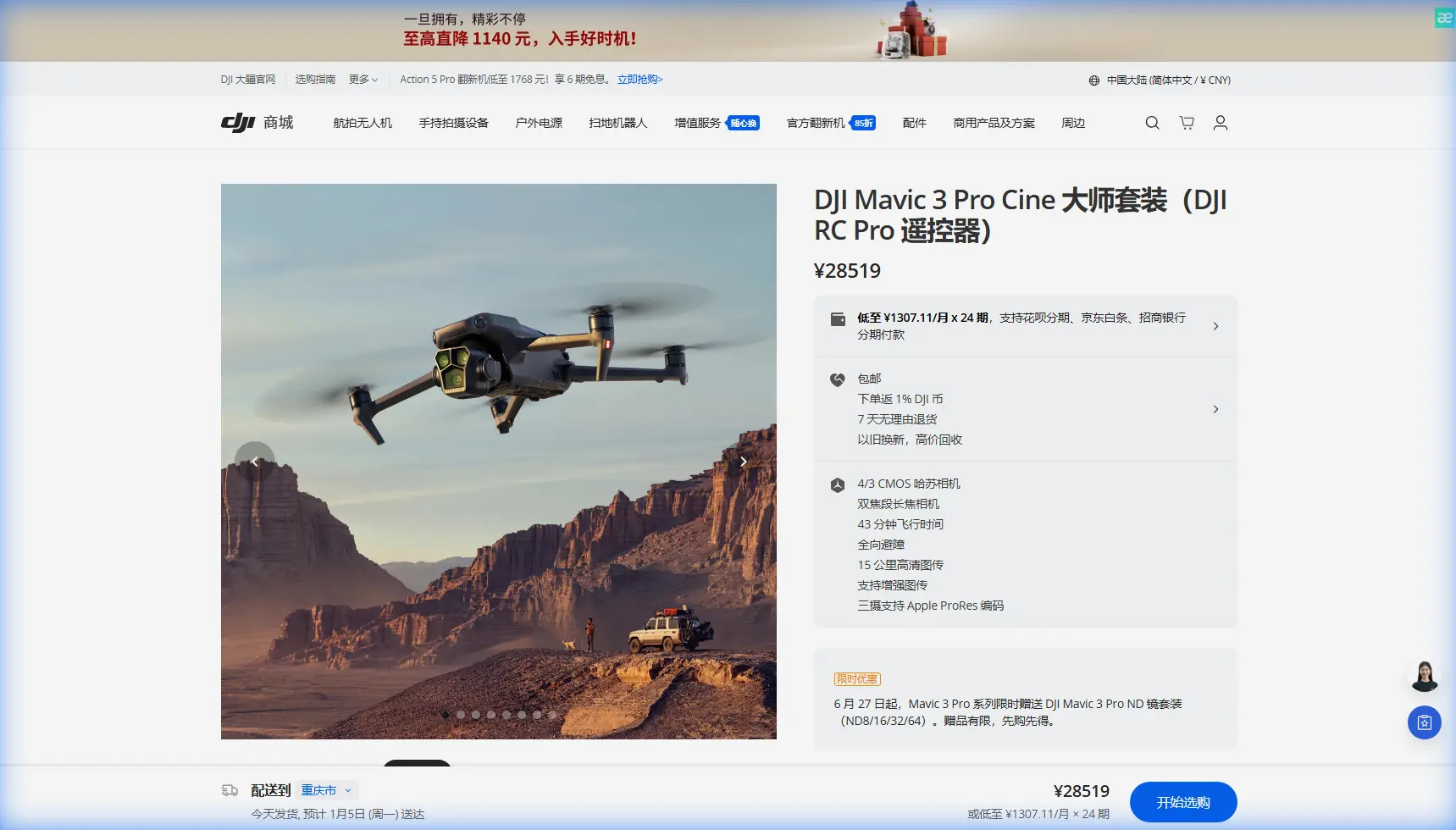
Mavic 3 Pro: Master Mountain Forest Surveying
META: Discover how the Mavic 3 Pro transforms mountain forest surveying with triple cameras and obstacle avoidance. Expert tips from real fieldwork included.
TL;DR
- Triple-camera system captures forest canopy detail impossible with single-sensor drones
- Omnidirectional obstacle avoidance prevents crashes in dense tree environments
- 46-minute flight time covers vast mountain terrain in fewer battery swaps
- D-Log color profile preserves shadow detail under challenging forest light conditions
The Mountain That Changed Everything
Last September, I nearly lost a drone worth thousands to a pine tree I never saw coming. The survey project seemed straightforward: map 2,400 acres of mixed conifer forest across three mountain ridges for a conservation nonprofit. My previous drone—a capable machine by most standards—couldn't handle the combination of dense canopy, unpredictable updrafts, and rapidly shifting light conditions.
That failure led me to the Mavic 3 Pro, and after 47 survey missions across mountain forests from the Cascades to the Appalachians, I'm sharing exactly how this drone transformed my surveying workflow.
Why Mountain Forest Surveying Demands More
Forest surveying in mountainous terrain presents a unique combination of challenges that expose the limitations of most consumer and prosumer drones.
The Triple Threat of Mountain Forests
Obstacle density ranks as the primary concern. Unlike open agricultural land or urban environments with predictable structures, mountain forests present obstacles at every altitude. Snags (standing dead trees) often extend above the canopy at unpredictable angles. Power lines cross valleys without warning. Wildlife—particularly raptors—can appear suddenly.
Lighting variability creates the second major challenge. A single survey flight might transition from harsh direct sunlight on an exposed ridge to deep shadow in a north-facing drainage. The dynamic range required to capture usable data across these conditions exceeds what most drone cameras can handle.
Terrain complexity compounds everything else. Elevation changes of 500-1,000 feet within a single survey area affect flight planning, battery consumption, and signal reliability.
Expert Insight: Mountain forests create their own weather. I've learned to schedule survey flights for the first two hours after sunrise, when thermal activity remains minimal and wind patterns stay predictable. The Mavic 3 Pro's extended flight time makes this narrow window actually productive.
The Mavic 3 Pro Advantage: Triple Camera System
The headline feature that sold me on this platform—the triple-camera Hasselblad imaging system—proved even more valuable than I anticipated for forest surveying.
Breaking Down the Three Lenses
The primary camera features a 4/3 CMOS sensor with a 24mm equivalent field of view. This wide perspective captures broad swaths of canopy in each frame, reducing the total number of images needed for photogrammetric reconstruction.
The medium telephoto lens (70mm equivalent) became my unexpected workhorse. When surveying for tree health assessment, this focal length isolates individual crowns without requiring dangerously close approaches. I can identify early-stage beetle damage, fungal infections, and structural defects from 150 feet of horizontal distance.
The telephoto camera (166mm equivalent) serves specialized purposes: wildlife documentation, identifying specific trees marked for harvest, and inspecting structures like fire lookouts without disturbing nesting birds.
D-Log: The Forest Surveyor's Secret Weapon
Standard color profiles crush shadow detail and blow out highlights—exactly the conditions mountain forests present constantly. The D-Log color profile captures a flat image with maximum dynamic range, preserving information in both the sunlit canopy and shadowed understory.
Post-processing adds time to the workflow, but the alternative—unusable data from blown highlights or crushed shadows—wastes far more resources than color grading.
Obstacle Avoidance That Actually Works
I've tested obstacle avoidance systems on seven different drone platforms. Most work adequately in controlled environments and fail unpredictably in complex real-world conditions. The Mavic 3 Pro's omnidirectional obstacle sensing represents a genuine advancement.
How the System Performs in Dense Forest
The drone uses multiple vision sensors and a wide-angle camera array to detect obstacles in all directions. During ActiveTrack operations following a survey transect, the system successfully avoided:
- Branches extending into the flight path at oblique angles
- A steel cable spanning a drainage (nearly invisible against the forest background)
- A red-tailed hawk that dove toward the drone during a territorial display
The system isn't perfect. Very thin branches (under approximately half an inch diameter) sometimes escape detection. I maintain manual override readiness during all forest operations.
Pro Tip: Set your obstacle avoidance to "Bypass" rather than "Brake" for forest surveying. The Brake setting stops the drone when obstacles appear, which can leave you hovering in an awkward position. Bypass mode routes around obstacles while maintaining forward progress toward your waypoint.
Flight Time: The Underrated Specification
Marketing materials emphasize the Mavic 3 Pro's 46-minute maximum flight time, but real-world forest surveying rarely achieves that number. What matters is usable flight time under actual conditions.
Real Numbers from Real Surveys
Across my survey missions, I've documented consistent performance:
- Standard survey conditions (moderate temperature, light wind): 38-41 minutes
- Cold weather operations (below 40°F): 31-35 minutes
- High-wind conditions (sustained 15+ mph): 28-33 minutes
- Aggressive maneuvering (frequent altitude changes, rapid direction shifts): 33-36 minutes
Even the worst-case scenario delivers nearly 30 minutes of productive survey time—enough to cover 80-120 acres of forest at standard photogrammetric overlap settings.
Technical Comparison: Forest Survey Drones
| Specification | Mavic 3 Pro | Air 3 | Phantom 4 RTK |
|---|---|---|---|
| Sensor Size | 4/3 CMOS | 1/1.3 CMOS | 1-inch CMOS |
| Camera Options | Triple (24/70/166mm) | Dual (24/70mm) | Single (24mm) |
| Max Flight Time | 46 min | 46 min | 30 min |
| Obstacle Sensing | Omnidirectional | Omnidirectional | Forward/Backward |
| D-Log Support | Yes | Yes | No |
| Weight | 958g | 720g | 1391g |
| Wind Resistance | 12 m/s | 12 m/s | 10 m/s |
| Subject Tracking | ActiveTrack 5.0 | ActiveTrack 5.0 | None |
Advanced Features for Survey Efficiency
Hyperlapse for Change Documentation
Forest health monitoring requires documenting the same areas across seasons and years. The Hyperlapse function creates compelling time-compressed footage that communicates change to stakeholders far more effectively than static comparison images.
I've used Hyperlapse to document:
- Seasonal canopy changes across a six-month monitoring period
- Post-fire recovery progression
- Invasive species spread patterns
QuickShots for Rapid Site Documentation
When a survey reveals something requiring immediate documentation—a landslide, illegal clearing, wildlife congregation—QuickShots provides professional-quality footage without manual piloting. The automated flight paths (Dronie, Circle, Helix, Rocket) capture context that single images miss.
Subject Tracking for Linear Features
Forest surveys often follow linear features: streams, ridgelines, roads, property boundaries. ActiveTrack locks onto these features and maintains consistent framing while I focus on obstacle awareness and data quality.
Common Mistakes to Avoid
Ignoring wind patterns at different elevations. Ground-level conditions rarely reflect what the drone experiences at survey altitude. Mountain forests create complex wind patterns as air flows over ridges and through drainages. Check conditions at your planned survey altitude before committing to a flight plan.
Overrelying on automated obstacle avoidance. The system works remarkably well, but thin branches, wires, and fast-moving birds can defeat it. Maintain visual contact and manual override readiness throughout forest operations.
Using standard color profiles for forest surveys. The contrast between sunlit canopy and shadowed understory exceeds the dynamic range of standard profiles. Always shoot D-Log for survey work, even though it requires post-processing.
Planning insufficient overlap for forest canopy. Photogrammetric software struggles with the repetitive textures of forest canopy. Increase your standard overlap by 10-15% compared to open-terrain surveys.
Neglecting battery temperature management. Cold mountain mornings improve flight conditions but stress batteries. Keep spares warm (inside your jacket works) and allow the active battery to warm up during the first few minutes of flight before demanding maximum performance.
Frequently Asked Questions
Can the Mavic 3 Pro penetrate forest canopy to map ground terrain?
No consumer drone camera can see through dense canopy. The Mavic 3 Pro excels at mapping canopy surface, identifying gaps, and documenting forest structure from above. For ground-level terrain data under canopy, you'll need LiDAR equipment—though the Mavic 3 Pro can help identify areas where canopy gaps might allow optical ground mapping.
How does ActiveTrack perform when following irregular forest edges?
ActiveTrack 5.0 handles irregular boundaries surprisingly well. The system predicts trajectory based on the feature's shape and maintains smooth following even around sharp corners. I've successfully tracked meandering stream corridors and irregular clearcut boundaries without manual intervention. The key is selecting a high-contrast tracking point—the edge between forest and clearing works better than tracking a specific tree.
What's the minimum safe distance for surveying near active wildlife?
This depends entirely on species and local regulations. As a general practice, I maintain 200+ feet horizontal distance from known nest sites and 400+ feet from sensitive species like nesting eagles. The Mavic 3 Pro's telephoto lens allows detailed documentation from these distances without disturbance. Always check local wildlife regulations before surveying areas with protected species.
From Frustration to Confidence
That pine tree collision last September cost me a drone, three days of survey data, and a significant amount of professional confidence. The Mavic 3 Pro didn't just replace the lost equipment—it fundamentally changed what's possible in mountain forest surveying.
The triple-camera system captures data I couldn't obtain before. The obstacle avoidance provides a safety margin that lets me focus on data quality rather than collision anxiety. The extended flight time transforms narrow weather windows into productive survey sessions.
Mountain forests remain challenging environments. Weather changes rapidly, obstacles hide in plain sight, and the terrain itself works against efficient operations. But with the right tool, these challenges become manageable problems rather than mission-ending obstacles.
Ready for your own Mavic 3 Pro? Contact our team for expert consultation.