
Mavic 3 Pro Guide: Surveying Complex Terrain Fields
Mavic 3 Pro Guide: Surveying Complex Terrain Fields
META: Master field surveying in complex terrain with the Mavic 3 Pro. Expert tips on antenna positioning, obstacle avoidance, and D-Log capture for precision results.
TL;DR
- Triple-camera system enables simultaneous wide-angle mapping and telephoto detail capture for comprehensive field surveys
- Omnidirectional obstacle avoidance with APAS 5.0 protects your investment in challenging terrain with trees, power lines, and elevation changes
- 46-minute flight time covers up to 200 acres per battery in optimal surveying conditions
- Proper antenna positioning can extend reliable signal range by 30-40% in hilly or obstructed environments
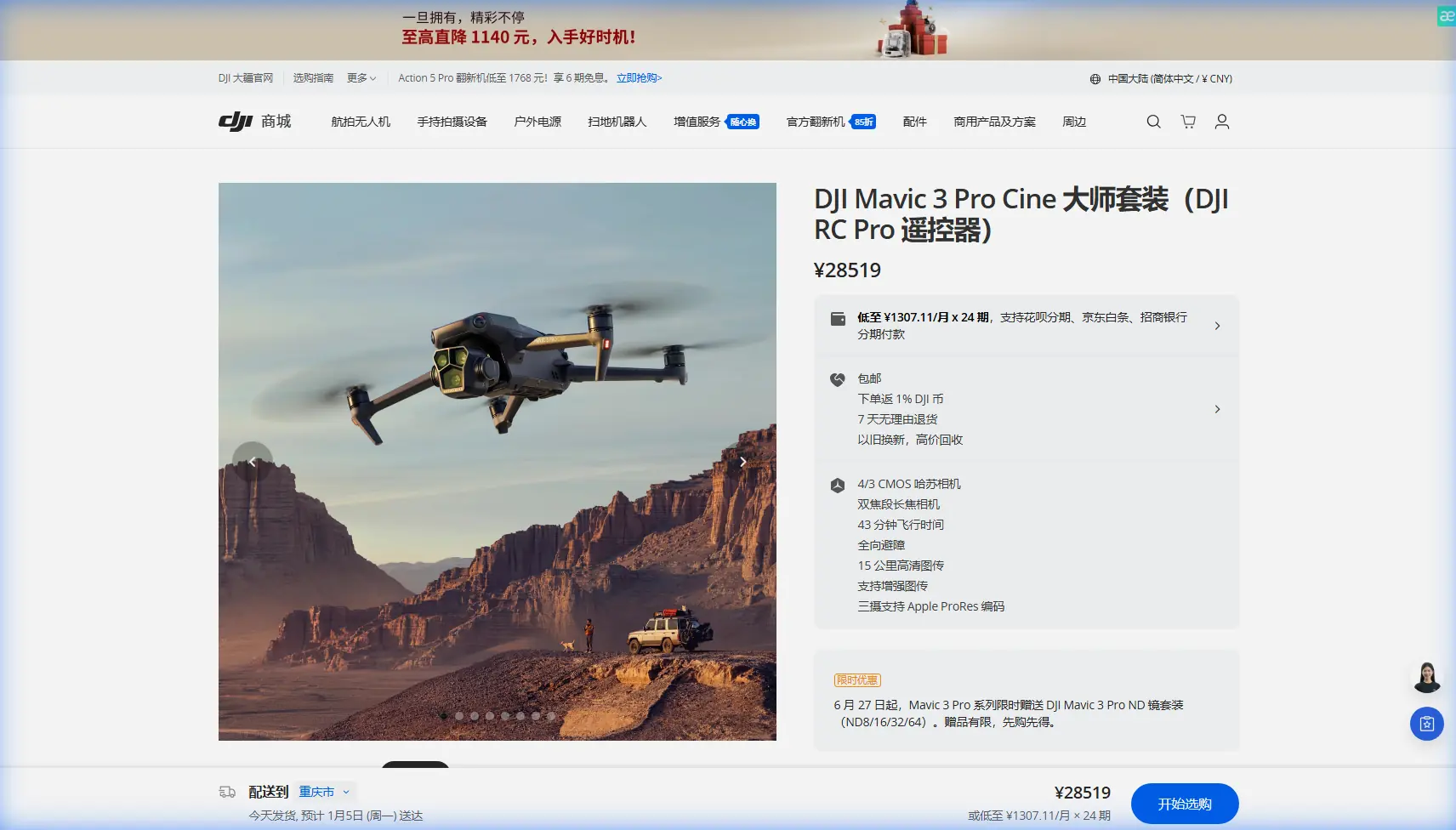
Field surveying across complex terrain presents unique challenges that standard consumer drones simply cannot handle. The DJI Mavic 3 Pro combines a Hasselblad primary camera with two telephoto lenses, advanced obstacle sensing, and extended flight endurance specifically designed for professional mapping applications.
This guide breaks down exactly how to configure your Mavic 3 Pro for agricultural surveys, terrain mapping, and land assessment—with particular focus on maintaining solid connections across valleys, ridgelines, and areas with signal interference.
Why Complex Terrain Demands Professional-Grade Equipment
Traditional field surveys using ground-based methods consume 8-12 hours for a 100-acre property with significant elevation changes. Aerial surveying cuts this to under 2 hours while capturing data impossible to gather from ground level.
Complex terrain introduces three critical challenges:
- Signal obstruction from hills, tree lines, and structures blocking line-of-sight communication
- Collision hazards including unmarked power lines, communication towers, and sudden elevation changes
- Inconsistent lighting across shadowed valleys and sun-exposed ridges during the same flight
The Mavic 3 Pro addresses each challenge through hardware and software integration that cheaper alternatives lack.
The Triple-Camera Advantage for Survey Work
Unlike single-camera drones requiring multiple passes at different altitudes, the Mavic 3 Pro captures three perspectives simultaneously:
| Camera | Sensor | Focal Length | Survey Application |
|---|---|---|---|
| Hasselblad Main | 4/3 CMOS, 20MP | 24mm equivalent | Wide-area orthomosaic mapping |
| Medium Tele | 1/1.3" CMOS, 48MP | 70mm equivalent | Crop health detail, boundary documentation |
| Telephoto | 1/2" CMOS, 12MP | 166mm equivalent | Infrastructure inspection, distant feature identification |
During a single pass at 120 meters AGL, you capture overview imagery while simultaneously documenting fence lines, drainage features, and potential problem areas that would otherwise require separate low-altitude flights.
Expert Insight: Switch to the 70mm medium telephoto when documenting field boundaries for legal or insurance purposes. The higher resolution and narrower field of view reduces lens distortion at edges—critical for measurements that may face scrutiny.
Antenna Positioning: The Most Overlooked Range Factor
Here's what most pilots miss: the Mavic 3 Pro's OcuSync 3+ transmission system delivers 15km maximum range under ideal conditions, but complex terrain rarely offers ideal conditions. Your controller antenna orientation directly impacts whether you maintain connection across a valley or lose signal behind a ridgeline.
The Physics of Signal Propagation
The RC Pro controller antennas emit a flat, disc-shaped signal pattern perpendicular to the antenna surface. Pointing antennas directly at your drone actually minimizes signal strength—the weakest transmission occurs directly off the antenna tips.
Optimal positioning protocol:
- Face the antennas' flat surfaces toward your drone's general operating area
- Keep antennas parallel to each other, not spread in a V-shape
- Maintain vertical orientation when the drone operates at similar elevation to your position
- Tilt antennas forward 45 degrees when the drone operates significantly above your position
- Position yourself on high ground whenever possible to maintain line-of-sight over obstacles
Dealing with Terrain Masking
When surveying fields surrounded by hills or dense tree lines, signal reflection and absorption create dead zones. The Mavic 3 Pro's dual-frequency transmission (2.4GHz and 5.8GHz) helps, but physical barriers still cause problems.
Practical solutions for complex terrain:
- Pre-plan waypoint missions that keep the drone above the horizon line from your position
- Use the "Return to Home" altitude setting at least 50 meters above the highest obstacle in your survey area
- Position yourself uphill from the survey area rather than in valleys
- Carry a portable mast or tripod to elevate the controller 2-3 meters above ground obstructions
Pro Tip: Before committing to a full survey flight, run a quick perimeter check at your planned altitude. Fly to the four corners of your survey area and note signal strength at each point. If any corner drops below two bars, reposition your ground station before beginning the actual mission.
Configuring Obstacle Avoidance for Agricultural Environments
The Mavic 3 Pro's omnidirectional obstacle sensing uses eight vision sensors plus two wide-angle cameras to detect hazards in all directions. For field surveying, this system requires specific configuration to balance safety with operational efficiency.
APAS 5.0 Settings for Survey Work
ActiveTrack and obstacle avoidance share the same sensor array, but survey work demands different priorities than subject tracking applications.
Recommended settings:
- Obstacle Avoidance Action: Set to "Brake" rather than "Bypass" for survey missions—unexpected course corrections compromise mapping accuracy
- Horizontal Obstacle Avoidance Distance: 8-12 meters minimum when power lines or communication towers exist in the survey area
- Downward Vision Positioning: Enable for precise altitude hold during low-altitude detail passes
- Return to Home Obstacle Check: Always enabled—this prevents collisions during automated returns
What the Sensors Cannot See
Understanding sensor limitations prevents overconfidence:
- Thin wires and cables below 10mm diameter may not register until dangerously close
- Transparent or reflective surfaces confuse vision-based detection
- Low-light conditions degrade sensor performance significantly
- High-speed flight reduces reaction time even when obstacles are detected
For surveys near power infrastructure, maintain manual visual observation regardless of automated systems.
Capturing Survey-Quality Imagery with D-Log
The Hasselblad camera's 12.8 stops of dynamic range in D-Log mode preserves detail across the extreme contrast differences common in complex terrain—shadowed valleys adjacent to sunlit ridges within the same frame.
D-Log Configuration for Field Surveys
Standard color profiles clip highlights and crush shadows, destroying data in post-processing. D-Log captures a flat, desaturated image containing maximum recoverable information.
Camera settings for survey work:
- Color Profile: D-Log (requires post-processing color grading)
- ISO: 100-400 for daylight surveys; avoid auto-ISO
- Shutter Speed: 1/focal length x 2 minimum to prevent motion blur
- Aperture: f/4-f/5.6 for optimal sharpness across the frame
- White Balance: Manual, set to current conditions (auto WB creates inconsistency between frames)
Hyperlapse for Temporal Documentation
Beyond static surveys, Hyperlapse mode creates time-compressed video documentation showing field conditions, water drainage patterns, or construction progress over extended periods.
Effective Hyperlapse applications:
- Irrigation system performance during watering cycles
- Shadow patterns affecting crop growth
- Erosion progression after weather events
- Livestock movement patterns across pastures
Set intervals based on the speed of change you're documenting—2-second intervals for fast-moving subjects like water flow, 10-second intervals for slower processes like shadow movement.
Common Mistakes to Avoid
Flying without pre-mission terrain analysis: Review topographic maps and satellite imagery before arriving on-site. Identify potential signal dead zones, obstacle hazards, and optimal ground station positions in advance.
Ignoring wind patterns in complex terrain: Valleys and ridgelines create unpredictable wind acceleration and turbulence. The Mavic 3 Pro handles 12 m/s winds, but localized gusts near terrain features can exceed this significantly.
Relying solely on automated flight modes: QuickShots and automated waypoint missions work well in open areas but require manual oversight in complex environments. Keep hands near controls throughout automated sequences.
Neglecting battery temperature: Cold valleys and shaded areas reduce battery performance. Pre-warm batteries to 20°C minimum before launch, and expect 15-20% reduced flight time in temperatures below 10°C.
Skipping redundant data capture: Survey flights should include 60-70% image overlap for reliable photogrammetry stitching. Single-pass coverage without overlap creates gaps that require costly re-flights.
Frequently Asked Questions
How many acres can I survey per battery with the Mavic 3 Pro?
At standard survey altitude (100-120 meters AGL) with 70% overlap and moderate wind conditions, expect to cover 150-200 acres per battery. Complex terrain with frequent altitude adjustments reduces this to approximately 100-130 acres. The 46-minute maximum flight time assumes ideal conditions—budget for 35-38 minutes of actual survey time per battery.
Can the Mavic 3 Pro create accurate topographic maps without RTK?
The standard Mavic 3 Pro achieves horizontal accuracy of 1-2 meters and vertical accuracy of 2-3 meters using GPS alone. For legal surveys, boundary disputes, or engineering applications requiring centimeter-level precision, you'll need the Mavic 3 Enterprise series with RTK capability. For agricultural planning, drainage assessment, and general land management, standard GPS accuracy typically suffices.
What's the best time of day for field surveys in hilly terrain?
Schedule flights during mid-morning (9-11 AM) or mid-afternoon (2-4 PM) when sun angle provides even illumination without harsh shadows. Avoid solar noon when overhead sun eliminates shadow detail useful for identifying terrain features. For areas with significant east-west valleys, morning flights illuminate west-facing slopes while afternoon flights reveal east-facing features—consider flying both for complete documentation.
Mastering field surveys across complex terrain requires understanding both your equipment's capabilities and its limitations. The Mavic 3 Pro delivers professional-grade results when configured correctly and operated with awareness of environmental factors that affect performance.
Ready for your own Mavic 3 Pro? Contact our team for expert consultation.