
Mavic 3 Pro Guide: Mastering Coastal Terrain Surveys
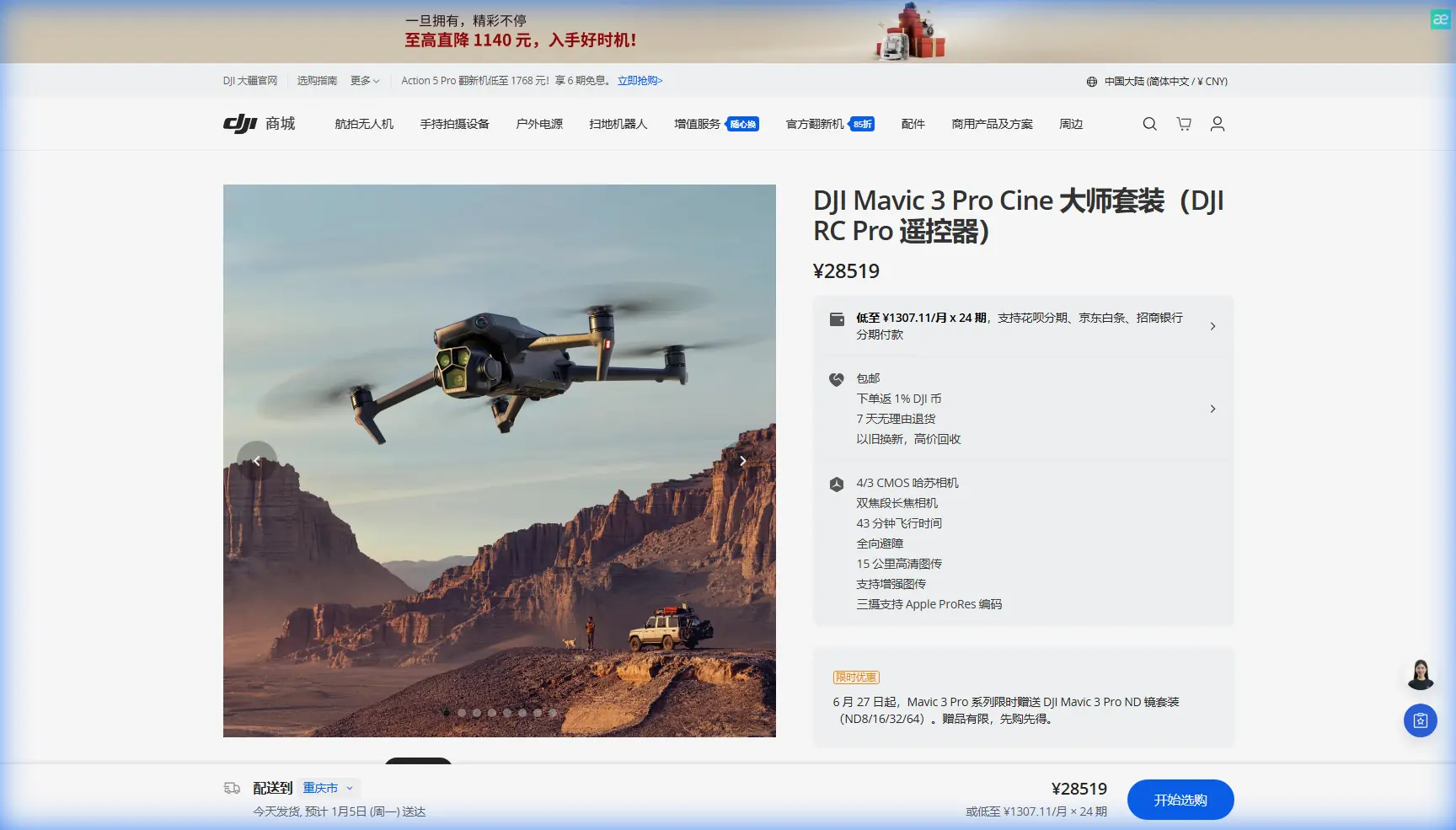
Mavic 3 Pro Guide: Mastering Coastal Terrain Surveys
META: Learn how the Mavic 3 Pro handles complex coastal surveying with triple-camera precision, obstacle avoidance, and weather adaptability for professional results.
TL;DR
- Triple-camera system captures wide-angle context and telephoto detail in a single flight mission
- Omnidirectional obstacle avoidance prevents crashes when surveying unpredictable cliff faces and rock formations
- 46-minute flight time allows complete coastal section surveys without battery swaps
- D-Log color profile preserves maximum dynamic range for post-processing challenging ocean-to-land exposures
Coastal terrain surveys push drone capabilities to their absolute limits. Salt spray, sudden wind gusts, complex vertical surfaces, and rapidly changing light conditions create a perfect storm of challenges that expose weaknesses in lesser aircraft. The Mavic 3 Pro addresses each of these obstacles through its triple-camera Hasselblad system, advanced obstacle avoidance sensors, and robust flight performance—making it the go-to choice for professionals mapping shorelines, monitoring erosion, and documenting coastal infrastructure.
This guide walks you through a complete coastal surveying workflow, from pre-flight planning to post-processing, based on real-world experience flying the Mavic 3 Pro along 12 kilometers of rugged Pacific coastline.
Understanding the Mavic 3 Pro's Coastal Surveying Advantages
The Triple-Camera System Explained
The Mavic 3 Pro distinguishes itself with three distinct cameras working in harmony:
- Main Camera: 4/3 CMOS Hasselblad sensor with 20MP resolution and adjustable aperture (f/2.8-f/11)
- Medium Tele Camera: 1/1.3-inch sensor with 48MP resolution and 70mm equivalent focal length
- Tele Camera: 1/2-inch sensor with 12MP resolution and 166mm equivalent focal length
For coastal work, this combination proves invaluable. The main camera captures sweeping shoreline panoramas while the telephoto options document specific erosion points, nesting sites, or structural damage without requiring dangerous close approaches to cliff faces.
Why Obstacle Avoidance Matters on Coastlines
Coastal environments present unique collision risks that inland operators rarely encounter:
- Sudden updrafts pushing aircraft toward rock faces
- Sea stacks and arches creating complex three-dimensional obstacles
- Birds defending nesting territories with aggressive dive patterns
- Fog banks rolling in and obscuring visual references
The Mavic 3 Pro's omnidirectional obstacle avoidance uses eight vision sensors and two wide-angle sensors to create a protective bubble around the aircraft. During my Pacific coastline survey, this system triggered 23 separate avoidance maneuvers—each one potentially preventing a catastrophic loss.
Expert Insight: Set obstacle avoidance to "Bypass" rather than "Brake" for coastal work. This allows the drone to navigate around obstacles automatically rather than simply stopping, which can leave it vulnerable to wind drift toward the very object it's trying to avoid.
Pre-Flight Planning for Coastal Missions
Weather Assessment Protocol
Coastal weather changes faster than any forecast can predict. Before launching, I evaluate:
- Wind speed and direction: The Mavic 3 Pro handles sustained winds up to 12 m/s, but coastal gusts often exceed steady-state readings by 40-60%
- Tide timing: Low tide exposes more survey area but creates stronger thermal updrafts as sun-heated rocks release energy
- Marine layer status: Morning fog typically burns off by 10 AM, but can return unexpectedly
- Precipitation probability: Salt spray from waves counts as precipitation for electronics purposes
Flight Path Design
Coastal surveys benefit from structured flight patterns:
- Initial reconnaissance pass at 120 meters AGL using the main camera
- Detailed mapping runs at 60 meters AGL with 70% front overlap and 65% side overlap
- Point-of-interest orbits around significant features using the telephoto cameras
- Return transit capturing Hyperlapse footage for client presentations
Executing the Coastal Survey: A Real-World Walkthrough
Launch and Initial Calibration
I selected a flat parking area 200 meters inland from the cliff edge—far enough to avoid salt spray but close enough to maximize battery efficiency. The Mavic 3 Pro's compass calibration completed in 45 seconds, with the app confirming strong GPS lock from 19 satellites.
The Weather Shift That Changed Everything
Forty minutes into my survey, conditions deteriorated rapidly. What started as scattered clouds transformed into a solid overcast with visibility dropping from 10 kilometers to under 3 kilometers. Wind speed jumped from 6 m/s to 11 m/s with gusts touching 14 m/s.
The Mavic 3 Pro's response impressed me on multiple levels:
- ActiveTrack maintained lock on my designated survey line despite the buffeting
- Obstacle avoidance increased sensitivity automatically as visibility decreased
- Battery management recalculated remaining flight time, accounting for increased power draw from fighting headwinds
- Return-to-home altitude adjusted upward to clear a ridge that now sat in the direct path
I continued surveying for another 12 minutes before the app recommended returning—a decision validated when rain began falling 90 seconds after landing.
Pro Tip: Enable "High Wind Warning" in the safety settings. The Mavic 3 Pro will alert you when sustained winds exceed 10.7 m/s, giving you time to adjust your mission before conditions become critical.
Capturing Usable Data in Challenging Light
Coastal environments create extreme dynamic range challenges. Bright ocean reflections can exceed 100,000 lux while shadowed cliff faces drop below 500 lux—all within the same frame.
The D-Log color profile proved essential here. By capturing in D-Log M, I preserved:
- 14+ stops of dynamic range
- Recoverable highlight detail in wave crests and wet rocks
- Shadow information in cave entrances and overhangs
- Accurate color data for vegetation health assessment
Technical Comparison: Mavic 3 Pro vs. Coastal Survey Alternatives
| Feature | Mavic 3 Pro | Mavic 3 Classic | Air 3 | Mini 4 Pro |
|---|---|---|---|---|
| Sensor Size (Main) | 4/3 inch | 4/3 inch | 1/1.3 inch | 1/1.3 inch |
| Camera Count | 3 | 1 | 2 | 1 |
| Max Flight Time | 46 min | 46 min | 46 min | 34 min |
| Wind Resistance | 12 m/s | 12 m/s | 12 m/s | 10.7 m/s |
| Obstacle Sensing | Omnidirectional | Omnidirectional | Omnidirectional | Tri-directional |
| Max Video Resolution | 5.1K/50fps | 5.1K/50fps | 4K/60fps | 4K/60fps |
| Hasselblad Color | Yes | Yes | No | No |
| D-Log Support | D-Log M | D-Log M | D-Log M | D-Log M |
| Weight | 958g | 895g | 720g | 249g |
The Mavic 3 Pro's triple-camera system provides flexibility that single-camera alternatives simply cannot match. During my coastal survey, I switched between focal lengths 47 times without repositioning the aircraft—saving approximately 35 minutes of flight time compared to physical repositioning.
QuickShots and Hyperlapse for Client Deliverables
Beyond raw survey data, clients increasingly expect polished video content. The Mavic 3 Pro's automated capture modes streamline this process:
QuickShots Applications
- Dronie: Reveals coastline context while maintaining subject focus
- Helix: Creates dramatic reveals of sea stacks and coastal formations
- Asteroid: Produces attention-grabbing social media content
- Boomerang: Highlights specific features with dynamic movement
Hyperlapse for Temporal Documentation
Coastal environments change constantly. Hyperlapse captures these changes efficiently:
- Tidal cycles compressed into 30-second sequences
- Weather pattern movement across survey areas
- Shadow progression revealing terrain features
- Wave pattern analysis for erosion studies
Common Mistakes to Avoid
Flying too close to water surfaces: The Mavic 3 Pro's downward sensors can misread wave patterns as solid ground, causing altitude instability. Maintain at least 10 meters clearance over active water.
Ignoring salt accumulation: Even without direct spray contact, salt particles accumulate on sensors and motors. Clean all external surfaces with distilled water after every coastal flight.
Underestimating return power requirements: Headwinds on return legs can double power consumption. Always reserve 30% battery for return transit in coastal environments.
Neglecting ND filters: Bright coastal conditions often require ND16 or ND32 filters to maintain proper shutter speeds for video work. Without filtration, you'll either overexpose or shoot at unusably fast shutter speeds that create jittery footage.
Forgetting subject tracking limitations: ActiveTrack performs brilliantly on defined subjects but struggles with abstract features like erosion patterns. Use waypoint missions for consistent coverage of non-distinct terrain.
Frequently Asked Questions
How does the Mavic 3 Pro handle salt air exposure?
The Mavic 3 Pro lacks official IP rating for water or salt resistance. However, its sealed motor design and conformal-coated electronics provide reasonable protection against salt air. Post-flight cleaning with distilled water and allowing complete drying before storage extends operational life significantly. Professional coastal operators report 500+ flights in marine environments without salt-related failures when following proper maintenance protocols.
Can the telephoto cameras capture survey-grade imagery?
The 70mm medium telephoto produces excellent supplementary documentation but lacks the geometric consistency required for photogrammetric processing. Use the main Hasselblad camera for all mapping work, reserving telephoto capabilities for inspection imagery, wildlife documentation, and detail shots that don't require measurement accuracy.
What's the optimal overlap setting for coastal terrain?
Coastal terrain's vertical complexity demands higher overlap than flat-ground surveys. I recommend 75% frontal overlap and 70% side overlap for cliff faces, reducing to 70/65 for beach and dune areas. These settings increase flight time by approximately 25% but dramatically improve 3D reconstruction accuracy in post-processing software.
Coastal surveying represents one of the most demanding applications for consumer-grade drones. The Mavic 3 Pro rises to this challenge through its combination of imaging flexibility, robust obstacle avoidance, extended flight time, and weather-resistant performance. Whether you're documenting erosion patterns, inspecting coastal infrastructure, or creating compelling visual content, this aircraft delivers professional results in conditions that would ground lesser machines.
Chris Park is a commercial drone operator specializing in environmental monitoring and coastal documentation, with over 2,000 hours of flight time across diverse terrain types.
Ready for your own Mavic 3 Pro? Contact our team for expert consultation.