
Mavic 3 Pro Guide: Scouting High-Altitude Venues
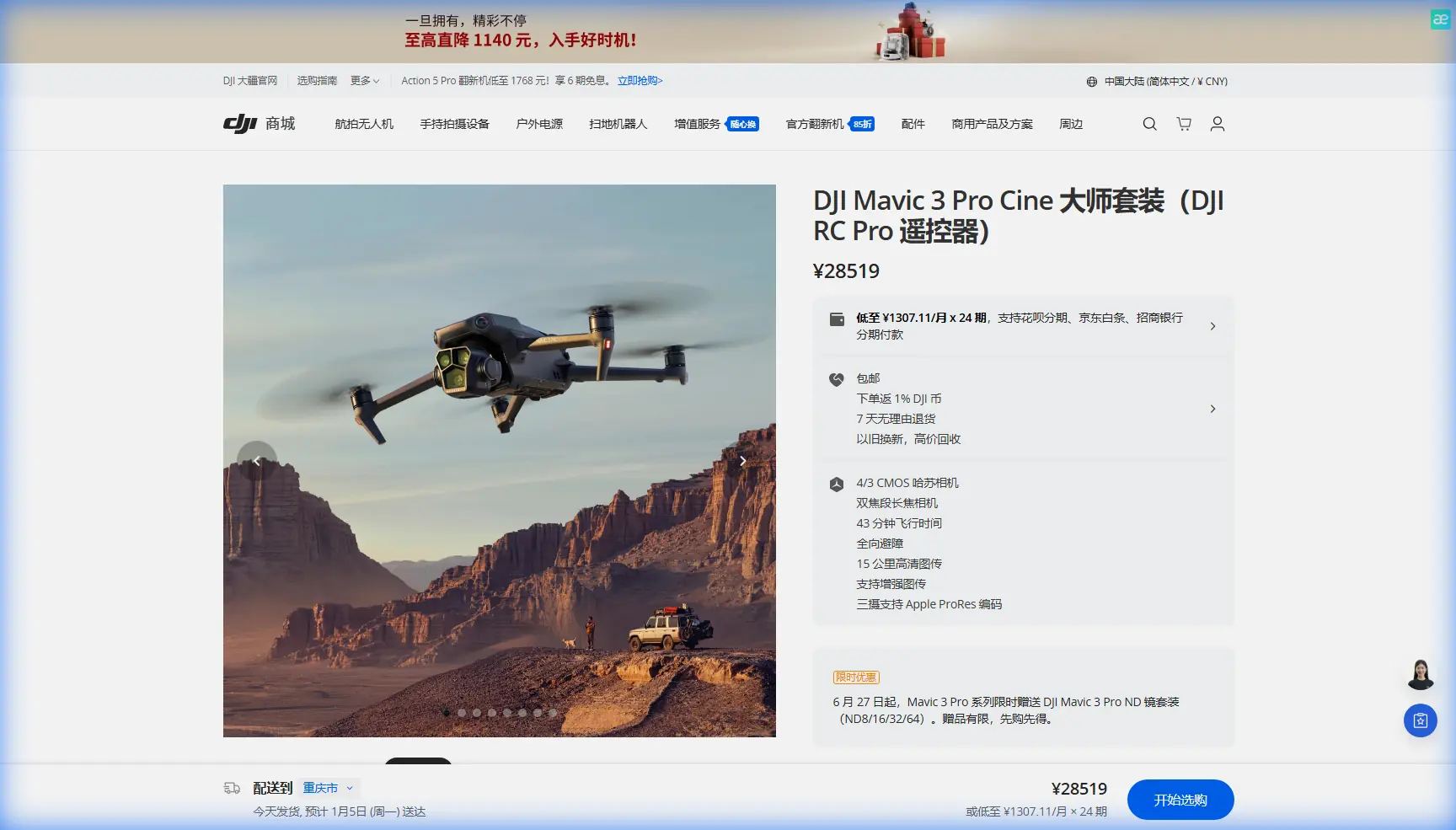
Mavic 3 Pro Guide: Scouting High-Altitude Venues
META: Master high-altitude venue scouting with the Mavic 3 Pro. Learn expert techniques for obstacle avoidance, subject tracking, and capturing stunning footage above 10,000 feet.
By Chris Park, Creator
TL;DR
- The Mavic 3 Pro's triple-camera system and omnidirectional obstacle avoidance make it the ideal tool for scouting venues at elevations exceeding 10,000 feet
- D-Log color profile preserves critical shadow and highlight detail in harsh alpine lighting conditions
- ActiveTrack 5.0 maintains subject lock even when atmospheric haze reduces visibility
- Battery performance drops approximately 20-30% at high altitude—plan flights accordingly
Why High-Altitude Venue Scouting Demands Specialized Equipment
Scouting mountain venues, alpine wedding locations, or elevated event spaces presents challenges that ground-level photography simply cannot address. The Mavic 3 Pro solves three critical problems: accessing perspectives impossible to reach on foot, navigating unpredictable terrain obstacles, and capturing usable footage in rapidly changing light conditions.
Last month, while scouting a corporate retreat venue at 11,200 feet in the Colorado Rockies, the Mavic 3 Pro's forward-facing obstacle sensors detected a golden eagle diving across my flight path. The drone executed an automatic hover, preventing what could have been a catastrophic mid-air collision. That single moment justified every feature I'll break down in this guide.
Understanding the Mavic 3 Pro's High-Altitude Capabilities
The Triple-Camera Advantage
The Mavic 3 Pro houses three distinct cameras that transform venue scouting workflows:
- Main Camera: 4/3 CMOS Hasselblad sensor with 12.8 stops of dynamic range
- Medium Tele Camera: 70mm equivalent focal length for architectural detail shots
- Tele Camera: 166mm equivalent for distant terrain assessment
This configuration eliminates the need for multiple flights or lens changes. During a single battery cycle, you can capture wide establishing shots, medium-range venue layouts, and telephoto details of access roads or parking areas.
Obstacle Avoidance at Altitude
The omnidirectional obstacle avoidance system uses eight sensors covering forward, backward, lateral, upward, and downward directions. At high altitude, this becomes essential for three reasons:
- Reduced air density affects flight stability, making precise manual control more difficult
- Unexpected wildlife encounters increase in remote alpine environments
- Terrain features like rock outcroppings can appear suddenly when navigating valleys
Expert Insight: Set your obstacle avoidance to "Bypass" mode rather than "Brake" when scouting venues. This allows the drone to navigate around obstacles automatically while maintaining forward momentum, preserving battery life and keeping your footage smooth.
Pre-Flight Preparation for High-Altitude Operations
Calibrating for Thin Air
Before launching above 8,000 feet, complete these essential steps:
- Update firmware to the latest version—DJI regularly optimizes motor algorithms for altitude performance
- Calibrate the IMU at your launch elevation, not at sea level
- Check propeller condition—micro-cracks become critical failure points when motors work harder in thin air
- Reduce maximum speed settings by 15-20% to compensate for decreased lift efficiency
Battery Management Strategy
Lithium-polymer batteries deliver reduced performance in cold, high-altitude environments. The Mavic 3 Pro's 46-minute maximum flight time drops to approximately 32-36 minutes at elevations above 10,000 feet.
Implement this battery protocol:
- Warm batteries to 25°C (77°F) before flight using body heat or vehicle heating
- Plan flights for no more than 70% of displayed battery capacity
- Land immediately if battery temperature drops below 15°C (59°F)
- Carry minimum three fully charged batteries for comprehensive venue coverage
Shooting Techniques for Venue Documentation
Leveraging D-Log for Maximum Flexibility
High-altitude light presents extreme contrast challenges. Snow-covered terrain reflects intense sunlight while shadowed valleys fall into near-darkness. The Mavic 3 Pro's D-Log M color profile captures over 1 billion colors and preserves detail across this entire range.
Configure these settings for optimal D-Log capture:
- ISO: Keep between 100-400 to minimize noise
- Shutter Speed: Use double your frame rate (1/60 for 30fps, 1/120 for 60fps)
- ND Filters: Essential at altitude—start with ND16 and adjust based on conditions
- White Balance: Set manually to 5600K for consistency across clips
Pro Tip: When scouting venues for clients, capture both D-Log footage for final delivery and standard color profile clips for quick preview sharing. The Mavic 3 Pro's storage capacity handles both workflows easily.
QuickShots for Efficient Coverage
QuickShots automate complex camera movements, allowing you to focus on composition rather than stick inputs. For venue scouting, prioritize these modes:
| QuickShot Mode | Best Use Case | Duration |
|---|---|---|
| Dronie | Establishing shots showing venue in landscape context | 15-30 seconds |
| Circle | 360-degree venue perimeter documentation | 30-60 seconds |
| Helix | Dramatic reveals of architectural features | 20-40 seconds |
| Rocket | Vertical perspective showing venue layout | 10-20 seconds |
| Boomerang | Dynamic shots for marketing materials | 15-25 seconds |
Hyperlapse for Time-Compressed Documentation
Venue scouting often requires demonstrating how light moves across a space throughout the day. The Mavic 3 Pro's Hyperlapse modes compress hours into seconds:
- Free Mode: Full manual control over flight path
- Circle Mode: Orbits a fixed point while capturing time-lapse
- Course Lock Mode: Maintains heading while you control position
- Waypoint Mode: Repeats exact flight paths for consistent multi-day captures
For high-altitude work, Waypoint Mode proves invaluable. Program your flight path once, then repeat it at sunrise, midday, and sunset to show clients exactly how their venue transforms.
Advanced Subject Tracking for Dynamic Scouting
ActiveTrack 5.0 Performance
The Mavic 3 Pro's ActiveTrack system uses machine learning algorithms to maintain subject lock through complex environments. When scouting venues, this feature serves multiple purposes:
- Following access roads to document approach routes
- Tracking vehicles to demonstrate parking logistics
- Maintaining focus on guides walking through venue spaces
At high altitude, atmospheric haze can confuse tracking systems. Maximize ActiveTrack reliability by:
- Selecting subjects with high contrast against backgrounds
- Avoiding tracking during peak sun hours when haze intensifies
- Using the Spotlight mode for stationary subjects rather than full tracking
Combining Tracking with Obstacle Avoidance
The Mavic 3 Pro processes tracking and obstacle avoidance simultaneously through its dedicated vision processing unit. This dual-system approach prevented disaster during my Colorado scouting mission.
While tracking a trail leading to a mountain venue, the drone maintained perfect subject lock while simultaneously detecting and avoiding a low-hanging pine branch that had fallen across the flight path. No manual intervention required.
Technical Comparison: Mavic 3 Pro vs. Alternative Platforms
| Feature | Mavic 3 Pro | Mavic 3 Classic | Air 3 |
|---|---|---|---|
| Camera Systems | Triple (3) | Single (1) | Dual (2) |
| Max Flight Time | 43 minutes | 46 minutes | 46 minutes |
| Obstacle Sensing | Omnidirectional | Omnidirectional | Omnidirectional |
| Max Transmission Range | 15 km | 15 km | 20 km |
| Video Resolution | 5.1K/50fps | 5.1K/50fps | 4K/100fps |
| Hasselblad Color Science | Yes | Yes | No |
| Aperture Range | f/2.8-f/11 | f/2.8-f/11 | f/1.7 (fixed) |
| Weight | 958g | 895g | 720g |
The Mavic 3 Pro's triple-camera system provides the versatility essential for comprehensive venue documentation without sacrificing flight performance.
Common Mistakes to Avoid
Launching without altitude calibration: Your drone's altimeter reads relative to launch point. At high elevation, this can cause significant errors in automated return-to-home altitude settings.
Ignoring wind speed at altitude: Ground-level conditions rarely reflect conditions at 100-400 feet AGL. The Mavic 3 Pro handles winds up to 12 m/s, but high-altitude gusts frequently exceed this threshold.
Overrelying on automated modes: QuickShots and ActiveTrack work brilliantly, but they cannot replace intentional composition. Use automation to execute movements while you focus on framing.
Neglecting audio documentation: The Mavic 3 Pro captures ambient audio. For venue scouting, this provides valuable information about noise levels, traffic patterns, and environmental sounds clients need to consider.
Failing to capture redundant footage: Memory is cheap. Capture every shot at least twice. High-altitude conditions introduce variables that may not be apparent until post-production review.
Frequently Asked Questions
What is the maximum operating altitude for the Mavic 3 Pro?
The Mavic 3 Pro can operate at elevations up to 6,000 meters (19,685 feet) above sea level. However, performance degrades progressively above 4,000 meters (13,123 feet). For venue scouting between 10,000-14,000 feet, expect approximately 25-30% reduction in flight time and slightly decreased maneuverability.
How does cold temperature affect high-altitude flights?
Cold temperatures compound altitude challenges. Below 10°C (50°F), battery capacity drops significantly. The Mavic 3 Pro's intelligent battery system will display warnings when temperatures fall outside optimal ranges. Always pre-warm batteries and monitor temperature readings throughout your flight.
Can I use all three cameras simultaneously during flight?
You cannot record from all three cameras simultaneously, but switching between them during flight is instantaneous. The Mavic 3 Pro's controller interface allows one-tap camera switching, making it practical to capture wide, medium, and telephoto perspectives within a single flight pattern.
Elevate Your Venue Scouting Workflow
High-altitude venue scouting demands equipment that performs when conditions challenge every system. The Mavic 3 Pro's combination of triple-camera versatility, omnidirectional obstacle avoidance, and intelligent tracking features creates a platform purpose-built for this demanding application.
Master the techniques outlined in this guide, respect the environmental challenges unique to elevated operations, and you'll deliver venue documentation that ground-based methods simply cannot match.
Ready for your own Mavic 3 Pro? Contact our team for expert consultation.