
Mavic 3 Pro Power Line Inspection Mastery Guide
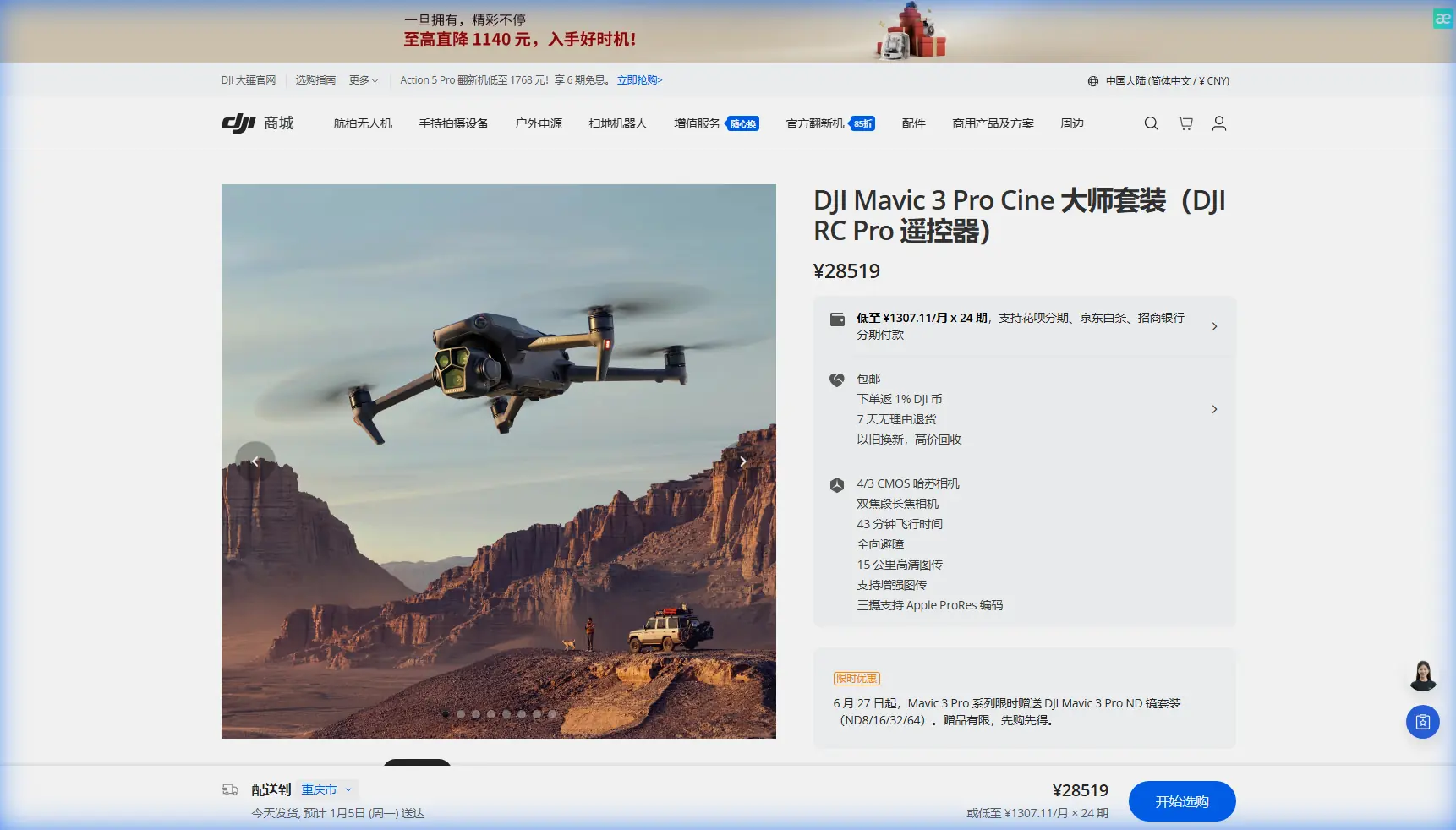
Mavic 3 Pro Power Line Inspection Mastery Guide
META: Master power line inspections with Mavic 3 Pro. Learn expert scouting techniques, obstacle avoidance tips, and workflow optimization for remote infrastructure surveys.
TL;DR
- Triple-camera system enables simultaneous wide-angle mapping and telephoto detail capture for comprehensive power line documentation
- APAS 5.0 obstacle avoidance provides omnidirectional safety when navigating complex tower structures and cable arrays
- 46-minute flight time covers up to 8 kilometers of power lines in a single battery cycle
- D-Log color profile preserves maximum dynamic range for identifying corrosion, damage, and vegetation encroachment
Last summer, I spent three frustrating days in Montana's backcountry trying to document a 12-kilometer stretch of aging power infrastructure. My previous drone couldn't handle the altitude, the wind kept triggering false obstacle warnings, and I burned through batteries faster than I could swap them. When the utility company hired me again this spring, I brought the Mavic 3 Pro—and finished the entire survey in a single afternoon.
This guide breaks down exactly how I transformed my power line inspection workflow using the Mavic 3 Pro's advanced capabilities. You'll learn specific camera configurations, flight patterns, and post-processing techniques that professional infrastructure photographers use daily.
Why Power Line Inspection Demands Professional-Grade Equipment
Remote power line corridors present unique challenges that consumer drones simply cannot address. You're dealing with electromagnetic interference from high-voltage cables, unpredictable wind patterns in mountain passes, and the constant threat of collision with guy wires that cameras struggle to detect.
The Mavic 3 Pro addresses these challenges through its Hasselblad triple-camera array. The primary 4/3 CMOS sensor captures 20MP stills with exceptional dynamic range, while the 166mm telephoto lens (equivalent) allows detailed inspection from safe distances.
Expert Insight: When scouting power lines, maintain a minimum horizontal distance of 30 meters from conductors. The Mavic 3 Pro's telephoto camera delivers publication-quality detail at this range without risking electromagnetic interference with your drone's compass system.
Essential Camera Configuration for Infrastructure Documentation
Primary Camera Settings
Before launching, configure your Hasselblad main camera for maximum flexibility in post-processing:
- Shooting mode: RAW + JPEG (DNG files preserve highlight detail in reflective insulators)
- Color profile: D-Log for video, Normal for reference stills
- ISO range: Lock between 100-400 to minimize noise in shadow areas
- Shutter speed: Minimum 1/500s to eliminate motion blur from wind movement
- Aperture: f/4.0-f/5.6 for optimal sharpness across the frame
The D-Log profile captures approximately 12.8 stops of dynamic range, critical when shooting metallic infrastructure against bright sky backgrounds. Without this headroom, you'll lose detail in either the cables or the cloud formations behind them.
Telephoto Lens Deployment
The 70mm medium telephoto and 166mm full telephoto lenses transform how you document specific components:
| Inspection Target | Recommended Lens | Working Distance | Effective Resolution |
|---|---|---|---|
| Full tower structure | 24mm (wide) | 50-80m | Context mapping |
| Insulator chains | 70mm (medium) | 30-50m | Component identification |
| Conductor splices | 166mm (telephoto) | 40-60m | Damage assessment |
| Vegetation clearance | 24mm (wide) | 30-40m | Corridor overview |
| Hardware corrosion | 166mm (telephoto) | 35-45m | Detail documentation |
Mastering Obstacle Avoidance in Complex Environments
The Mavic 3 Pro's APAS 5.0 system uses omnidirectional sensors to detect obstacles in all directions. However, power line environments require specific configuration adjustments.
Recommended APAS Settings
For infrastructure work, I configure obstacle avoidance as follows:
- Horizontal obstacle avoidance: Bypass mode (allows controlled proximity)
- Downward vision: Always enabled
- Braking distance: Maximum setting
- Return-to-home altitude: Set 50 meters above highest structure in survey area
Guy wires present the greatest collision risk. These thin cables often fall below the detection threshold of vision sensors, especially against complex backgrounds. Always perform a visual scan of each tower before approaching.
Pro Tip: Create a pre-flight checklist specific to each tower type. Lattice towers typically have 4-8 guy wires, while monopoles may have none. Knowing the structure before you fly prevents dangerous surprises.
Flight Patterns for Comprehensive Coverage
The Orbital Documentation Method
For individual tower inspection, I use a modified orbital pattern that captures every angle:
- Establish safe altitude at 15 meters above tower peak
- Begin circular orbit at 40-meter radius using ActiveTrack on tower center
- Capture wide shots every 45 degrees (8 positions total)
- Descend in spiral to insulator level, maintaining radius
- Switch to telephoto for component-specific documentation
- Document base hardware from 20-meter altitude at 30-meter distance
This pattern generates approximately 40-60 images per tower, providing complete documentation for engineering review.
Linear Corridor Surveys
For extended power line runs, the Mavic 3 Pro's Hyperlapse function creates time-efficient documentation:
- Mode: Waypoint Hyperlapse
- Interval: 2-second capture rate
- Flight speed: 5-8 m/s for sharp imagery
- Altitude: 20-30 meters above conductor height
- Offset: 25-40 meters lateral distance from line
This configuration produces both video documentation and extractable still frames for detailed analysis.
Leveraging Subject Tracking for Dynamic Inspection
ActiveTrack 5.0 enables hands-free documentation while you focus on visual assessment. The system recognizes and follows structural elements with impressive accuracy.
Effective Tracking Targets
- Tower silhouettes: High contrast against sky provides reliable tracking
- Transformer housings: Distinct geometric shapes maintain lock
- Access roads: Following maintenance paths reveals corridor condition
Avoid tracking individual cables—the system struggles with thin linear elements against variable backgrounds.
QuickShots for Standardized Documentation
While QuickShots seem oriented toward creative content, several modes serve practical inspection purposes:
- Circle: Automated orbital documentation of individual structures
- Helix: Ascending spiral reveals vertical component relationships
- Rocket: Rapid altitude gain for corridor overview shots
These automated sequences ensure consistent documentation across multiple sites, simplifying comparative analysis.
Post-Processing Workflow for D-Log Footage
D-Log footage requires color grading before delivery. My standard workflow:
- Import to DaVinci Resolve with DJI LUT applied
- Adjust exposure to reveal shadow detail in structural elements
- Increase contrast selectively in midtones
- Sharpen at 40-60% for cable definition
- Export at original resolution with minimal compression
For still images, Adobe Lightroom's Hasselblad camera profiles provide excellent starting points for color accuracy.
Common Mistakes to Avoid
Flying too close to conductors: Electromagnetic fields can corrupt compass data, causing erratic flight behavior. Maintain minimum 30-meter horizontal clearance from energized lines.
Ignoring wind patterns: Mountain corridors create unpredictable gusts. The Mavic 3 Pro handles 12 m/s winds, but turbulence near towers can exceed this. Monitor real-time wind data in the DJI Fly app.
Relying solely on obstacle avoidance: Guy wires, bird diverters, and fiber optic cables often escape sensor detection. Visual confirmation remains essential before every approach.
Underestimating battery consumption: Cold temperatures and high altitudes reduce effective flight time by 15-25%. Plan for 35 minutes maximum in challenging conditions, not the rated 46 minutes.
Neglecting compass calibration: Power infrastructure creates localized magnetic anomalies. Calibrate at least 100 meters from any tower or substation before each flight session.
Frequently Asked Questions
Can the Mavic 3 Pro operate safely near high-voltage power lines?
Yes, when proper distances are maintained. The drone's electronics are shielded against typical electromagnetic interference, but compass accuracy degrades within 20 meters of high-voltage conductors. Professional operators maintain 30-meter minimum clearance and calibrate away from infrastructure.
How many towers can I inspect on a single battery?
Under optimal conditions, expect to document 8-12 towers per battery when using efficient orbital patterns. This assumes 200-meter spacing between structures and 3-5 minutes of hover time per tower. Cold weather or aggressive maneuvering reduces this significantly.
Is the telephoto camera sharp enough for damage assessment?
The 166mm equivalent telephoto resolves details as small as 5mm from 40 meters distance. This proves sufficient for identifying cracked insulators, frayed conductors, and hardware corrosion. For microscopic analysis, the imagery guides ground crews to specific components requiring hands-on inspection.
The Mavic 3 Pro transformed my infrastructure photography from a multi-day ordeal into a streamlined professional service. The combination of extended flight time, triple-camera versatility, and reliable obstacle avoidance creates a platform genuinely suited for demanding field work.
Ready for your own Mavic 3 Pro? Contact our team for expert consultation.