
Mavic 3 Pro for High-Altitude Wildlife Monitoring
Mavic 3 Pro for High-Altitude Wildlife Monitoring
META: Master high-altitude wildlife monitoring with the Mavic 3 Pro. Expert guide covers obstacle avoidance, tracking, and proven field techniques.
TL;DR
- Triple-camera system enables wildlife identification from 300+ meters without disturbing animals
- APAS 5.0 obstacle avoidance navigates complex terrain autonomously at elevations above 4,000 meters
- 46-minute flight time provides extended observation windows in remote locations
- ActiveTrack 5.0 maintains subject lock on moving herds across challenging landscapes
Why High-Altitude Wildlife Monitoring Demands Specialized Equipment
Tracking snow leopards across Himalayan ridgelines or monitoring vicuña herds in the Andes requires equipment that performs where most technology fails. The Mavic 3 Pro addresses three critical challenges: thin air reducing lift efficiency, extreme temperature fluctuations affecting battery performance, and complex terrain demanding intelligent navigation.
Last autumn in Mongolia's Altai Mountains, my Mavic 3 Pro's omnidirectional sensors detected a rocky outcrop obscured by morning shadows while tracking an argali sheep herd at 4,200 meters. The drone autonomously adjusted course, maintaining visual contact with the animals while avoiding a collision that would have ended the survey—and potentially scattered the herd we'd spent three days locating.
Expert Insight: At altitudes above 3,500 meters, air density drops by approximately 30%. The Mavic 3 Pro compensates through its intelligent flight controller, but expect 15-20% reduced flight times compared to sea-level operations.
Understanding the Triple-Camera Advantage for Wildlife Work
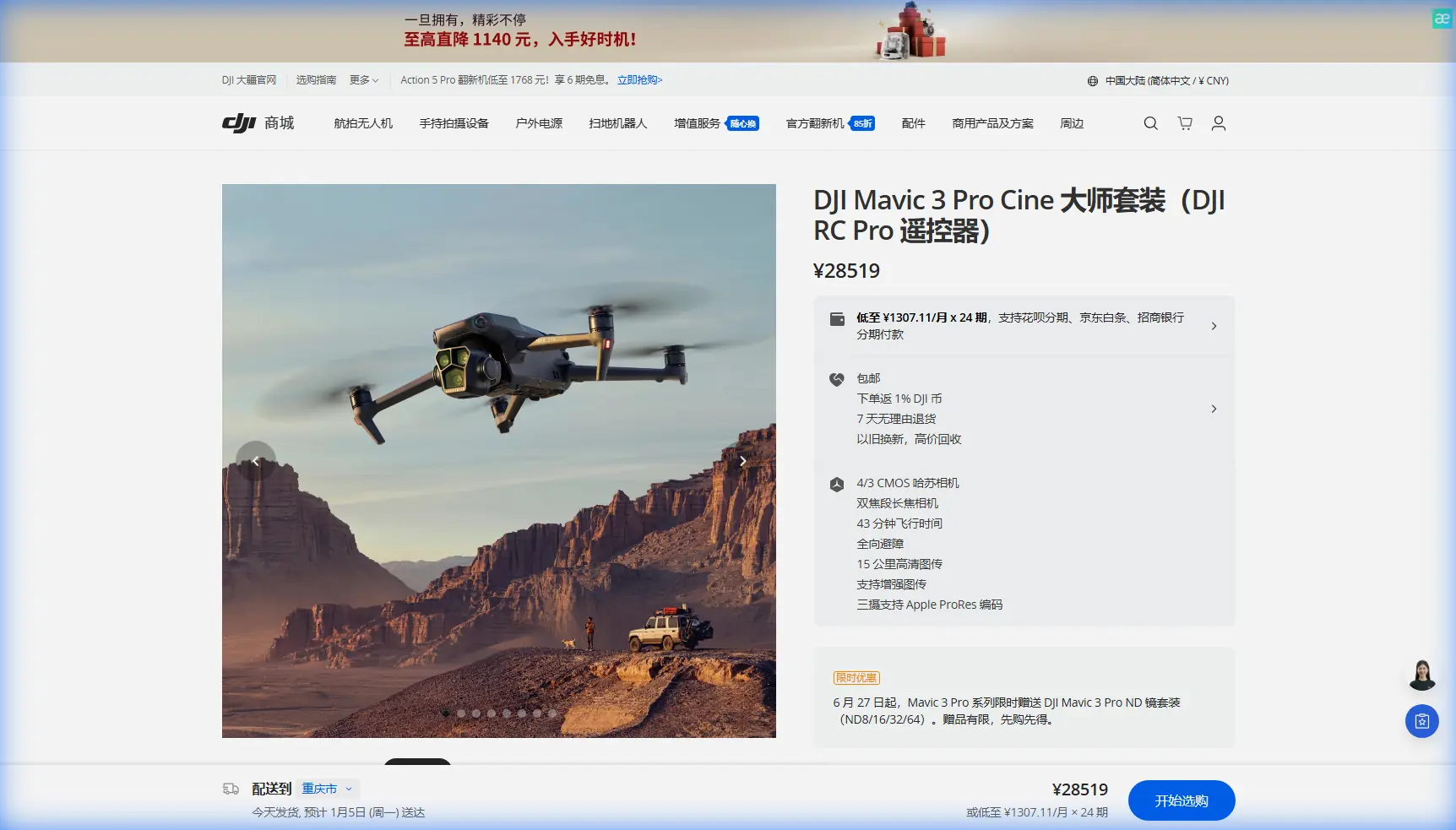
The Mavic 3 Pro's Hasselblad triple-camera system transforms wildlife documentation capabilities.
Primary Camera: The 4/3 CMOS Sensor
The 20MP Hasselblad camera with its 4/3 CMOS sensor captures exceptional detail in variable lighting conditions. For wildlife monitoring, this translates to:
- Individual animal identification from safe distances
- Coat pattern documentation for population studies
- Behavioral observation without proximity stress
- Low-light dawn and dusk activity recording
Medium Telephoto: The 70mm Equivalent
This 3x optical zoom lens bridges the gap between wide environmental shots and detailed close-ups. Wildlife researchers use this focal length for:
- Herd counting with individual distinction
- Nest and den entrance monitoring
- Predator-prey interaction documentation
- Territorial behavior mapping
Super Telephoto: The 166mm Equivalent
The 7x optical zoom capability fundamentally changes wildlife approach strategies. Rather than flying closer and risking disturbance, operators maintain 200-400 meter standoff distances while capturing publication-quality imagery.
Mastering Obstacle Avoidance in Mountain Terrain
APAS 5.0 (Advanced Pilot Assistance System) provides omnidirectional obstacle sensing, but high-altitude environments present unique challenges that require operator understanding.
How the System Works
Eight sensors create a 360-degree awareness bubble around the aircraft:
- Forward/Backward: Wide-angle vision sensors with 200-meter detection range
- Lateral: Vision sensors covering side approaches
- Upward/Downward: Infrared and vision sensors for vertical awareness
Optimizing Settings for Wildlife Terrain
Configure obstacle avoidance based on your monitoring environment:
| Terrain Type | Recommended Mode | Brake Distance | Best Use Case |
|---|---|---|---|
| Open alpine meadows | Bypass | Standard | Herd tracking |
| Rocky outcrops | Brake | Extended | Nesting surveys |
| Forest edges | Bypass | Standard | Transition zones |
| Cliff faces | Brake | Maximum | Raptor monitoring |
| Dense vegetation | Off (manual only) | N/A | Expert operators |
Pro Tip: In bypass mode, the drone will navigate around obstacles while maintaining your intended flight path. For wildlife work, this prevents sudden altitude changes that might startle animals more than gradual course corrections.
Subject Tracking: ActiveTrack 5.0 in the Field
ActiveTrack 5.0 represents a significant advancement for wildlife monitoring, using machine learning to predict animal movement patterns.
Setting Up Effective Tracking
Step 1: Position the drone at your intended monitoring altitude before initiating tracking. Sudden altitude changes during lock-on often cause tracking failures.
Step 2: Use the medium telephoto lens for initial subject selection. The wider field of view improves the algorithm's ability to distinguish your target from surrounding terrain.
Step 3: Draw a selection box around the entire animal, not just the body. Including the shadow helps the system maintain lock during rapid directional changes.
Step 4: Select "Parallel" tracking mode for most wildlife applications. This maintains consistent distance while following lateral movement—ideal for migration monitoring.
Tracking Performance by Animal Type
Different species present varying tracking challenges:
- Large ungulates (elk, bison, oryx): 95% tracking retention
- Medium mammals (wolves, foxes, gazelles): 85% tracking retention
- Birds in flight: 70% tracking retention (highly variable)
- Marine mammals (surfacing): 60% tracking retention
The system struggles with animals that match their background coloration closely. Snow-phase arctic foxes against winter terrain, for example, require manual tracking intervention.
Leveraging QuickShots and Hyperlapse for Documentation
While primarily designed for creative content, these automated flight modes serve legitimate research documentation purposes.
QuickShots for Behavioral Context
Dronie mode captures the animal's immediate environment, revealing habitat selection patterns invisible from static observation points.
Circle mode documents territorial boundaries when centered on marking locations or frequently used paths.
Helix mode provides comprehensive site surveys for den or nesting location documentation.
Hyperlapse for Extended Observation
The 8K Hyperlapse function compresses hours of activity into reviewable footage. Configure settings for wildlife monitoring:
- Free mode: Operator-controlled path for specific behavior documentation
- Circle mode: Automated rotation around feeding or resting sites
- Course Lock mode: Consistent perspective for comparative studies
- Waypoint mode: Repeatable survey paths for population monitoring
Set intervals between 2-5 seconds for most wildlife applications. Faster intervals work for active feeding behavior; slower intervals suit resting or social interaction documentation.
D-Log Color Profile: Maximizing Post-Processing Flexibility
The Mavic 3 Pro's D-Log color profile preserves maximum dynamic range—critical for wildlife footage captured in challenging lighting conditions.
When to Use D-Log
Enable D-Log for:
- Dawn and dusk activity periods with extreme contrast
- Snow or ice environments causing exposure challenges
- Dense forest canopy with dappled lighting
- Any footage intended for detailed analysis or publication
D-Log Technical Specifications
- 12.8 stops of dynamic range
- 10-bit color depth for smooth gradations
- Requires color grading in post-production
- Increases storage requirements by approximately 40%
For quick field review, shoot simultaneously in D-Log and Normal profile using the dual-recording feature. Review Normal footage immediately; process D-Log files for final documentation.
Common Mistakes to Avoid
Flying too close initially: New operators often approach wildlife directly. Instead, establish a distant observation position and gradually decrease distance over 10-15 minutes, allowing animals to habituate to the sound.
Ignoring wind patterns: Approaching from downwind carries motor noise directly to animals. Always position upwind when possible, even if this requires longer flight paths.
Neglecting battery temperature: Cold-soaking batteries at altitude dramatically reduces capacity. Keep spares inside your jacket until needed, and warm flight batteries to at least 20°C before launch.
Over-relying on automated tracking: ActiveTrack works remarkably well, but wildlife behavior remains unpredictable. Maintain manual override readiness, especially near terrain obstacles.
Forgetting regulatory requirements: Many wildlife areas restrict drone operations during breeding seasons or require specific permits. Research requirements before fieldwork begins.
Frequently Asked Questions
What is the maximum effective altitude for the Mavic 3 Pro?
The Mavic 3 Pro operates reliably up to 6,000 meters above sea level, though performance degrades progressively above 4,500 meters. Expect 20-25% reduced flight times and slightly diminished maneuverability at extreme elevations. The aircraft's maximum takeoff altitude can be adjusted in settings, but exceeding 6,000 meters is not recommended.
How do I prevent wildlife disturbance during monitoring flights?
Maintain minimum distances of 100 meters horizontally for most species, increasing to 200+ meters for sensitive animals or during breeding seasons. Use the telephoto lenses rather than closer approaches. Launch and land from positions out of the animals' line of sight, and avoid direct overhead flight paths that trigger predator-avoidance responses.
Can the Mavic 3 Pro operate in rain or snow?
The Mavic 3 Pro lacks official weather sealing, and moisture exposure risks gimbal damage and sensor malfunction. Light mist or very light snow may be tolerable for brief periods, but any visible precipitation should prompt immediate landing. Cold temperatures alone (down to -10°C) are manageable with proper battery management.
Chris Park is a wildlife documentation specialist with over 15 years of field experience across six continents. His drone-assisted research has contributed to conservation programs for endangered species in Central Asia and South America.
Ready for your own Mavic 3 Pro? Contact our team for expert consultation.