
How to Monitor Urban Venues with the Mavic 3 Pro
How to Monitor Urban Venues with the Mavic 3 Pro
META: Learn how the DJI Mavic 3 Pro transforms urban venue monitoring with triple-camera precision, obstacle avoidance, and ActiveTrack for professionals.
By Jessica Brown | Aerial Photographer & Drone Operations Specialist
TL;DR
- The Mavic 3 Pro's triple-camera system enables simultaneous wide-angle overview and telephoto detail capture for comprehensive urban venue monitoring
- Optimal flight altitude of 60–80 meters delivers the best balance of coverage area and subject detail for most urban venue scenarios
- Omnidirectional obstacle avoidance makes it the safest choice for complex urban environments with buildings, cables, and crowds
- ActiveTrack 5.0 and Hyperlapse modes automate repetitive monitoring tasks, reducing pilot fatigue and increasing data consistency
Why Urban Venue Monitoring Demands a Multi-Camera Drone
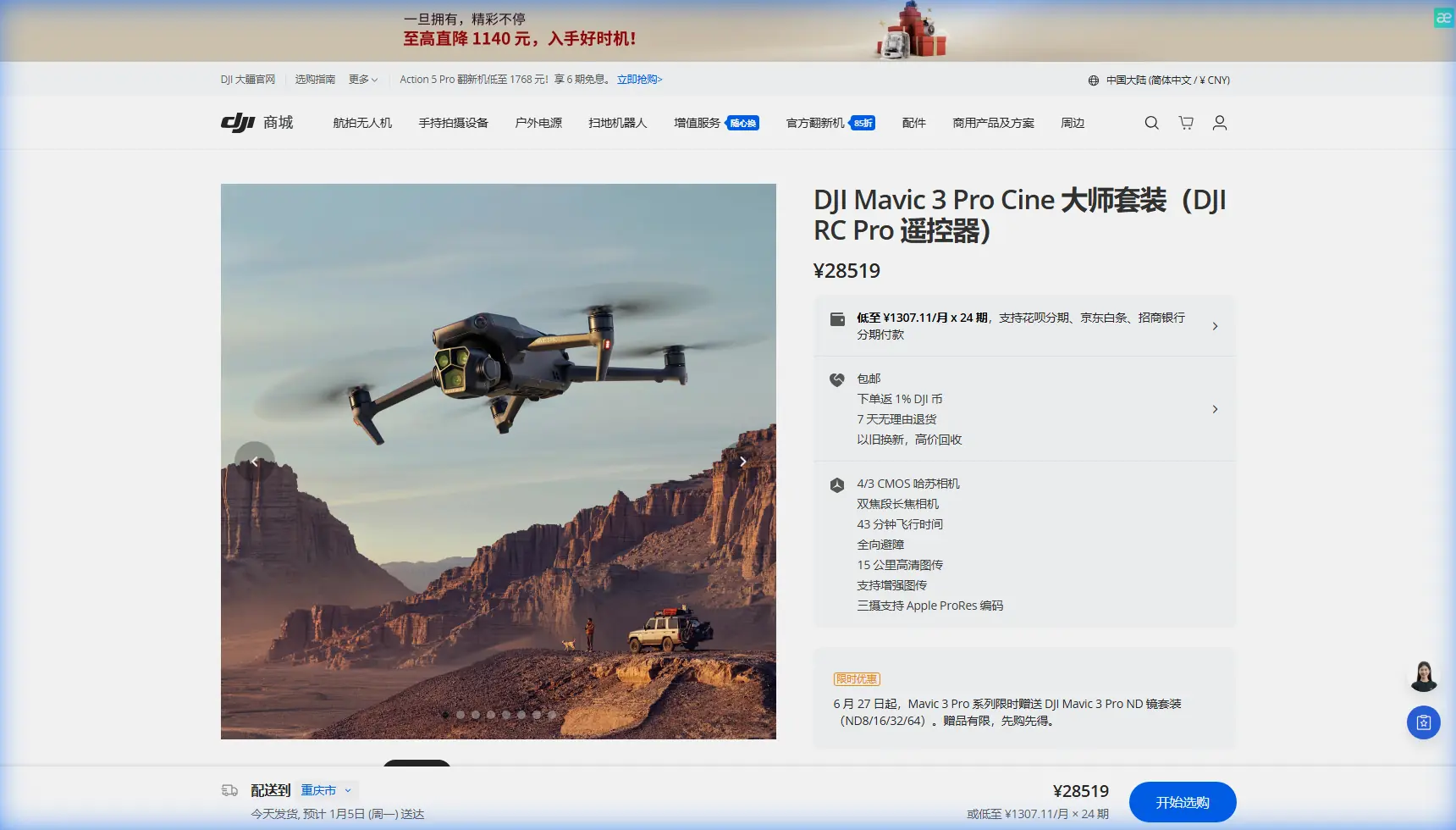
Urban venue monitoring is one of the most demanding applications for any drone operator. You need wide situational awareness, the ability to zoom into specific zones, and the confidence to fly safely near buildings, crowds, and infrastructure. The Mavic 3 Pro is the first DJI drone to pack three distinct cameras into a foldable airframe—and that changes everything about how professionals approach this scenario.
Whether you're documenting event logistics at an outdoor concert, surveying crowd density at a festival, or providing real-time security overwatch for a stadium, this technical review breaks down exactly how the Mavic 3 Pro performs and where it excels.
The Triple-Camera Advantage for Venue Coverage
Hasselblad Main Camera: The Wide View
The primary 4/3 CMOS Hasselblad camera offers a 24mm equivalent focal length with a 20 MP sensor. For urban venue monitoring, this is your establishing shot—the lens that captures the full scope of the venue, surrounding streets, entry and exit points, and overall crowd patterns.
Shooting in D-Log color profile is critical here. D-Log preserves up to 12.8 stops of dynamic range, which matters enormously when you're filming a sunlit open-air venue next to shadowed alleyways. You retain detail in both highlights and shadows, giving your post-production team maximum flexibility.
Medium Tele Camera: The Sweet Spot
The 70mm equivalent medium telephoto camera is arguably the most useful lens for venue monitoring work. At 70mm, you can isolate specific zones—vendor areas, VIP entrances, parking structures—without losing context. This 1/1.3-inch CMOS sensor captures 48 MP stills, enabling significant cropping in post without resolution loss.
Expert Insight: At the optimal monitoring altitude of 60–80 meters, the 70mm lens covers roughly a 40m x 30m ground area with enough pixel density to identify individual activity patterns. This is the altitude sweet spot I return to on nearly every urban venue job—high enough to avoid noise complaints, low enough for actionable detail.
Tele Camera: Zoomed Detail
The 166mm equivalent telephoto lens lets you punch in to specific points of interest without repositioning the aircraft. Need to read signage, check a structural detail on a temporary stage, or verify a credential checkpoint is functioning? The 166mm reach handles it from a safe, unobtrusive distance.
Flight Performance in Urban Environments
Obstacle Avoidance: Non-Negotiable in Cities
The Mavic 3 Pro features omnidirectional obstacle sensing across all directions—forward, backward, upward, downward, and lateral. In urban environments filled with light poles, cables, building facades, and cranes, this isn't a convenience feature. It's a safety requirement.
The sensing system uses a combination of wide-angle vision sensors, infrared ToF sensors, and an APAS 5.0 flight algorithm that actively reroutes the drone around detected obstacles. During my monitoring work over a 12-block outdoor festival in Chicago, the system triggered seventeen avoidance corrections during a single 35-minute flight—each one preventing a potential collision I hadn't visually detected from my ground position.
Battery and Flight Time
The Mavic 3 Pro delivers up to 43 minutes of hover time and roughly 34–37 minutes of realistic mixed-use flight time during active monitoring missions. That is enough to complete a full perimeter sweep, capture Hyperlapse sequences of crowd flow, and still return with a 15% battery reserve.
Key flight specs for urban operators:
- Max speed: 21 m/s (S mode)
- Max wind resistance: 12 m/s
- Operating temperature range: -10°C to 40°C
- Max transmission range (O3+): 15 km (FCC), though urban interference typically reduces effective range to 2–4 km
- Return-to-home precision: ±0.1 m with RTK-grade downward vision
Intelligent Flight Modes for Monitoring
ActiveTrack 5.0 and Subject Tracking
ActiveTrack 5.0 uses the Mavic 3 Pro's vision system to lock onto and follow a designated subject—a vehicle, a person, or even a moving group. For venue monitoring, I use this to track service vehicles navigating through pedestrian zones or to follow security patrol routes and verify coverage gaps.
The tracking algorithm handles partial occlusions well. When a subject passes behind a tent or under a canopy, the system predicts trajectory and re-acquires the lock within 1–2 seconds in most cases.
Hyperlapse for Crowd Flow Analysis
Hyperlapse mode is underrated for monitoring applications. Set the Mavic 3 Pro on a waypoint-based Hyperlapse path around the venue perimeter, and you generate a compressed time-sequence that reveals crowd density patterns, bottleneck formation, and evacuation route viability in a format that's immediately understandable to non-technical stakeholders.
Supported Hyperlapse modes:
- Free: Manual camera control during capture
- Circle: Orbits a fixed point of interest
- Course Lock: Maintains heading while flying a custom path
- Waypoint: Fully programmable multi-point path (most useful for venue monitoring)
QuickShots for Standardized Documentation
QuickShots—including Dronie, Helix, Rocket, Boomerang, and Asteroid—might seem consumer-oriented, but they serve a real purpose in documentation workflows. Running an identical Rocket shot from the same GPS coordinate before and after an event creates a standardized visual comparison that event managers and insurers find extremely valuable.
Pro Tip: Save your QuickShots waypoints and camera settings as a preset checklist. Running the same automated shots at the same coordinates across multiple events builds a visual baseline database that makes anomaly detection trivially easy during post-review.
Technical Comparison: Mavic 3 Pro vs. Competing Monitoring Platforms
| Feature | Mavic 3 Pro | Mavic 3 Classic | Air 3 | Autel EVO II Pro V3 |
|---|---|---|---|---|
| Camera Count | 3 | 1 | 2 | 1 |
| Max Photo Resolution | 48 MP | 20 MP | 48 MP | 20 MP |
| Telephoto Reach | 166mm | None | 70mm | None |
| Obstacle Sensing | Omnidirectional | Omnidirectional | Omnidirectional | Omnidirectional |
| Max Flight Time | 43 min | 46 min | 46 min | 42 min |
| D-Log Support | Yes | Yes | Yes (D-Log M) | Yes |
| ActiveTrack Version | 5.0 | 5.0 | 5.0 | N/A (Dynamic Track 2.1) |
| Weight | 958 g | 895 g | 720 g | 1175 g |
| Video Max Resolution | 5.1K/50fps | 5.1K/50fps | 4K/100fps | 6K/30fps |
The Mavic 3 Pro's decisive advantage is the triple-camera system. No competing platform in this weight class gives you wide, medium telephoto, and telephoto coverage simultaneously, which eliminates the need to reposition for different framing during time-sensitive monitoring operations.
Common Mistakes to Avoid
1. Flying Too Low in Urban Venues Operators frequently drop to 20–30 meters for "better footage." In venue monitoring, this creates noise disturbances, increased collision risk, and actually reduces your effective coverage area. Stick to 60–80 meters for the optimal balance.
2. Ignoring D-Log in Mixed Lighting Urban venues combine harsh artificial lighting, deep shadows from structures, and variable sunlight. Shooting in standard color profiles clips highlights and crushes shadows. Always shoot D-Log for monitoring work—color grading takes minutes, but lost data is unrecoverable.
3. Neglecting Pre-Flight Obstacle Mapping Omnidirectional obstacle avoidance is excellent, but it's not infallible against thin wires or transparent surfaces. Walk the venue perimeter before flight and note overhead cables, guy-wires from temporary structures, and glass surfaces that confuse infrared sensors.
4. Relying Solely on Live Feed for Analysis The DJI RC Pro controller screen, even at 1080p, cannot reveal the detail captured by the 48 MP medium telephoto sensor. Always review recorded footage on a calibrated monitor in post. Critical details—license plates, credential badges, structural stress indicators—only become visible at full resolution.
5. Skipping Redundant Battery Planning One flight covers the venue once. Professional monitoring requires minimum three batteries per session: one for the initial survey, one for focused investigation of flagged areas, and one emergency reserve.
Frequently Asked Questions
What is the best flight altitude for monitoring urban venues with the Mavic 3 Pro?
60–80 meters provides the optimal trade-off between coverage area and image detail for most urban venue scenarios. At this altitude, the 70mm medium telephoto camera can resolve individual activity zones with sufficient pixel density for meaningful analysis, while the 24mm wide camera captures the full venue context. Flying below 50 meters significantly increases noise impact on attendees and raises collision risk near temporary structures.
Can the Mavic 3 Pro handle nighttime urban venue monitoring?
The Mavic 3 Pro performs reasonably well in low light thanks to the 4/3 CMOS Hasselblad sensor with a maximum aperture of f/2.8 and a native ISO range up to 6400 for video. However, true nighttime monitoring—with minimal ambient light—will introduce visible noise above ISO 3200. For venues with standard event lighting (stage lights, street lights, decorative illumination), the camera produces usable monitoring footage. Pair D-Log shooting with noise reduction in post for best results.
Do I need a Part 107 waiver for urban venue monitoring flights?
In the United States, flying over people and moving vehicles requires compliance with Part 107.39 or an approved waiver. The Mavic 3 Pro's 958 g weight places it in Category 2 for operations over people when equipped with a remote ID module. You should verify local regulations, secure necessary airspace authorizations through LAANC, and coordinate with venue security and local law enforcement before any monitoring flight. Regulations vary significantly outside the US—always check your local aviation authority requirements.
The Mavic 3 Pro isn't just a creative tool—it's a professional-grade monitoring platform that fits in a backpack. Its triple-camera system, intelligent tracking capabilities, and robust obstacle avoidance make it the most versatile option available for urban venue work today.
Ready for your own Mavic 3 Pro? Contact our team for expert consultation.