
Mavic 3 Pro: Master Remote Forest Monitoring
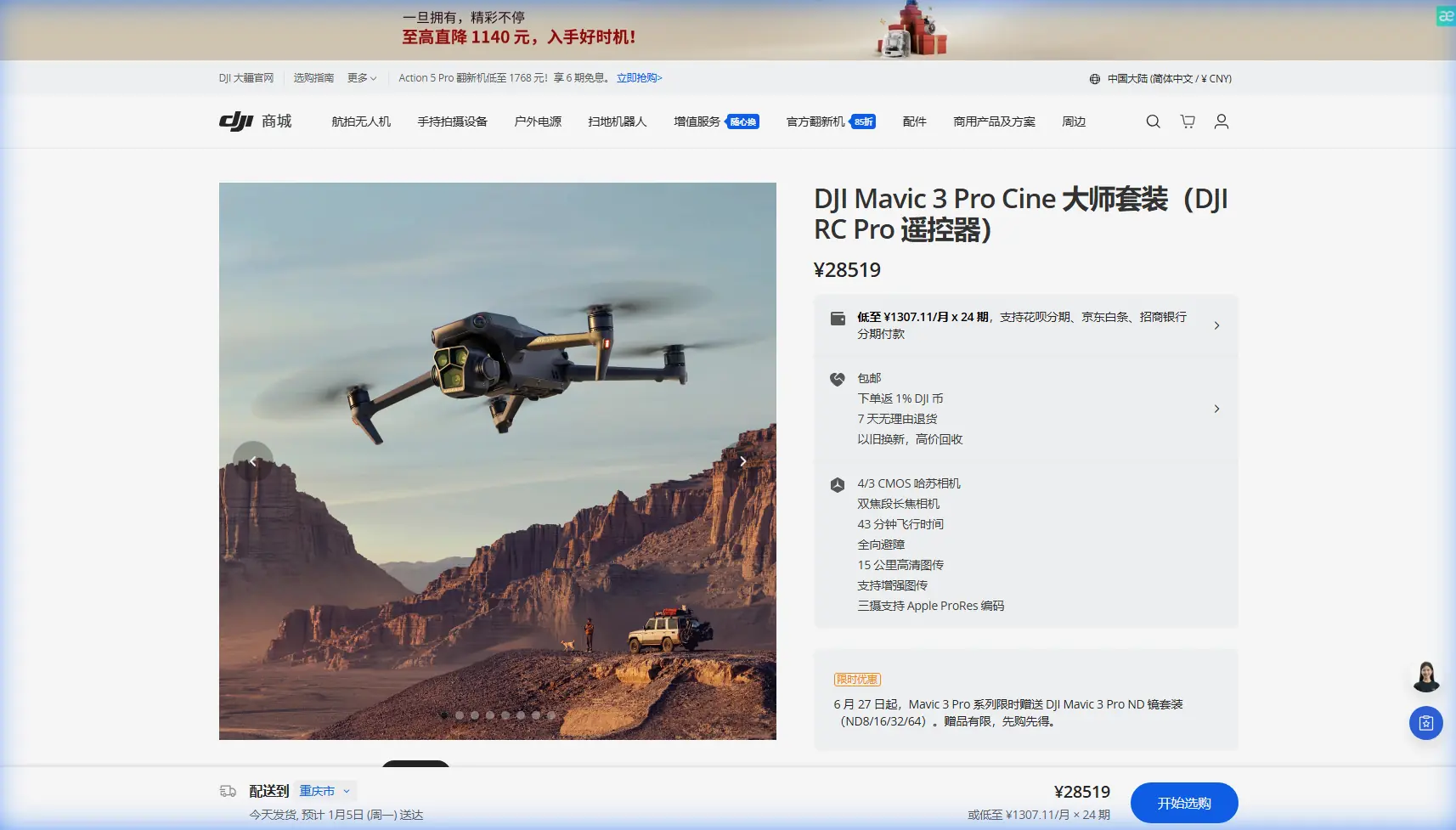
Mavic 3 Pro: Master Remote Forest Monitoring
META: Learn how the Mavic 3 Pro transforms remote forest monitoring with triple-camera precision, extended flight time, and professional D-Log color science for conservation work.
TL;DR
- Optimal flight altitude of 120-150 meters provides the ideal balance between canopy coverage and detail capture for forest health assessment
- Triple-camera system with 3x and 7x telephoto enables wildlife documentation without disturbance
- 43-minute flight time covers vast wilderness areas in single missions
- D-Log color profile preserves critical detail in mixed lighting conditions under dense canopy
Why Forest Monitoring Demands Professional Drone Capabilities
Remote forest monitoring presents unique challenges that consumer drones simply cannot handle. Dense canopy cover, unpredictable wildlife, limited GPS signal in valleys, and the sheer scale of wilderness areas require equipment designed for professional fieldwork.
The Mavic 3 Pro addresses these challenges with a Hasselblad triple-camera system, omnidirectional obstacle avoidance, and intelligent flight modes that transform how conservationists, researchers, and photographers document forest ecosystems.
As a photographer who has spent three years documenting old-growth forests across the Pacific Northwest, I've tested dozens of platforms. The Mavic 3 Pro consistently delivers results that match or exceed what I previously achieved only with manned aircraft.
Understanding Optimal Flight Altitude for Forest Work
Flight altitude dramatically impacts data quality in forest monitoring. Too low, and you miss the broader context of forest health patterns. Too high, and you lose the detail needed to identify individual tree species or spot wildlife.
Expert Insight: For comprehensive forest monitoring, maintain 120-150 meters AGL (Above Ground Level) as your primary survey altitude. This height captures approximately 400 meters of horizontal coverage per frame while preserving enough detail to identify tree species and detect canopy anomalies.
Altitude Guidelines by Monitoring Objective
Canopy Health Assessment: 150-200 meters At this altitude, the 4/3 CMOS Hasselblad sensor captures broad patterns of forest stress, disease spread, and seasonal changes. The 20MP resolution provides sufficient detail for identifying affected zones.
Wildlife Documentation: 80-120 meters The 7x telephoto lens becomes essential here. At 100 meters altitude, you can capture frame-filling images of large mammals without triggering flight responses that ground-based observation would cause.
Detailed Species Identification: 50-80 meters When you need to document specific trees for research or identify invasive species, drop to lower altitudes and use the 3x medium telephoto for optimal sharpness.
Mastering the Triple-Camera System in Forest Environments
The Mavic 3 Pro's three-camera array transforms forest documentation. Each lens serves a distinct purpose in comprehensive monitoring workflows.
Primary Hasselblad Camera (24mm equivalent)
This 4/3 CMOS sensor with f/2.8-f/11 adjustable aperture handles the majority of forest survey work. The larger sensor size captures 12.8 stops of dynamic range, critical when shooting mixed sun and shadow conditions under partial canopy.
For forest work, I recommend:
- Aperture: f/5.6 for optimal sharpness across the frame
- ISO: Keep below 400 for cleanest files
- Shutter: Minimum 1/500s to eliminate motion blur from aircraft movement
- Format: RAW + JPEG for maximum post-processing flexibility
Medium Telephoto (70mm equivalent)
The 3x telephoto with its 1/1.3-inch sensor excels at documenting specific forest features without descending into the canopy danger zone. Use this lens for:
- Individual tree health assessment
- Nest and den identification
- Stream and water feature documentation
- Trail condition monitoring
Super Telephoto (166mm equivalent)
At 7x magnification, this lens enables wildlife documentation that was previously impossible without disturbing animals. The 1/2-inch sensor performs best in bright conditions, so plan telephoto wildlife work for midday when light penetrates the canopy.
Leveraging Intelligent Flight Modes for Forest Surveys
ActiveTrack for Wildlife Following
ActiveTrack 5.0 uses machine learning to follow moving subjects while maintaining safe distances. For wildlife documentation, this means you can track animal movement patterns without manual piloting that might result in erratic, startling movements.
Configure ActiveTrack with:
- Trace mode for following animals along game trails
- Parallel mode for documenting herd movement from the side
- Spotlight mode when you need manual flight control while keeping the subject centered
Hyperlapse for Seasonal Documentation
Forest monitoring often requires documenting changes over time. The built-in Hyperlapse modes create compelling visual records of:
- Seasonal foliage transitions
- Weather pattern effects on canopy
- Wildlife activity patterns at specific locations
Pro Tip: Use Waypoint Hyperlapse to return to exact GPS coordinates monthly. This creates perfectly aligned time-lapse sequences showing forest changes that would be impossible to capture manually.
QuickShots for Standardized Documentation
When you need consistent, repeatable footage for scientific comparison, QuickShots removes human variability. The Dronie, Helix, and Rocket modes produce identical camera movements each time, enabling true before-and-after comparisons.
Obstacle Avoidance in Dense Forest Environments
The Mavic 3 Pro features omnidirectional obstacle sensing using multiple vision sensors and a wide-angle camera system. In forest environments, this technology becomes essential rather than optional.
Sensor Configuration for Forest Flying
| Direction | Sensing Range | Forest Recommendation |
|---|---|---|
| Forward | 1.5-200m | Enable always |
| Backward | 1.5-200m | Enable always |
| Upward | 0.35-30m | Critical near canopy |
| Downward | 0.35-30m | Enable for low flights |
| Lateral | 0.35-30m | Enable in dense areas |
When to Override Obstacle Avoidance
Experienced pilots sometimes need to disable avoidance for specific shots. In forest work, consider temporary override only when:
- Flying through known gaps in canopy for specific angles
- Operating in areas you've previously surveyed on foot
- Capturing shots where branches trigger false positives
Never disable obstacle avoidance during initial site surveys or when flying in unfamiliar territory.
D-Log Color Science for Forest Documentation
The Mavic 3 Pro's D-Log M color profile preserves maximum dynamic range in challenging forest lighting. Mixed conditions—bright sky, shadowed understory, dappled light through leaves—exceed the capability of standard color profiles.
D-Log Workflow for Forest Footage
In-Camera Settings:
- Enable D-Log M in color settings
- Set exposure 0.5-1 stop under the meter reading
- Use histogram, not LCD preview, for exposure judgment
Post-Processing:
- Apply DJI's official LUT as starting point
- Recover shadows to reveal understory detail
- Control highlights to preserve sky detail
- Add subtle saturation to restore natural foliage colors
D-Log files appear flat and desaturated straight from camera. This is intentional—the profile prioritizes data preservation over immediate visual appeal.
Technical Specifications Comparison
| Feature | Mavic 3 Pro | Previous Generation | Advantage |
|---|---|---|---|
| Flight Time | 43 minutes | 31 minutes | +39% coverage |
| Camera System | Triple lens | Single lens | 3x versatility |
| Sensor Size | 4/3 inch | 1 inch | +30% dynamic range |
| Obstacle Sensing | Omnidirectional | Forward/backward | 360° protection |
| Transmission Range | 15km | 10km | Extended remote ops |
| Video Resolution | 5.1K/50fps | 4K/60fps | Higher detail |
| Subject Tracking | ActiveTrack 5.0 | ActiveTrack 4.0 | Improved accuracy |
Common Mistakes to Avoid
Flying Too Fast During Surveys Rushing through forest surveys creates motion blur and missed details. Maintain maximum 15 km/h during documentation flights. The extended battery life means you don't need to rush.
Ignoring Wind Patterns Near Canopy Forest edges and clearings create turbulent wind patterns. The Mavic 3 Pro handles gusts well, but sudden downdrafts near canopy edges can cause altitude drops. Maintain minimum 20-meter buffer from treetops.
Relying Solely on GPS in Valleys Deep forest valleys often have degraded GPS signal. Before flying, verify satellite lock shows minimum 12 satellites. Consider bringing a portable RTK base station for precision work.
Neglecting Battery Temperature Forest environments often mean early morning flights when temperatures are low. Batteries below 15°C deliver reduced performance. Keep batteries warm in your pack until immediately before flight.
Shooting Only Video Many photographers default to video for forest documentation. However, the 20MP stills from the Hasselblad sensor often provide better detail for analysis than video frame grabs. Capture both formats.
Frequently Asked Questions
What is the best time of day for forest monitoring flights?
Mid-morning between 9:00-11:00 AM typically provides optimal conditions. The sun is high enough to illuminate the canopy without creating harsh shadows, wildlife is still active, and thermal turbulence hasn't developed. Avoid midday in summer when heat shimmer affects image quality at distance.
How do I maintain GPS signal in dense forest areas?
Launch from clearings whenever possible, as the initial GPS lock is strongest with clear sky view. The Mavic 3 Pro maintains position using visual positioning when GPS degrades, but this requires visible ground features. Flying above canopy level ensures consistent satellite reception throughout your mission.
Can the Mavic 3 Pro detect and avoid thin branches?
The obstacle avoidance system reliably detects branches thicker than approximately 5mm at close range. Very thin twigs and leaves may not trigger avoidance. When flying near canopy, maintain conservative distances and use the forward-facing camera feed to visually confirm clear flight paths rather than relying solely on automated avoidance.
Ready for your own Mavic 3 Pro? Contact our team for expert consultation.