
Coastal Monitoring Mastery with the Mavic 3 Pro
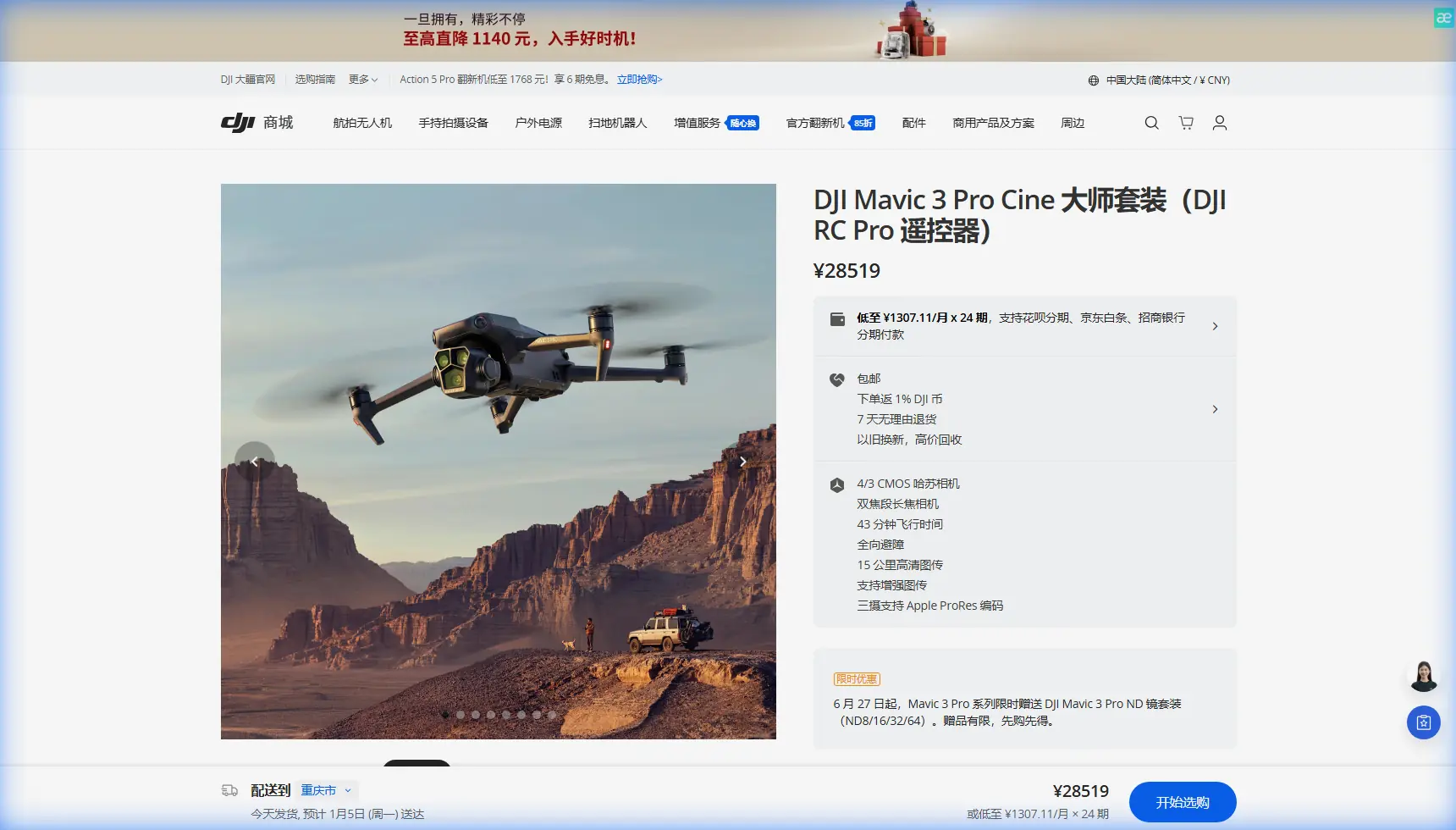
Coastal Monitoring Mastery with the Mavic 3 Pro
META: Learn how to monitor coastlines in dusty conditions with the Mavic 3 Pro. Expert tutorial covers pre-flight cleaning, ActiveTrack, D-Log settings, and more.
TL;DR
- Pre-flight sensor cleaning is non-negotiable in dusty coastal environments—skipping it compromises obstacle avoidance and ActiveTrack reliability
- The Mavic 3 Pro's tri-camera system enables simultaneous wide-angle coastal surveys and telephoto detail captures without swapping lenses
- D-Log color profile preserves up to 12.8 stops of dynamic range, critical for high-contrast shoreline footage
- Hyperlapse and QuickShots modes automate cinematic coastal documentation that would otherwise require hours of manual flight planning
Why Dusty Coastlines Demand a Specific Workflow
Coastal monitoring in arid, dusty regions pushes drone hardware to its limits. Sand particles clog gimbal motors, coat vision sensors, and degrade the very safety systems you depend on. The Mavic 3 Pro is built to handle demanding fieldwork—but only if you prepare it correctly before every flight.
This tutorial walks you through my complete coastal monitoring workflow, from the pre-flight cleaning protocol that keeps your obstacle avoidance system functional, to advanced camera settings that capture publication-ready data in a single battery cycle. I've spent three years flying the Mavic 3 Pro along eroding shorelines in North Africa and the Middle East, and every step here comes from hard-won field experience.
Step 1: The Pre-Flight Cleaning Protocol That Saves Your Safety Systems
Here's a truth most pilots learn the hard way: dust is the number one killer of obstacle avoidance reliability. The Mavic 3 Pro uses an omnidirectional obstacle sensing system built around vision sensors and an infrared time-of-flight sensor on the bottom. When fine coastal dust coats these sensors—even a thin, barely visible film—the aircraft's ability to detect and avoid obstacles degrades dramatically.
Before every single flight in dusty conditions, I follow this exact sequence:
- Step 1a: Use a rocket blower (not canned air, which can push particles deeper) to clear loose dust from all six vision sensor pairs and the infrared sensor
- Step 1b: Wipe each sensor lens with a microfiber cloth dampened with lens cleaning solution—never dry-wipe, as sand micro-scratches the glass
- Step 1c: Inspect the gimbal's three camera lenses using a 10x jeweler's loupe for particles lodged in the lens housing seams
- Step 1d: Clean the cooling vents on the aircraft body to prevent dust ingestion that causes thermal throttling during long flights
- Step 1e: Power on the aircraft in a sheltered location and run a sensor calibration through DJI Fly before heading to your launch site
Expert Insight — I carry a clear ziplock bag large enough to fit the Mavic 3 Pro. Between flights, the aircraft goes directly into the bag. This single habit has reduced my sensor cleaning time by 60% and virtually eliminated mid-session obstacle avoidance failures. Dusty coastal wind doesn't take breaks, and neither should your protection strategy.
This protocol takes four to five minutes. Skipping it doesn't just risk a crash—it means your Subject tracking and ActiveTrack features may lock onto the wrong target, lose lock mid-flight, or fail to initialize entirely. Those features rely on the same vision system, so clean sensors equal reliable automation.
Step 2: Camera Configuration for Coastal Monitoring
The Mavic 3 Pro's tri-camera system is what separates it from every other platform in its class for coastal work. Here's what you're working with:
| Camera | Sensor | Focal Length | Best Coastal Use |
|---|---|---|---|
| Hasselblad Main | 4/3 CMOS, 20MP | 24mm equivalent | Wide shoreline surveys, erosion mapping |
| Medium Tele | 1/1.3" CMOS, 48MP | 70mm equivalent | Cliff face detail, wildlife buffer zones |
| Tele | 1/2" CMOS, 12MP | 166mm equivalent | Distant structure inspection, nesting site monitoring |
D-Log: Your Secret Weapon for High-Contrast Coastlines
Coastal environments are a nightmare for dynamic range. You're simultaneously capturing bright white sand or surf, dark volcanic rock or shadow-filled cliff faces, and the midtone blues and greens of the water. Standard color profiles clip highlights and crush shadows mercilessly.
Switch to D-Log color profile in the camera settings. This flat, desaturated profile preserves the Mavic 3 Pro's full 12.8 stops of dynamic range on the Hasselblad main camera, giving you extraordinary latitude in post-processing.
My standard D-Log settings for midday coastal monitoring:
- ISO: 100 (always the base; higher ISOs introduce noise that mimics dust artifacts)
- Shutter Speed: 1/500 to 1/1000 for stills; double the frame rate for video (shooting 4K/30p means 1/60 shutter)
- ND Filter: ND16 or ND32 to maintain proper shutter speed in bright conditions
- White Balance: 5600K manual (auto white balance shifts unpredictably over water)
- Aperture: f/2.8 to f/5.6 on the Hasselblad camera for the sharpest results
Pro Tip — When shooting in D-Log, your LCD preview will look washed out and flat. Don't panic. Apply a monitoring LUT in the DJI Fly app by navigating to Camera Settings > Display > LUT Display. This gives you a real-time contrast-corrected preview without affecting the recorded file. You get the benefits of D-Log's dynamic range with the visual feedback of a standard profile.
Step 3: Flight Planning for Coastline Coverage
Efficient coastal monitoring isn't about flying randomly along the shore. It requires deliberate planning that maximizes coverage within the Mavic 3 Pro's 43-minute maximum flight time.
Automated Flight Modes That Accelerate Data Collection
Hyperlapse mode is remarkably effective for documenting tidal erosion patterns over short periods. Set the Mavic 3 Pro into Waypoint Hyperlapse mode, define your coastal path with four to eight waypoints, set the interval to two seconds, and let the aircraft execute the path autonomously. A single 20-minute Hyperlapse flight produces a timelapse that compresses hours of tidal movement into a 15-to-30-second clip—invaluable for erosion reports and stakeholder presentations.
QuickShots modes—specifically Dronie and Rocket—serve as rapid documentation tools when you need establishing context shots of a specific monitoring site. I use QuickShots at the beginning and end of each monitoring session to provide visual anchoring for the detailed data captured between.
Subject Tracking for Moving Coastal Features
ActiveTrack 6.0 on the Mavic 3 Pro can lock onto and follow moving subjects with impressive precision—useful for tracking watercraft, wildlife, or even advancing wave patterns along a specific stretch of coastline.
To activate ActiveTrack:
- Tap and drag a selection box around your subject on the screen
- Choose Trace (follows behind or in front) or Parallel (maintains a lateral offset)
- Set your minimum altitude to at least 30 meters over water to maintain safe obstacle avoidance clearance
- Ensure all vision sensors are clean (see Step 1) for reliable lock maintenance
ActiveTrack performs best when the subject contrasts clearly against its background. A dark boat against blue water locks instantly. A grey seal on grey rock may require manual intervention.
Step 4: Post-Flight Data Management in the Field
After landing, your workflow isn't finished. Dusty coastal environments demand immediate attention:
- Power down the aircraft and place it in your protective bag or case immediately
- Remove the microSD card and back up footage to a portable SSD before your next flight
- Log flight metadata: GPS coordinates, altitude, wind speed, temperature, and humidity for each flight
- Clean the aircraft again using the full pre-flight protocol—dust accumulates during flight and doubles during coastal wind landings
- Inspect propellers for sand erosion on leading edges; replace any prop showing visible pitting
Technical Comparison: Mavic 3 Pro vs. Common Coastal Monitoring Alternatives
| Feature | Mavic 3 Pro | Mavic 3 Classic | Air 3 |
|---|---|---|---|
| Camera System | Tri-camera (3 lenses) | Single Hasselblad | Dual camera |
| Max Flight Time | 43 minutes | 46 minutes | 46 minutes |
| Obstacle Sensing | Omnidirectional | Omnidirectional | Omnidirectional |
| D-Log Support | Yes (10-bit) | Yes (10-bit) | Yes (10-bit) |
| ActiveTrack Version | 6.0 | 5.0 | 5.0 |
| Medium Tele Camera | Yes (70mm, 48MP) | No | Yes (70mm) |
| Telephoto Camera | Yes (166mm, 12MP) | No | No |
| Max Video Resolution | 5.1K/50fps | 5.1K/50fps | 4K/100fps |
| Weight | 958g | 895g | 720g |
The tri-camera system is the decisive advantage. Coastal monitoring demands both wide context shots and tight detail captures. With the Mavic 3 Pro, you switch between 24mm, 70mm, and 166mm focal lengths mid-flight without landing. That capability alone justifies the platform choice for serious monitoring work.
Common Mistakes to Avoid
Flying without cleaning sensors in dusty conditions. This is the mistake I see most often among pilots new to arid coastal work. A single grain of sand on a forward vision sensor can cause a false obstacle detection that triggers an emergency brake at the worst possible moment—or worse, the system fails to detect a real obstacle because the sensor is uniformly obscured.
Using auto white balance over water. The reflective, shifting surface of the ocean confuses auto white balance algorithms. Your footage will shift between warm and cool tones frame-to-frame, creating unusable data for scientific monitoring and unprofessional-looking content. Lock white balance to 5600K for daylight coastal work.
Ignoring wind patterns at different altitudes. Coastal wind at 10 meters may be manageable, but at 120 meters, gusts can exceed the Mavic 3 Pro's max wind resistance of 12 m/s. Check wind conditions at your planned altitude using an anemometer or weather app with altitude-specific data before launching.
Shooting in standard color profiles to "save time in post." The dynamic range you sacrifice by avoiding D-Log cannot be recovered. Blown highlights in surf and crushed shadows in cliff faces represent permanently lost monitoring data. The extra 10 to 15 minutes of color grading per session is always worth it.
Launching and landing on exposed sand. Prop wash kicks sand directly into motors, vents, and sensors. Always carry a portable landing pad (minimum 50cm diameter) and stake it down in windy conditions.
Frequently Asked Questions
How often should I clean the Mavic 3 Pro's sensors during a full day of coastal monitoring?
Clean sensors before every flight, without exception. In heavy dust or sand conditions, I also perform a quick visual check and rocket blower pass after every landing, even if I'm launching again within minutes. Vision sensor contamination is cumulative—a sensor that looks "fine" after two flights may have enough micro-deposits to degrade obstacle avoidance performance by the third.
Can I use ActiveTrack reliably in dusty, windy coastal environments?
Yes, but with caveats. ActiveTrack 6.0 relies on the vision processing system, which means clean sensors are essential (this is why the pre-flight cleaning step matters so much). Wind gusts above 8 m/s can cause the aircraft to momentarily shift position, which may break the tracking lock on small or distant subjects. For best results, track subjects at a distance of 5 to 30 meters and keep the aircraft below 50 meters altitude where wind is typically more predictable along coastlines.
What's the best Hyperlapse mode for documenting tidal changes along a coastline?
Waypoint Hyperlapse is the clear winner. It lets you define a precise, repeatable flight path with up to 99 waypoints along the coast. Set the shooting interval to two seconds and the total duration based on the tidal change speed you're documenting. For rapid tidal shifts (incoming tide on flat beaches), 15 to 20 minutes of capture produces dramatic results. For slower erosion documentation, consider running 30-minute sessions at the same waypoints over multiple days or weeks to build a powerful comparative dataset.
Ready for your own Mavic 3 Pro? Contact our team for expert consultation.