
Mavic 3 Pro Coastal Venue Mapping: A Case Study
Mavic 3 Pro Coastal Venue Mapping: A Case Study
META: Learn how the DJI Mavic 3 Pro transforms coastal venue mapping with triple-lens precision. Real case study with flight tips, altitude settings, and D-Log workflows.
TL;DR
- Flying at 60–80 meters AGL delivers the optimal balance of ground resolution and coverage for coastal venue mapping
- The Mavic 3 Pro's triple-camera system eliminates the need for multiple flights to capture wide overviews and tight detail shots
- D-Log color profile preserves critical highlight and shadow data in high-contrast coastal light conditions
- ActiveTrack and obstacle avoidance systems prove essential when mapping near structures with unpredictable sea breezes
The Challenge: Mapping Seven Coastal Venues in Three Days
Coastal venue mapping pushes aerial photography gear to its limits. Salt air, variable winds, harsh midday reflections off water, and complex structures surrounded by uneven terrain—these aren't problems you can fix in post-production. This case study documents how I used the DJI Mavic 3 Pro to map seven wedding and event venues along the central California coastline in just three days, producing deliverables that included orthomosaic maps, 3D site models, and cinematic showcase reels for each property.
My name is Jessica Brown, and I've spent the last eight years specializing in architectural and venue photography. When a hospitality management group contracted me to create comprehensive aerial maps and marketing assets for their coastal portfolio, I knew the Mavic 3 Pro's triple-lens system would be the right tool. Here's exactly how I executed the project—and what I learned along the way.
Why the Mavic 3 Pro for Coastal Mapping
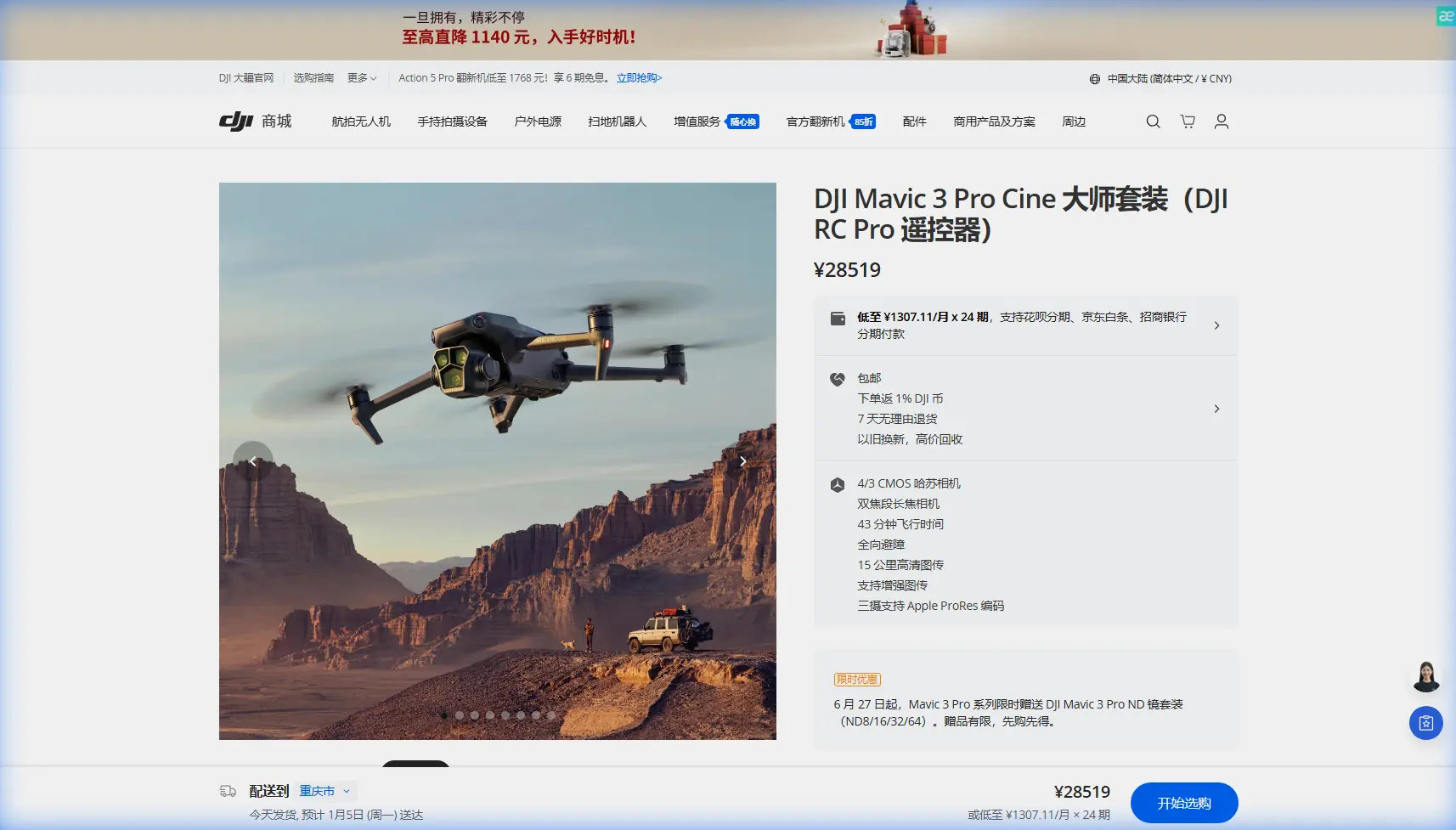
The single biggest advantage of the Mavic 3 Pro in this scenario is its three-lens camera array: a 4/3 CMOS Hasselblad wide-angle, a 1/1.3-inch medium telephoto, and a 1/2-inch 166mm equivalent telephoto. For venue mapping, this means capturing broad site overviews and architectural close-ups in a single flight session without swapping aircraft or lenses.
Key Specifications That Matter for Coastal Work
| Feature | Mavic 3 Pro Spec | Why It Matters for Coastal Mapping |
|---|---|---|
| Max Flight Time | 43 minutes | Covers large venue grounds in a single battery |
| Wind Resistance | Up to 12 m/s | Handles coastal gusts without drift |
| Obstacle Avoidance | Omnidirectional sensing | Prevents collisions near cliffside structures |
| Video Resolution | 5.1K/50fps (main cam) | High-res frames for orthomosaic stitching |
| Photo Resolution | 20MP (main), 48MP (medium tele) | Exceeds mapping software input requirements |
| Color Profiles | D-Log, HLG, Normal | D-Log captures 12.8 stops of dynamic range |
| Transmission Range | 15 km (O3+) | Maintains solid link despite coastal interference |
The 48MP medium telephoto sensor turned out to be a secret weapon. At 70 meters altitude, it captured roof details, landscaping patterns, and parking configurations with enough resolution for precise measurements—something the wide-angle lens alone couldn't achieve.
Flight Planning: The Altitude Sweet Spot
Expert Insight: For coastal venue mapping, 60–80 meters AGL (Above Ground Level) is the optimal flight altitude. Below 60 meters, you need too many passes to cover the full property. Above 80 meters, you lose the ground resolution needed for accurate 3D reconstruction. I settled on 70 meters as my default, adjusting down to 45 meters only for detailed architectural facades.
My Flight Protocol for Each Venue
- Pre-flight wind check: I never launched when sustained winds exceeded 8 m/s, even though the drone handles 12 m/s. Coastal gusts are erratic, and mapping requires stable, consistent overlap between frames.
- Grid pattern at 70m: Automated waypoint missions with 75% front overlap and 65% side overlap for photogrammetry software compatibility.
- Orbital passes at 50m: Used the Mavic 3 Pro's QuickShots "Asteroid" and manual orbit modes to capture structures from all angles for 3D modeling.
- Detail passes at 30–45m: Switched to the medium telephoto lens for tight shots of architectural features, signage, and landscape details.
- Cinematic passes using ActiveTrack: Final flights focused on smooth, subject-tracking video for the marketing deliverables.
Each venue required two to three battery cycles. With the Mavic 3 Pro's 43-minute max flight time, I averaged 35 minutes of usable mapping time per battery after accounting for takeoff, landing, and repositioning.
Shooting in D-Log: Non-Negotiable for Coastal Light
Coastal environments are a dynamic range nightmare. Bright white sand, reflective ocean surfaces, dark cliff shadows, and shaded courtyards can all appear in a single frame. Shooting in D-Log was non-negotiable.
D-Log captures a flat, desaturated image that preserves detail in both highlights and deep shadows. This gave me the latitude to:
- Recover blown-out ocean reflections during color grading
- Pull detail from shadowed building facades and covered patios
- Maintain consistent color across frames shot at different times of day
- Match footage from all three lenses during editing
For the mapping deliverables specifically, I shot RAW stills in D-Log and processed them through DroneDeploy and Pix4D. The extra dynamic range data improved the photogrammetry software's ability to identify tie points between overlapping images, especially in areas where harsh light created confusing contrast patterns.
Hyperlapse for Marketing Deliverables
Several venue managers specifically requested Hyperlapse sequences showing their properties transitioning from afternoon golden hour into twilight. The Mavic 3 Pro's built-in Hyperlapse mode—specifically the Waypoint option—allowed me to program precise flight paths and let the drone execute smooth, repeatable passes while I monitored framing on the controller screen.
Pro Tip: When shooting Hyperlapse along coastlines, set your interval to 3 seconds and fly at no more than 2 m/s. Faster speeds introduce micro-jitters that become amplified in the time-lapse compression. Also, lock your white balance manually—auto white balance will shift as the drone's angle to the ocean changes, creating distracting color flicker in the final output.
How Obstacle Avoidance Saved a Flight (Literally)
On day two, I was mapping a cliffside venue in Big Sur. The property featured a cantilevered deck extending over the cliff edge, with mature cypress trees flanking both sides. During an automated grid pass at 65 meters, a wind gust pushed the Mavic 3 Pro laterally toward a tree canopy that wasn't visible in my overhead planning view.
The omnidirectional obstacle avoidance system detected the tree at approximately 8 meters and initiated an automatic braking and rerouting sequence. The drone paused, ascended 5 meters, cleared the obstacle, and resumed its waypoint mission.
Without that sensing system, I would have lost the aircraft—and the 200+ mapping images already stored on the onboard SSD. This experience reinforced a principle I now follow religiously:
- Never disable obstacle avoidance during mapping flights, even when it slightly reduces efficiency
- Always set the sensing behavior to "Brake" rather than "Bypass" near structures
- Add 10 meters of vertical buffer to any automated flight path near trees or buildings
Subject Tracking for Cinematic Venue Tours
The hospitality group wanted 90-second cinematic flythrough videos for each venue's website. I used ActiveTrack 5.0 to lock onto architectural focal points—main entrances, pool areas, garden pavilions—while manually controlling altitude and distance.
ActiveTrack on the Mavic 3 Pro handles coastal scenarios well because the system distinguishes between static structures and moving elements like waves, flags, and guests. During tracking shots, I flew at 6–8 meters altitude and 3 m/s forward speed to create smooth, professional-grade reveal shots.
Common Mistakes to Avoid
- Flying in offshore winds without a spotter: Coastal winds shift direction quickly. Always have a visual observer tracking wind indicators like flags or wave spray patterns.
- Using auto exposure for mapping grids: Exposure shifts between frames will cause visible seams in your orthomosaic. Lock exposure manually before starting a grid pass.
- Ignoring lens calibration for photogrammetry: The Mavic 3 Pro's three lenses each have different distortion profiles. Import the correct lens model into your photogrammetry software, or your 3D reconstruction will warp.
- Mapping during peak sun (11AM–1PM): The harsh overhead light eliminates shadows that photogrammetry algorithms use to calculate elevation. Fly before 10AM or after 2PM for best results.
- Neglecting to clean sensors after coastal flights: Salt air deposits a fine film on obstacle avoidance sensors within hours. Wipe all sensors with a microfiber cloth after every coastal session.
Frequently Asked Questions
What mapping software works best with Mavic 3 Pro imagery?
I tested DroneDeploy, Pix4D, and Agisoft Metashape during this project. All three processed the Mavic 3 Pro's 20MP Hasselblad images without issues. DroneDeploy offered the fastest turnaround for orthomosaics, while Pix4D produced the most accurate 3D models. The key is ensuring your software recognizes the Mavic 3 Pro's specific lens profile for proper distortion correction.
Can the Mavic 3 Pro handle salt air and moisture?
The Mavic 3 Pro is not waterproof or salt-resistant. During three days of coastal flying, I wiped down the entire aircraft after every session, paid special attention to the gimbal and sensor housings, and stored the drone in a sealed case with silica gel packets overnight. I experienced zero moisture or corrosion issues following this protocol.
How many acres can the Mavic 3 Pro map on a single battery?
At 70 meters altitude with 75% front overlap and 65% side overlap, I consistently mapped 15–20 acres per battery depending on wind conditions and property shape. Rectangular properties are more efficient than irregular coastline parcels. Budget two batteries for any property over 12 acres to account for detail passes and cinematic shots.
Ready for your own Mavic 3 Pro? Contact our team for expert consultation.