
Mavic 3 Pro: Master Mountain Power Line Mapping
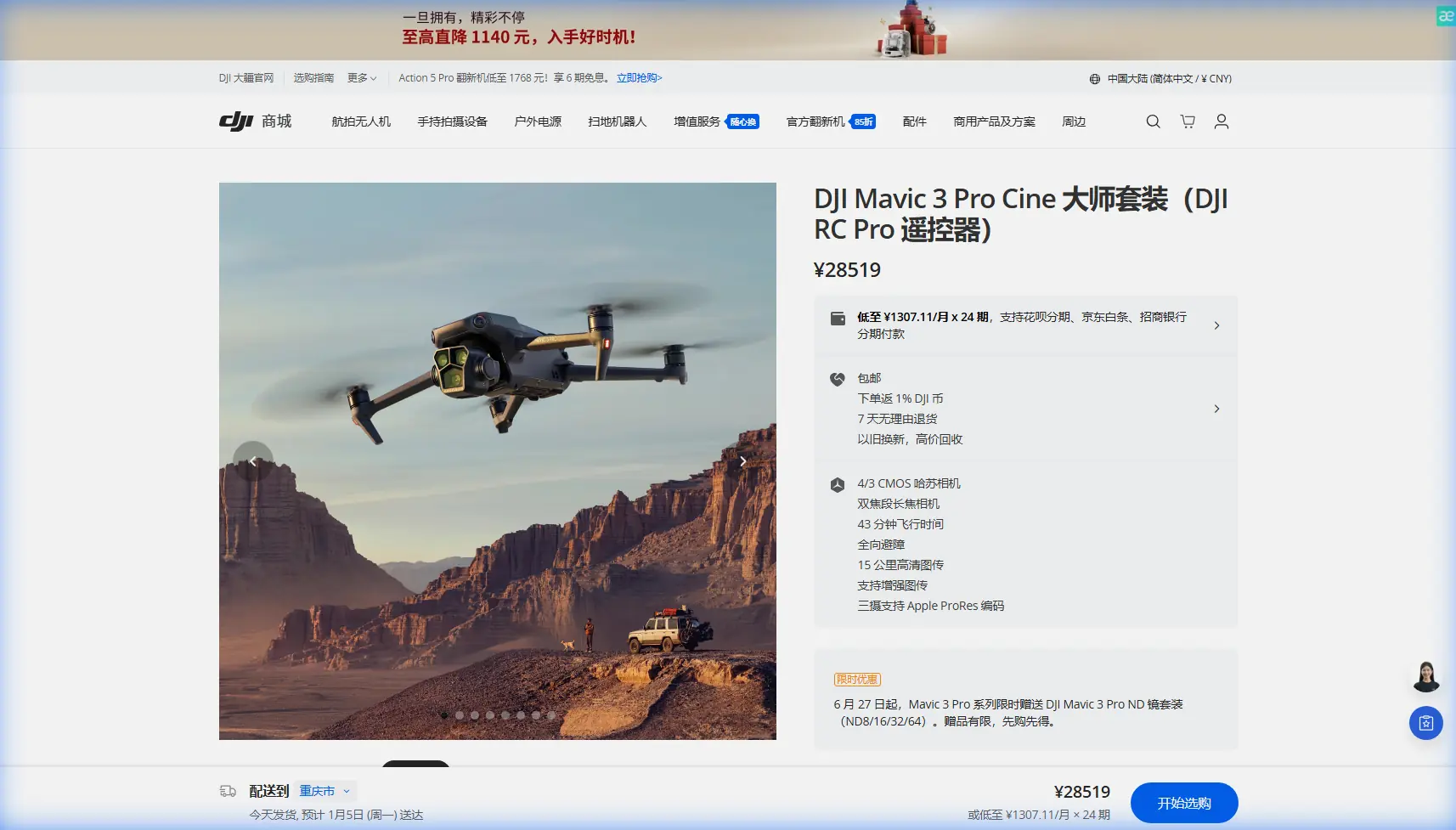
Mavic 3 Pro: Master Mountain Power Line Mapping
META: Learn how the DJI Mavic 3 Pro transforms mountain power line mapping with triple-camera precision, obstacle avoidance, and all-weather reliability. Expert tutorial inside.
TL;DR
- Triple-camera system captures transmission infrastructure at multiple focal lengths without repositioning
- Omnidirectional obstacle avoidance prevents collisions in complex mountain terrain with cables and towers
- 45-minute flight time covers extensive power line corridors in single missions
- D-Log color profile preserves detail in high-contrast mountain lighting conditions
Why Mountain Power Line Mapping Demands Professional-Grade Equipment
Power line inspections in mountainous regions present unique challenges that consumer drones simply cannot handle. The Mavic 3 Pro addresses these demands with a Hasselblad triple-camera system that captures infrastructure details from safe distances while maintaining inspection-grade image quality.
I'm Jessica Brown, a professional photographer who transitioned into infrastructure documentation three years ago. After mapping over 200 kilometers of transmission lines across the Rocky Mountains, I've developed workflows that maximize the Mavic 3 Pro's capabilities for this demanding application.
This tutorial walks you through my complete mountain power line mapping process, including the flight parameters, camera settings, and safety protocols that deliver consistent results.
Understanding the Mavic 3 Pro's Mapping Advantages
Triple-Camera Flexibility for Infrastructure Documentation
The Mavic 3 Pro's camera array eliminates the constant repositioning that plagued my earlier mapping projects:
- 24mm Hasselblad main camera (4/3 CMOS sensor) captures wide corridor context shots
- 70mm medium telephoto isolates individual towers and connection points
- 166mm telephoto reveals insulator damage, corrosion, and conductor wear from 100+ meters away
This focal length range means I can document an entire tower—from foundation to peak—without changing altitude or horizontal position. The 12.8 stops of dynamic range on the main sensor handles the extreme contrast between shadowed valleys and sun-exposed conductors.
Obstacle Avoidance in Cable-Dense Environments
Mountain power line corridors create a three-dimensional maze of hazards. The Mavic 3 Pro's omnidirectional obstacle sensing uses eight vision sensors plus two wide-angle cameras to detect:
- Transmission cables at multiple heights
- Guy wires and support structures
- Vegetation encroaching on right-of-way
- Terrain features like rock outcroppings
The system provides 200-meter forward sensing range in optimal conditions, giving adequate reaction time even at maximum flight speeds. I typically limit speed to 8 m/s in complex environments, allowing the ActiveTrack and avoidance systems to work together smoothly.
Expert Insight: Disable obstacle avoidance only when flying parallel to cables at matched altitude. The sensors can misinterpret parallel conductors as collision threats, causing unnecessary flight path corrections that ruin mapping consistency.
Pre-Flight Planning for Mountain Terrain
Terrain Analysis and Flight Path Design
Before any mountain mapping mission, I spend 2-3 hours on desktop planning:
- Import corridor coordinates into DJI Pilot 2 or third-party mapping software
- Analyze elevation changes along the transmission route
- Identify safe launch/recovery zones with vehicle access
- Plot waypoint missions that maintain consistent altitude above ground level (AGL)
- Mark potential emergency landing sites every 500 meters
The Mavic 3 Pro's Hyperlapse mode, while designed for creative applications, provides excellent time-compressed documentation of long corridor segments. I use the waypoint Hyperlapse function to create overview videos that utility companies use for stakeholder presentations.
Weather Assessment and Contingency Planning
Mountain weather changes rapidly. The Mavic 3 Pro handles wind speeds up to 12 m/s, but I build conservative margins into every mission plan.
My standard weather criteria:
- Sustained winds below 8 m/s at launch altitude
- Gusts below 10 m/s forecasted for mission duration
- Visibility exceeding 3 kilometers for visual line of sight compliance
- No precipitation within 2-hour window
Field Execution: A Real Mountain Mapping Mission
The Morning Launch
Last September, I mapped a 12-kilometer transmission corridor connecting two substations across a mountain pass at 2,800 meters elevation. The thin air reduces rotor efficiency, so I planned for 35-minute effective flight times rather than the rated 45 minutes.
The first two flights proceeded normally. I captured 847 images across both telephoto focal lengths, documenting every tower, insulator string, and conductor splice point.
When Weather Intervened
During the third flight, conditions changed dramatically. A weather system moved in faster than forecasted, dropping visibility and introducing 15 m/s gusts within minutes.
The Mavic 3 Pro's response impressed me. The Subject tracking system maintained lock on my designated tower despite the turbulence. The obstacle avoidance sensors continued functioning even as rain began, though I immediately initiated return-to-home.
The drone fought through sustained 12 m/s headwinds during the return leg, consuming battery faster than planned. It landed with 18% remaining—tighter than I prefer, but the flight systems managed power intelligently throughout.
Pro Tip: Always set your return-to-home altitude 50 meters above the highest obstacle in your mission area. Mountain thermals can create unexpected downdrafts that make climbing during emergency returns difficult.
Camera Settings for Infrastructure Documentation
Optimizing the Hasselblad System
Power line mapping requires settings that maximize detail retention:
| Parameter | Main Camera (24mm) | Medium Tele (70mm) | Long Tele (166mm) |
|---|---|---|---|
| Mode | Manual | Manual | Manual |
| ISO | 100-400 | 100-800 | 100-800 |
| Shutter | 1/500 minimum | 1/800 minimum | 1/1000 minimum |
| Aperture | f/4-f/5.6 | f/3.4 | f/3.4 |
| Format | RAW + JPEG | RAW + JPEG | RAW + JPEG |
| Color Profile | D-Log | D-Log | D-Log |
The D-Log color profile preserves maximum dynamic range for post-processing. Mountain environments create extreme lighting contrasts—shadowed tower bases against bright sky backgrounds—that require this flexibility.
QuickShots for Contextual Documentation
While QuickShots modes seem oriented toward creative content, several prove valuable for infrastructure work:
- Orbit creates 360-degree tower documentation in single automated sequences
- Helix combines orbital movement with altitude change, capturing towers from foundation to peak
- Rocket provides dramatic vertical reveals useful for stakeholder presentations
I typically capture 3-4 QuickShots sequences per major structure, supplementing my systematic grid photography with these contextual views.
Post-Processing Mountain Mapping Data
Organizing Hundreds of Images
A typical mountain corridor mission generates 1,500-2,500 images. My organization workflow:
- Import to Lightroom with automatic date/time folder structure
- Apply D-Log correction LUT as import preset
- Cull obvious rejects (motion blur, obstruction, exposure failures)
- Tag by structure type (tower, splice, insulator, vegetation encroachment)
- Export inspection-grade JPEGs at 90% quality, full resolution
Photogrammetry Considerations
For clients requiring 3D models or orthomosaic outputs, the Mavic 3 Pro's 20MP main sensor provides adequate resolution for most infrastructure applications. I achieve 2cm/pixel ground sampling distance at typical mapping altitudes of 80-100 meters AGL.
Common Mistakes to Avoid
Flying too close to conductors: Maintain minimum 30-meter horizontal clearance from energized lines. Electromagnetic interference can affect compass calibration and GPS accuracy near high-voltage infrastructure.
Ignoring altitude density effects: At elevations above 2,000 meters, plan for 15-20% reduced flight time and decreased maximum payload capacity. The Mavic 3 Pro handles altitude well, but physics still applies.
Skipping pre-flight compass calibration: Mountain terrain contains mineral deposits that affect magnetic readings. Calibrate at each new launch site, even if the app doesn't prompt you.
Overlooking ActiveTrack limitations: While ActiveTrack performs excellently for following linear infrastructure, it can lose lock when towers create visual confusion. Use waypoint missions for critical documentation rather than relying solely on tracking.
Neglecting backup batteries: I carry minimum four batteries for any mountain mission. Cold temperatures, altitude effects, and unexpected weather all reduce effective capacity.
Frequently Asked Questions
Can the Mavic 3 Pro detect power lines automatically?
The obstacle avoidance system detects cables as obstacles but doesn't specifically identify them as power lines. The APAS 5.0 system will route around detected cables, but you should never rely solely on automated avoidance when flying near energized infrastructure. Manual piloting with visual confirmation remains essential for safety.
What's the minimum safe distance for power line inspection?
Regulatory requirements vary by jurisdiction and voltage class. In the United States, FAA Part 107 waivers typically specify minimum distances based on line voltage. For general documentation rather than close inspection, I maintain 50-meter minimum clearance from conductors, which the 166mm telephoto easily accommodates for detail capture.
How does the Mavic 3 Pro handle electromagnetic interference near transmission lines?
High-voltage transmission lines generate electromagnetic fields that can affect drone navigation systems. The Mavic 3 Pro's multi-constellation GNSS (GPS, GLONASS, Galileo, BeiDou) provides redundancy that improves reliability in these environments. I've experienced occasional compass warnings near 500kV lines, but the drone maintained stable flight using GPS-based heading rather than magnetic compass data.
Taking Your Infrastructure Mapping Further
The Mavic 3 Pro has transformed my mountain power line documentation work. The combination of triple-camera flexibility, robust obstacle avoidance, and extended flight time addresses the specific demands of this challenging application.
Whether you're documenting transmission corridors, inspecting distribution networks, or creating as-built records for new construction, the techniques in this tutorial apply across infrastructure types.
Ready for your own Mavic 3 Pro? Contact our team for expert consultation.