
Mavic 3 Pro Mapping Tips for Construction Sites
Mavic 3 Pro Mapping Tips for Construction Sites
META: Learn expert Mavic 3 Pro mapping tips for urban construction sites. Master flight planning, obstacle avoidance, and D-Log capture for precise aerial surveys.
TL;DR
- Plan overlapping flight grids at 80m altitude to capture construction site data that stitches into accurate orthomosaic maps
- Use D-Log color profile for maximum dynamic range when mapping reflective urban materials like steel, glass, and concrete
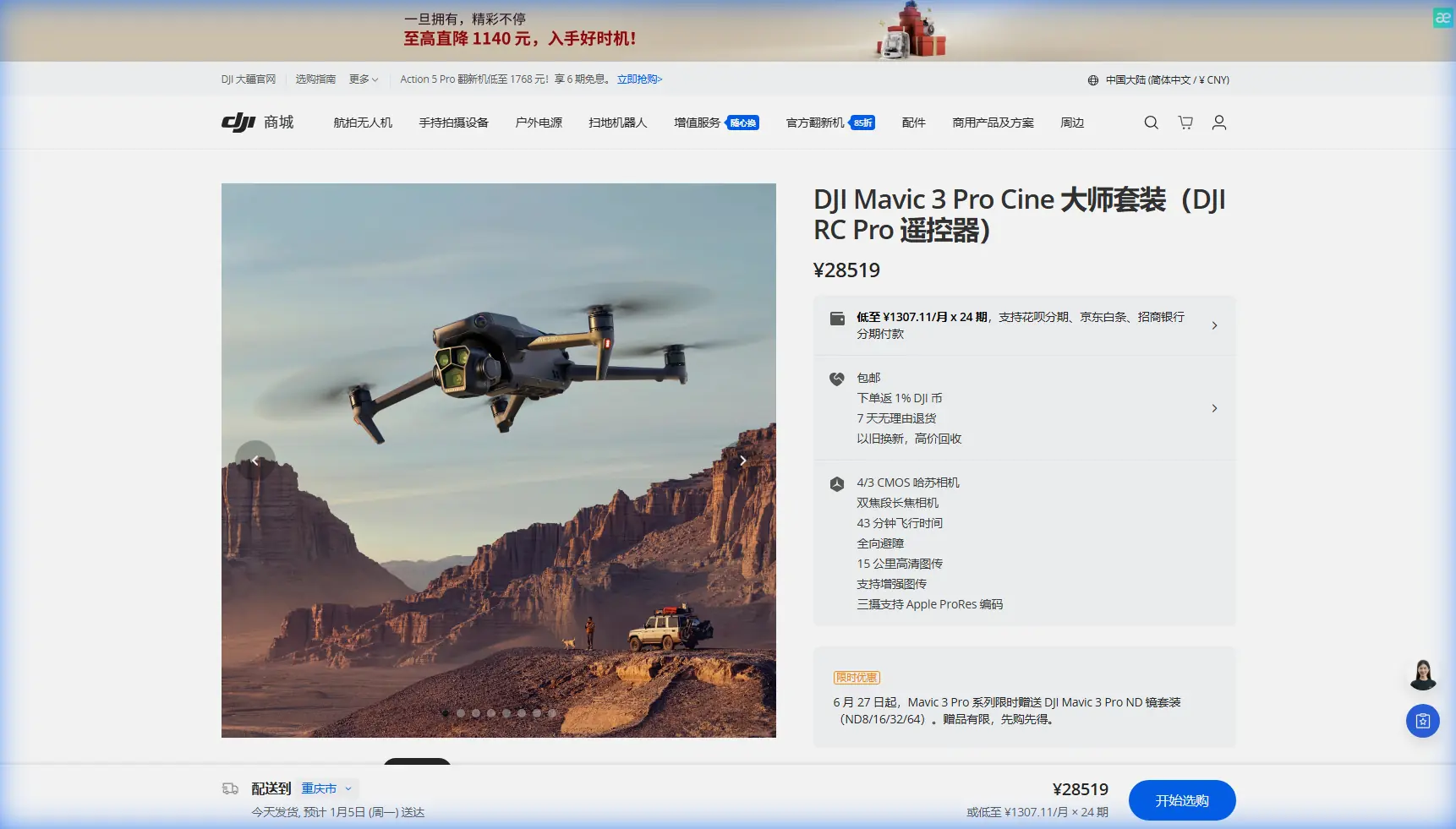
- Leverage the tri-camera system to switch between wide, medium, and tele focal lengths without repositioning the aircraft
- Implement a two-battery rotation system to maintain continuous site coverage during time-sensitive mapping windows
Why the Mavic 3 Pro Dominates Urban Construction Mapping
Mapping a construction site surrounded by cranes, scaffolding, and neighboring buildings requires a drone that won't flinch. The Mavic 3 Pro's omnidirectional obstacle avoidance system uses sensors on all six sides of the aircraft to detect hazards in real time—making it one of the safest platforms for flying in congested urban environments. This guide breaks down exactly how to configure your Mavic 3 Pro for precise, repeatable construction site maps that your project managers and surveyors will actually use.
I'm Jessica Brown, a photographer who transitioned into commercial drone mapping three years ago. After logging over 500 hours of urban flight time, I've developed a workflow specifically built around the Mavic 3 Pro's unique tri-camera system. Every tip here comes from real jobsites—muddy boots, early mornings, and all.
Step 1: Pre-Flight Planning for Urban Construction Sites
Before you ever power on the Mavic 3 Pro, your mapping mission lives or dies in the planning phase. Urban construction sites introduce variables that open-field surveys simply don't have.
Assess the Airspace
- Check for Temporary Flight Restrictions (TFRs) near your site
- Identify crane heights and confirm they won't exceed your planned altitude
- Log nearby helipad locations (hospitals, corporate buildings)
- Verify that no other drone operators are scheduled on or near the site
- Confirm LAANC authorization if operating in controlled airspace
Choose Your Ground Control Points (GCPs)
Place a minimum of 5 GCPs spread across the site for survey-grade accuracy. On active construction sites, I recommend using weighted checkered targets that won't blow away when a concrete truck rolls past. Position them away from heavy machinery paths but visible from your planned altitude.
Map Your Flight Grid
Set your grid pattern with 80% frontal overlap and 70% side overlap. This redundancy is essential in urban environments where shadows from adjacent buildings can create data gaps. The Mavic 3 Pro's 4/3 CMOS Hasselblad sensor captures enough detail at 80 meters AGL to resolve features as small as 2 cm per pixel.
Pro Tip: I always fly a quick manual orbit of the entire site at 100 meters before launching the automated grid. This gives me a live preview of shadow patterns and helps me decide whether to delay the mission by 30 minutes for better sun angle. That single orbit has saved me from re-flying entire jobs more times than I can count.
Step 2: Configure Your Mavic 3 Pro Camera Settings
The wrong camera settings will produce maps that look fine on a phone screen but fall apart the moment your surveyor tries to extract measurements.
Lock Down Manual Exposure
- Set ISO to 100–200 to minimize noise
- Choose a shutter speed of 1/800s or faster to eliminate motion blur
- Use f/2.8 to f/5.6 on the Hasselblad main camera for the sharpest results
- Disable auto white balance—lock it to Sunny (5600K) or Cloudy (6500K)
Shoot in D-Log for Maximum Flexibility
D-Log captures a flat color profile that preserves over 12.8 stops of dynamic range. On construction sites, you'll encounter extreme contrast between dark excavation pits and highly reflective steel beams. D-Log keeps detail in both ends of the histogram, which is critical when your photogrammetry software analyzes pixel data for elevation models.
Use the Right Lens for the Job
The Mavic 3 Pro's tri-camera system gives you three focal lengths without swapping hardware:
| Camera | Sensor | Focal Length (equiv.) | Best Use Case |
|---|---|---|---|
| Hasselblad Main | 4/3 CMOS, 20MP | 24mm | Full-site orthomosaic grids |
| Medium Tele | 1/1.3" CMOS, 48MP | 70mm | Structural detail inspection |
| Tele | 1/2" CMOS, 12MP | 166mm | Distant crane/façade close-ups |
For mapping grids, the 24mm Hasselblad camera is your workhorse. Switch to the 70mm medium tele when you need to document specific structural elements—rebar placement, formwork alignment, or façade progress—without flying dangerously close.
Step 3: Execute the Mapping Flight
With your plan locked and cameras configured, it's time to fly.
Activate Obstacle Avoidance (Don't Disable It)
Some pilots turn off obstacle avoidance for mapping missions, claiming it interferes with automated flight paths. On urban construction sites, this is reckless. The Mavic 3 Pro's APAS 5.0 system is sophisticated enough to navigate around unexpected obstacles—like a crane arm that swung into your flight path—while maintaining your grid line. Keep it on. Always.
Use Waypoint Mode for Repeatable Flights
Program your grid as a waypoint mission in DJI Pilot 2. Save the mission file so you can re-fly the exact same path every week for progress tracking. Consistent flight paths produce comparable datasets, which makes volumetric change detection accurate over time.
Monitor Your Battery Like a Hawk
Here's the field tip that changed my workflow entirely: never map on a single battery. I run a two-battery rotation system. Battery one flies the first 60% of the grid, then I bring the aircraft home at 35% remaining charge. I swap to battery two, resume from the last completed waypoint, and finish the grid. That remaining 35% in battery one? It becomes my emergency reserve if battery two has an issue mid-flight, or I use it for a quick manual inspection pass after the grid completes.
Expert Insight: Cold mornings on construction sites can reduce battery performance by 15–20%. I keep my spare batteries inside an insulated bag with hand warmers during winter mapping jobs. Pre-warming batteries to at least 20°C before flight ensures you get the full 43 minutes of rated flight time rather than an unpleasant surprise at 30 minutes.
This two-battery system also protects your data. If a battery fails at 8% during a single-battery mission, you lose the entire dataset because the aircraft emergency-lands before completing the grid. With the rotation method, you always have at least 60% of your data safely on the card.
Step 4: Post-Processing Your Construction Site Maps
Raw images from the Mavic 3 Pro need processing to become usable deliverables.
Software Workflow
- Import all images into photogrammetry software (Pix4D, DroneDeploy, or OpenDroneMap)
- Tag your GCPs in at least 5 images each for georeferencing
- Generate the orthomosaic first to verify complete coverage
- Build the Digital Surface Model (DSM) for elevation and volumetric data
- Export in GeoTIFF format for compatibility with CAD and GIS platforms
Leverage Hyperlapse for Client Reports
Beyond technical maps, the Mavic 3 Pro's Hyperlapse mode creates stunning time-compressed flyovers of the construction site. Set a waypoint-based Hyperlapse path along the site perimeter, and you'll produce a polished progress video that project stakeholders immediately understand. This isn't just a nice-to-have—it's a deliverable that justifies your mapping contract.
Use QuickShots for Context Footage
QuickShots modes like Dronie and Rocket give you quick contextual clips that show the site's relationship to surrounding urban infrastructure. These 15-second automated clips take almost no time to capture and add significant value to your final report package.
Advanced Techniques: Subject Tracking and ActiveTrack
While mapping grids are automated, some construction documentation requires dynamic tracking shots. The Mavic 3 Pro's ActiveTrack 5.0 can lock onto a specific subject—like a concrete pour in progress or a crane operation—and orbit it smoothly while recording.
This is particularly useful for:
- Safety compliance documentation (tracking worker movements near hazard zones)
- Equipment operation records (following a crane lift from multiple angles)
- Client presentation reels (cinematic reveals of completed phases)
ActiveTrack pairs with the obstacle avoidance system, so the aircraft will automatically detour around obstructions while keeping your subject centered in frame.
Common Mistakes to Avoid
- Flying at noon for "best lighting"—midday sun creates harsh shadows that confuse photogrammetry algorithms. Fly during golden hour or overcast conditions instead
- Skipping GCPs to save time—without ground control, your map could be off by several meters in absolute position, making it useless for surveying
- Using JPEG instead of RAW—JPEG compression destroys the subtle tonal data your mapping software needs. Always shoot DNG (RAW)
- Ignoring wind speed at altitude—ground-level wind may feel calm, but at 80 meters, gusts can exceed 30 km/h and cause image blur
- Forgetting to calibrate the IMU and compass on-site—urban environments are filled with magnetic interference from rebar and electrical conduits. Calibrate every time you set up at a new location
Frequently Asked Questions
How many acres can the Mavic 3 Pro map on a single battery?
At 80 meters AGL with 80/70 overlap settings, expect to cover approximately 15–20 acres per battery in ideal conditions. Urban sites with complex vertical structures may reduce this to 10–12 acres due to slower flight speeds required for obstacle avoidance processing.
Can the Mavic 3 Pro produce survey-grade maps without RTK?
The Mavic 3 Pro does not have built-in RTK, so absolute positional accuracy relies on well-distributed GCPs. With 5 or more GCPs, you can achieve relative accuracy of 1–2 cm in your orthomosaic—sufficient for most construction progress monitoring and volumetric calculations. For cadastral-grade surveys, pair the Mavic 3 Pro data with a dedicated RTK base station and PPK workflow.
What's the best way to handle no-fly zones near urban construction sites?
Apply for LAANC authorization through apps like AirHub, Aloft, or DJI FlySafe. Most urban construction sites fall within controlled airspace, and LAANC approvals are typically processed in under 5 minutes. For sites near airports or restricted facilities, file a manual authorization with your local aviation authority at least 90 days in advance.
Ready for your own Mavic 3 Pro? Contact our team for expert consultation.