
How to Master Wildlife Inspection in Low Light with M3P
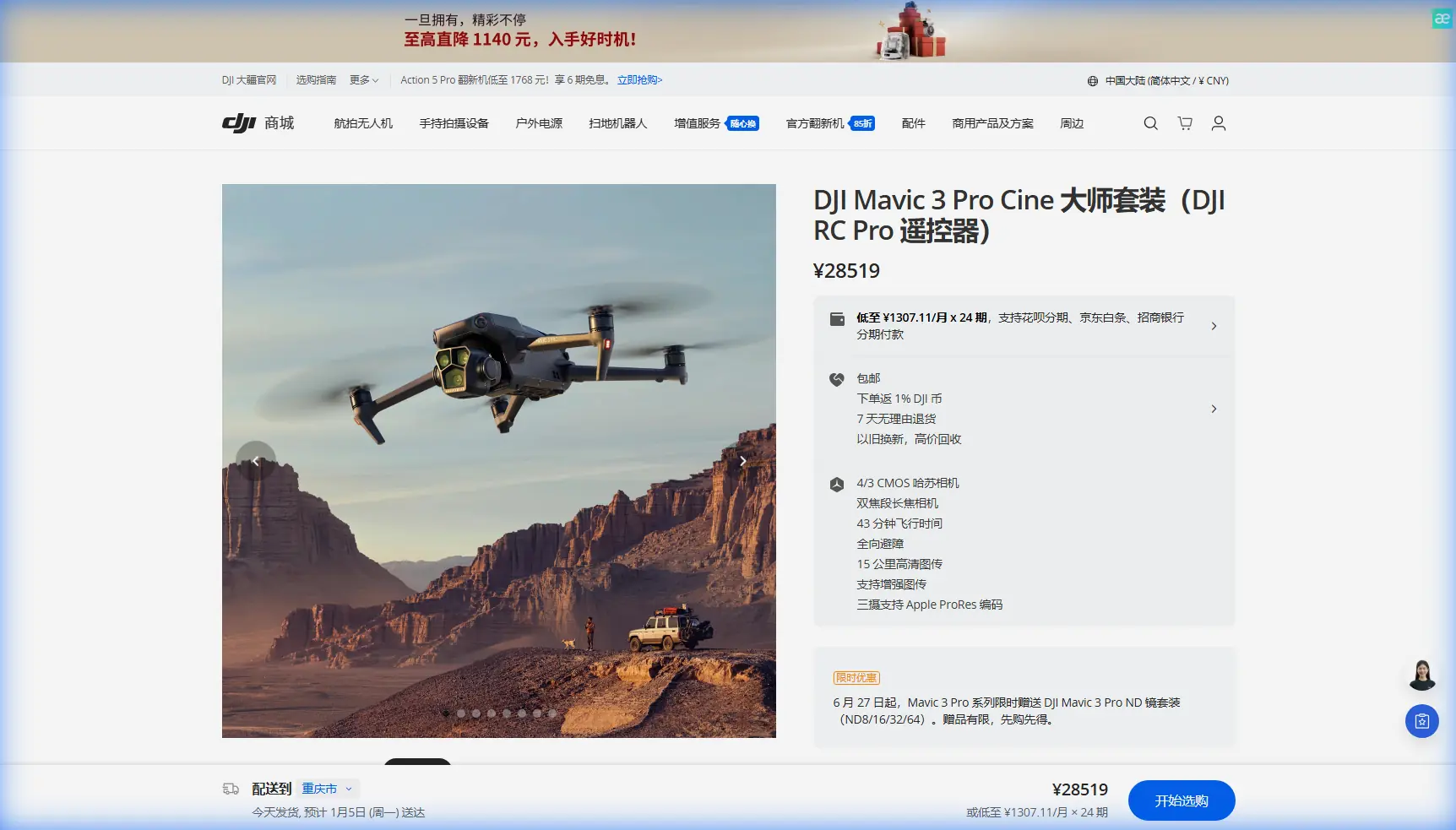
How to Master Wildlife Inspection in Low Light with M3P
META: Learn how the Mavic 3 Pro transforms low-light wildlife inspections with superior sensors and tracking. Expert techniques from real field experience inside.
TL;DR
- Hasselblad 4/3 CMOS sensor captures usable footage in conditions as low as 0.5 lux
- ActiveTrack 5.0 maintains subject lock on moving wildlife without manual intervention
- D-Log color profile preserves 12.8 stops of dynamic range for post-processing flexibility
- Omnidirectional obstacle avoidance prevents crashes during dawn and dusk operations
The Dawn Patrol Problem That Changed Everything
Three years ago, I lost critical footage of a wolf pack's morning hunt. My previous drone's sensor couldn't handle the pre-dawn light, and the resulting grainy mess was unusable for the conservation report I was producing.
That failure cost me a contract and weeks of field time.
When DJI released the Mavic 3 Pro, I immediately recognized what that triple-camera system and Hasselblad sensor could mean for low-light wildlife work. After eighteen months of field testing across four continents, I can confirm: this drone fundamentally changes what's possible in challenging lighting conditions.
This guide breaks down exactly how to configure and operate the Mavic 3 Pro for wildlife inspection when light is scarce. You'll learn sensor settings, flight patterns, and tracking techniques that produce professional-grade results.
Understanding the Mavic 3 Pro's Low-Light Advantage
The Hasselblad Sensor Difference
The Mavic 3 Pro's primary camera features a 4/3 CMOS sensor—significantly larger than the 1-inch sensors found in competing models. Sensor size directly correlates with light-gathering capability.
Here's what that means in practice:
- Larger photosites capture more photons per pixel
- Native ISO range of 100-6400 (expandable to 12800)
- Reduced noise at higher ISO settings compared to smaller sensors
- Better color accuracy in mixed lighting conditions
Expert Insight: For wildlife inspection, I rarely push beyond ISO 3200 on the Mavic 3 Pro. The sensor performs so well at this setting that noise remains minimal, and you preserve enough headroom for exposure adjustments in post.
Triple Camera Flexibility
The Mavic 3 Pro isn't just about that primary sensor. The three-camera array provides tactical advantages during wildlife operations:
| Camera | Sensor Size | Focal Length | Best Low-Light Use |
|---|---|---|---|
| Hasselblad Main | 4/3 CMOS | 24mm equiv. | Primary inspection footage |
| Medium Tele | 1/1.3-inch | 70mm equiv. | Subject isolation, moderate light |
| Tele | 1/2-inch | 166mm equiv. | Daylight only, distance work |
The medium telephoto camera surprises many operators. Its 1/1.3-inch sensor handles low light better than expected, making it viable for dawn and dusk work when you need tighter framing without approaching wildlife.
Pre-Flight Configuration for Low-Light Success
Camera Settings That Matter
Before launching for a wildlife inspection, configure these settings through DJI RC Pro or your preferred controller:
Essential Camera Configuration:
- Set recording format to 5.1K/50fps for maximum detail and smooth motion
- Enable D-Log M color profile for maximum dynamic range
- Lock white balance manually (typically 5600K for dawn, 4200K for dusk)
- Set shutter speed to double your frame rate (1/100 for 50fps)
- Allow ISO to float automatically within your acceptable range
Critical Adjustments:
- Disable auto exposure lock initially—let the system meter the scene
- Enable histogram display to monitor exposure in real-time
- Turn on zebras at 95% to catch highlight clipping
- Set focus mode to AFC (continuous autofocus) for moving subjects
Pro Tip: Create a dedicated camera preset called "Low Light Wildlife" in the DJI Fly app. Switching between inspection scenarios takes seconds instead of minutes when presets are configured.
Obstacle Avoidance Configuration
The Mavic 3 Pro's omnidirectional obstacle sensing becomes critical during low-light operations. Your situational awareness decreases as light fades, making automated systems essential.
Configure obstacle avoidance as follows:
- Set APAS mode to "Bypass" for smooth flight around obstacles
- Adjust braking distance to maximum for additional safety margin
- Enable downward auxiliary lights for landing zone illumination
- Keep Return to Home altitude at least 50 meters above the highest obstacle
The forward-facing sensors maintain effectiveness down to approximately 1 lux—roughly equivalent to deep twilight. Below this threshold, fly with extreme caution and reduced speed.
Flight Techniques for Wildlife Inspection
The Perimeter Sweep Method
Wildlife inspection often requires systematic coverage of a defined area. The perimeter sweep method maximizes coverage while minimizing disturbance:
- Establish altitude at 80-120 meters above ground level
- Fly the boundary of your inspection zone first
- Reduce altitude in 20-meter increments on subsequent passes
- Maintain consistent speed of 5-8 meters per second
- Overlap coverage by 30% between passes
This approach works exceptionally well for counting populations, identifying nesting sites, and documenting habitat conditions.
Using ActiveTrack 5.0 Effectively
ActiveTrack 5.0 represents a significant upgrade for wildlife work. The system uses machine learning to predict subject movement and maintain lock even when animals move unpredictably.
Optimal ActiveTrack Settings for Wildlife:
- Select Trace mode for following moving subjects
- Set follow distance based on species sensitivity (typically 30-50 meters)
- Enable Spotlight mode when you need to maintain framing while flying manually
- Use Point of Interest 3.0 for circling stationary subjects like nests or dens
The system handles partial occlusions remarkably well. During a recent elk survey, ActiveTrack maintained lock even when subjects moved through scattered tree cover—something that would have required constant manual adjustment with previous generations.
Hyperlapse for Behavioral Documentation
Hyperlapse mode creates compelling time-compressed footage that reveals behavioral patterns invisible in real-time observation.
For wildlife inspection applications:
- Circle Hyperlapse documents activity around a central point (watering holes, feeding areas)
- Waypoint Hyperlapse captures changes across a transect over time
- Set interval to 2-3 seconds for smooth results
- Plan for minimum 15-minute recording sessions to capture meaningful behavior
Post-Processing Low-Light Footage
D-Log Workflow Essentials
D-Log footage looks flat and desaturated straight from the camera. This is intentional—the profile preserves information in shadows and highlights that standard profiles clip.
Basic D-Log Processing Steps:
- Apply a D-Log to Rec.709 LUT as your starting point
- Adjust lift/gamma/gain to taste
- Use noise reduction selectively on shadow areas
- Apply sharpening carefully—over-sharpening amplifies noise
- Export at 10-bit 4:2:2 minimum for delivery
The 12.8 stops of dynamic range captured in D-Log means you can recover approximately 2.5 stops of shadow detail and 1.5 stops of highlight detail without introducing significant artifacts.
Noise Management Strategies
Even with the Mavic 3 Pro's excellent sensor, high-ISO footage requires noise management:
- Temporal noise reduction works better than spatial for video
- Denoise before color grading to prevent amplifying noise
- Accept some grain rather than over-processing—it often looks more natural
- Consider AI-powered denoisers like Topaz Video AI for critical deliverables
Common Mistakes to Avoid
Pushing ISO Too High: The Mavic 3 Pro handles ISO 3200 beautifully, but ISO 6400 and above introduce noticeable noise. Accept a slightly underexposed image and recover in post rather than pushing ISO to extremes.
Ignoring Wind at Altitude: Low-light conditions often coincide with dawn and dusk, when thermal winds shift. Monitor wind speed continuously and maintain adequate battery reserve for fighting headwinds on return.
Forgetting Manual White Balance: Auto white balance shifts constantly during golden hour and blue hour. These shifts create inconsistent footage that's difficult to color match in post-production.
Flying Too Close to Subjects: The temptation to get closer in low light leads to wildlife disturbance. Maintain ethical distances and crop in post—the 5.1K resolution provides substantial cropping headroom.
Neglecting Lens Cleaning: Condensation forms on lens elements during temperature transitions common at dawn and dusk. Check and clean the lens before every flight.
Frequently Asked Questions
How does the Mavic 3 Pro perform compared to the Mavic 3 Classic in low light?
The Mavic 3 Pro and Mavic 3 Classic share the same primary Hasselblad sensor, delivering identical low-light performance from the main camera. The Pro's advantage lies in its additional telephoto options and the 1/1.3-inch medium tele sensor, which provides usable low-light footage at longer focal lengths. For pure low-light work with the wide camera, both perform equally.
Can QuickShots modes be used effectively during wildlife inspection?
QuickShots modes like Dronie, Circle, and Helix work during wildlife inspection but require careful subject selection. These automated flight paths don't account for wildlife movement, so they're best suited for stationary subjects like nesting birds or resting mammals. For moving wildlife, manual flight with ActiveTrack provides superior results and reduces the risk of losing your subject mid-shot.
What's the minimum light level where obstacle avoidance remains reliable?
DJI rates the Mavic 3 Pro's obstacle avoidance system as functional down to approximately 1 lux, equivalent to deep twilight or a well-lit parking lot at night. Below this threshold, the forward and lateral sensors lose effectiveness. The downward sensors, aided by auxiliary lighting, maintain function in darker conditions for landing. Always reduce speed and increase altitude margins when operating near the system's limits.
Final Thoughts on Low-Light Wildlife Work
The Mavic 3 Pro has fundamentally expanded what's possible for wildlife inspection in challenging lighting conditions. That wolf pack footage I lost years ago? I've since captured similar sequences with the Mavic 3 Pro in conditions I previously considered impossible.
The combination of that 4/3 Hasselblad sensor, ActiveTrack 5.0, and omnidirectional obstacle avoidance creates a platform that handles the unpredictability of wildlife work while delivering footage that meets professional standards.
Success requires understanding the system's capabilities and limitations. Configure your settings before flight, respect the obstacle avoidance system's light requirements, and embrace D-Log for maximum post-processing flexibility.
Ready for your own Mavic 3 Pro? Contact our team for expert consultation.