
Mavic 3 Pro: Mastering Field Inspections in Complex Terrain
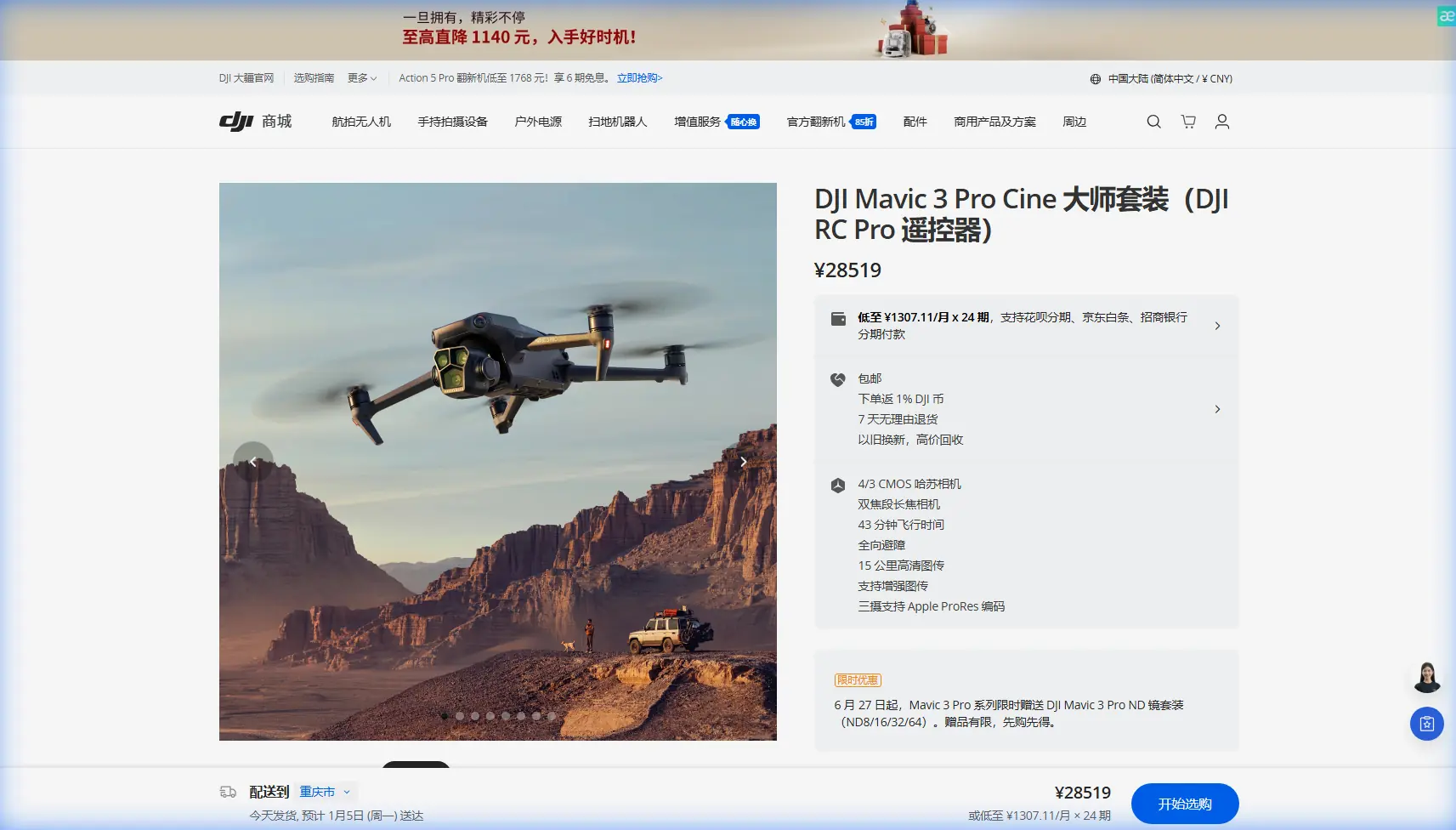
Mavic 3 Pro: Mastering Field Inspections in Complex Terrain
META: Discover how the Mavic 3 Pro transforms agricultural field inspections in challenging terrain with triple-camera precision and advanced obstacle avoidance systems.
TL;DR
- Triple-camera system enables simultaneous wide-angle mapping and telephoto detail capture during single flight passes
- Omnidirectional obstacle sensing allows confident navigation through orchards, vineyards, and uneven terrain
- 46-minute flight time covers up to 200 acres per battery in optimal conditions
- Third-party ND filter integration proved essential for consistent D-Log footage across varying light conditions
The Challenge: Agricultural Inspections Demand More Than Basic Drones
Field inspections across complex agricultural terrain present unique obstacles that standard consumer drones simply cannot handle. Uneven topography, dense crop canopies, scattered equipment, and unpredictable wind corridors create an environment where precision and reliability become non-negotiable.
After three years of documenting agricultural operations across California's Central Valley, I've tested nearly every professional drone platform available. The Mavic 3 Pro emerged as my primary inspection tool after a particularly demanding project surveying 450 acres of hillside vineyards with elevation changes exceeding 800 feet.
This case study breaks down exactly how the Mavic 3 Pro's feature set translates to real-world agricultural inspection efficiency—and where third-party accessories filled critical gaps.
Why the Mavic 3 Pro Excels in Agricultural Environments
Triple-Camera Versatility Changes the Inspection Workflow
The Mavic 3 Pro's Hasselblad triple-camera array isn't just a marketing specification. During field inspections, this configuration eliminates the need for multiple flight passes that drain batteries and extend project timelines.
The primary 4/3 CMOS sensor with its 24mm equivalent focal length captures comprehensive field overviews. Switching to the 70mm medium telephoto allows detailed crop health assessment without descending into obstacle-rich zones. The 166mm telephoto lens identifies specific plant stress indicators, pest damage, or irrigation issues from safe operating altitudes.
Expert Insight: I maintain altitude above 120 feet AGL when inspecting mature orchards, using the telephoto lenses to examine individual tree canopies. This approach keeps the aircraft safely above the tallest obstacles while delivering inspection-quality imagery.
Obstacle Avoidance That Actually Works in Dense Environments
Agricultural terrain presents obstacle challenges that suburban flying never encounters. Irrigation pivots, power lines, windbreaks, and equipment create a three-dimensional maze that demands reliable sensing systems.
The Mavic 3 Pro's omnidirectional obstacle sensing covers all directions with a detection range up to 200 meters forward. During vineyard inspections, I've watched the aircraft smoothly navigate between trellis rows while maintaining subject tracking on specific vine sections.
Key obstacle avoidance specifications:
- Forward sensing range: 200m (optimal conditions)
- Backward sensing range: 100m
- Lateral sensing range: 100m
- Upward/downward sensing: Active during all flight modes
- APAS 5.0 enables automatic path planning around detected obstacles
Subject Tracking for Moving Agricultural Equipment
Documenting equipment operations requires smooth, consistent tracking shots that traditional manual piloting struggles to achieve. ActiveTrack 5.0 on the Mavic 3 Pro maintains lock on tractors, harvesters, and other machinery across varied terrain.
During a recent harvest documentation project, I tracked a combine harvester across 40 acres of wheat fields. The aircraft maintained consistent framing despite dust clouds, terrain undulation, and my position changes as ground photographer. ActiveTrack predicted the harvester's path and adjusted positioning proactively rather than reactively.
The Third-Party Accessory That Transformed My Workflow
Stock ND filters included with the Mavic 3 Pro cover basic exposure scenarios. Agricultural inspections, however, demand more nuanced light control—especially when shooting D-Log footage for post-processing flexibility.
I integrated the PolarPro Variable ND 2-5 Stop filter specifically designed for the Mavic 3 Pro's Hasselblad camera. This single filter replaced carrying multiple fixed ND options and allowed real-time exposure adjustment as cloud cover shifted during extended inspection flights.
The variable ND capability proved essential during a six-hour inspection day where lighting conditions changed dramatically. Rather than landing to swap filters, I adjusted exposure compensation and variable ND density while maintaining flight operations.
Pro Tip: When shooting D-Log for agricultural inspections, target 1/50 shutter speed at 24fps or 1/100 at 48fps. The variable ND filter maintains these settings across lighting conditions ranging from overcast to harsh midday sun.
Technical Comparison: Mavic 3 Pro vs. Alternative Inspection Platforms
| Specification | Mavic 3 Pro | Mavic 3 Classic | Air 3 | Mini 4 Pro |
|---|---|---|---|---|
| Camera System | Triple (24/70/166mm) | Single (24mm) | Dual (24/70mm) | Single (24mm) |
| Sensor Size | 4/3 CMOS | 4/3 CMOS | 1/1.3" CMOS | 1/1.3" CMOS |
| Max Flight Time | 46 min | 46 min | 46 min | 34 min |
| Obstacle Sensing | Omnidirectional | Omnidirectional | Omnidirectional | Tri-directional |
| Max Transmission | 15km | 15km | 20km | 20km |
| D-Log Support | Yes | Yes | Yes | Yes |
| Weight | 958g | 895g | 720g | 249g |
| Ideal Use Case | Professional inspection | General professional | Travel/inspection hybrid | Recreational/light commercial |
Practical Workflow: Inspecting 200 Acres of Hillside Orchards
Pre-Flight Planning
Complex terrain inspections require thorough pre-flight analysis. I use satellite imagery to identify:
- Elevation changes requiring altitude adjustments
- Power line corridors demanding manual control zones
- Equipment storage areas with vertical obstacles
- Wind corridor patterns based on terrain features
Flight Pattern Optimization
For comprehensive field coverage, I employ a modified grid pattern that accounts for terrain contours:
- Perimeter flight at 200 feet AGL using the 24mm lens for boundary documentation
- Grid passes at 150 feet AGL with 70% overlap for mapping data
- Detail passes at 100 feet AGL using telephoto lenses for specific concern areas
- Hyperlapse sequences along key rows for time-compressed growth documentation
Post-Processing Pipeline
D-Log footage from agricultural inspections requires consistent color grading. My workflow includes:
- Import to DaVinci Resolve with Mavic 3 Pro D-Log to Rec.709 LUT
- Exposure normalization across clips
- Highlight recovery for sun-bleached canopy sections
- Export at 4K 60fps for client delivery with 1080p proxy for field review
QuickShots and Hyperlapse for Client Deliverables
Agricultural clients increasingly request polished video content alongside technical inspection data. The Mavic 3 Pro's automated flight modes deliver professional results without complex manual piloting.
QuickShots I use regularly for agricultural content:
- Dronie: Establishing shots showing field scale
- Circle: Equipment documentation with 360-degree coverage
- Helix: Dramatic reveals of terrain complexity
- Rocket: Vertical ascent showing crop pattern uniformity
Hyperlapse modes for time-compressed documentation:
- Free: Manual path control for custom routes
- Circle: POI-centered rotation for equipment or structure focus
- Course Lock: Consistent heading for row-by-row progression
- Waypoint: Repeatable paths for growth comparison sequences
Common Mistakes to Avoid
Flying too low in unfamiliar terrain: Obstacle avoidance works well, but unexpected hazards like guy wires or temporary structures can appear suddenly. Maintain conservative altitudes until you've surveyed the area.
Ignoring wind patterns in complex terrain: Hills, tree lines, and structures create turbulence zones. The Mavic 3 Pro handles wind well, but mechanical turbulence near obstacles can exceed its compensation capabilities.
Neglecting ND filters for video work: Agricultural inspections often require video documentation. Without proper ND filtration, D-Log footage suffers from motion artifacts or overexposure that limits post-processing options.
Overestimating battery performance in cold conditions: Early morning inspections during cooler months reduce effective flight time by 15-20%. Plan for shorter missions and keep spare batteries warm.
Skipping compass calibration after travel: Agricultural sites often have magnetic interference from buried irrigation infrastructure or nearby equipment. Calibrate before each new location.
Frequently Asked Questions
Can the Mavic 3 Pro handle dusty agricultural environments?
The aircraft performs reliably in moderate dust conditions common during harvest operations. I recommend avoiding flight directly behind active tillage equipment and cleaning sensor surfaces between flights. The obstacle avoidance sensors can accumulate dust that reduces detection accuracy.
How does ActiveTrack perform when subjects move behind obstacles?
ActiveTrack 5.0 maintains subject prediction when temporary occlusion occurs—such as a tractor passing behind a tree. The system typically reacquires the subject within 2-3 seconds of reappearance. For extended occlusions, manual intervention may be necessary.
Is the 46-minute flight time realistic for inspection work?
Under optimal conditions with minimal wind and moderate temperatures, I consistently achieve 38-42 minutes of actual flight time while maintaining safe battery reserves. Aggressive maneuvering, strong winds, or cold temperatures reduce this figure. Plan for 35 minutes of productive inspection time per battery as a conservative baseline.
Final Assessment
The Mavic 3 Pro has fundamentally changed how I approach agricultural field inspections. The triple-camera system eliminates workflow compromises that previously required multiple aircraft or repeated flights. Obstacle avoidance provides genuine confidence in complex environments rather than serving as a marketing checkbox.
The addition of quality third-party ND filters addressed the primary limitation I encountered—inconsistent exposure control across extended inspection days. This combination of capable hardware and targeted accessories delivers inspection results that satisfy both technical documentation requirements and client presentation expectations.
For photographers and videographers working in agricultural inspection, the Mavic 3 Pro represents the current benchmark for balancing capability, portability, and reliability.
Ready for your own Mavic 3 Pro? Contact our team for expert consultation.