
Filming Venues with Mavic 3 Pro in Dusty Conditions
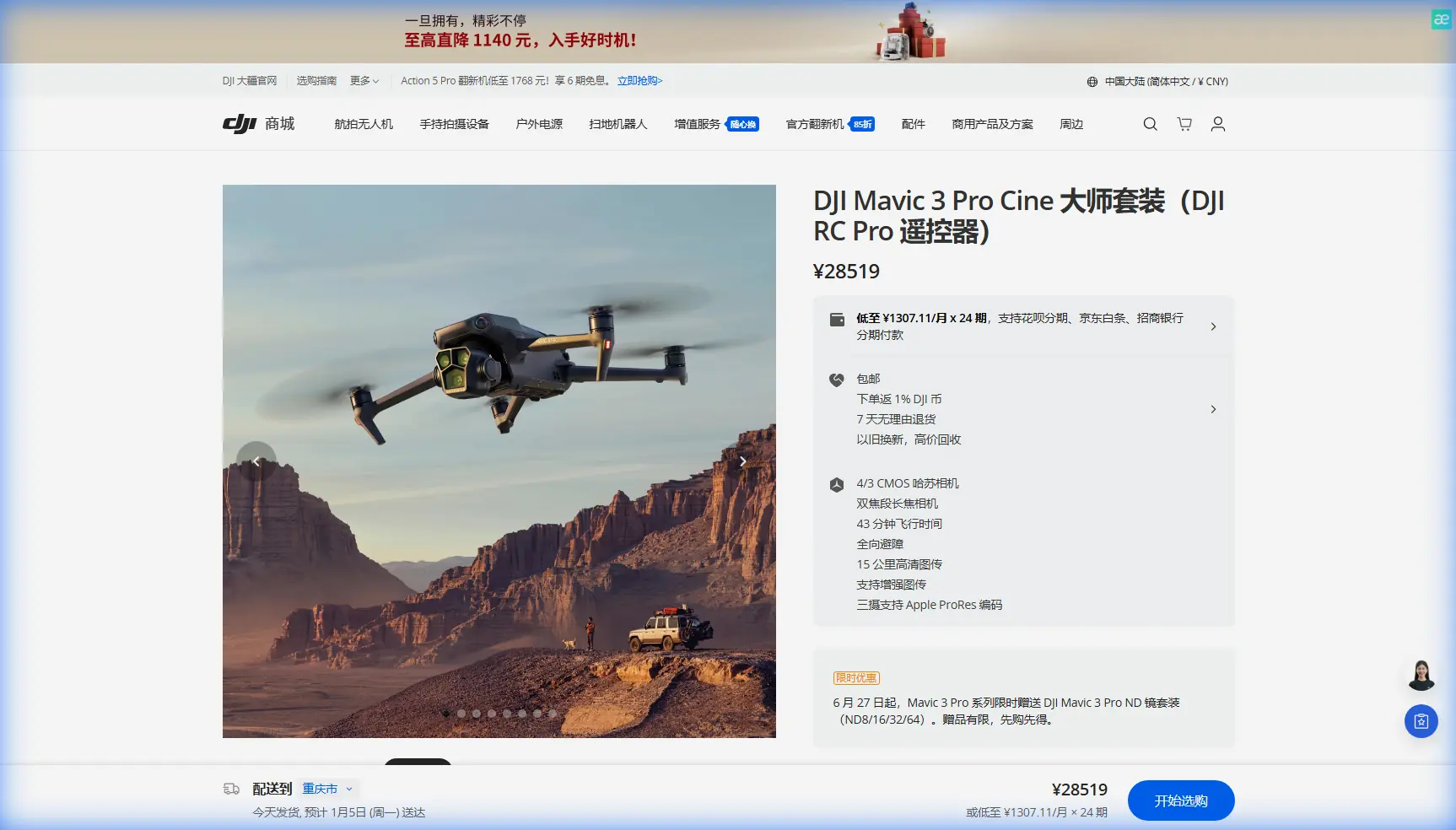
Filming Venues with Mavic 3 Pro in Dusty Conditions
META: Master dusty venue filming with the Mavic 3 Pro. Expert tips for sensor protection, optimal settings, and cinematic shots in challenging environments.
TL;DR
- Pre-flight sensor cleaning and lens protection are non-negotiable in dusty environments
- Use D-Log color profile to preserve highlight detail in haze-filled air
- ActiveTrack 5.0 maintains subject lock even when dust reduces visual contrast
- Battery performance drops 15-20% in dusty, hot conditions—plan accordingly
Why Dusty Venues Challenge Even Professional Drone Pilots
Dust destroys drones. I learned this the hard way filming a desert music festival when fine particles infiltrated my gimbal motors mid-flight. The Mavic 3 Pro's sealed construction handles dusty venues better than most consumer drones, but success requires deliberate preparation and technique adjustments.
This guide covers everything from pre-flight protection protocols to post-processing workflows specifically designed for dusty venue cinematography. Whether you're capturing outdoor concerts, construction sites, or arid landscape events, these field-tested methods will protect your gear and elevate your footage.
Essential Pre-Flight Preparation for Dusty Environments
Sensor and Lens Protection Protocol
The Mavic 3 Pro features a Hasselblad triple-camera system that demands protection. Before every dusty venue shoot, complete this checklist:
- Apply a UV filter or clear lens protector to the main camera
- Clean all 8 obstacle avoidance sensors with a microfiber cloth
- Inspect gimbal motors for visible particle accumulation
- Check ventilation ports for debris blockage
- Verify propeller attachment points are dust-free
Pro Tip: Carry a rocket blower rather than compressed air. Compressed air can force particles deeper into mechanical components, while a rocket blower safely displaces surface dust without moisture or excessive pressure.
Launch and Landing Zone Preparation
Ground disturbance during takeoff creates the highest contamination risk. Establish a clean launch zone using these methods:
- Bring a portable landing pad (minimum 75cm diameter)
- Wet the surrounding ground if water is available
- Launch from elevated surfaces like vehicle roofs or equipment cases
- Use hand-launch techniques when ground conditions are severe
The Mavic 3 Pro's downward vision sensors sit just centimeters from the ground during landing. A single grain of sand lodged in these sensors can trigger false obstacle warnings throughout your entire shoot.
Optimal Camera Settings for Hazy, Dusty Air
Why D-Log Changes Everything
Dusty air scatters light unpredictably. Shooting in standard color profiles crushes shadow detail and blows out highlights where dust particles catch sunlight. D-Log preserves 12+ stops of dynamic range, giving you recovery options in post-production.
Configure these settings for dusty venue work:
- Color Profile: D-Log or HLG
- ISO: Keep at 100-400 to minimize noise in flat profiles
- Shutter Speed: Double your frame rate (1/50 for 24fps, 1/60 for 30fps)
- White Balance: Manual setting—auto white balance struggles with dust-tinted light
- Resolution: 5.1K on the main camera for maximum cropping flexibility
Exposure Compensation Strategy
Dust particles in the air fool the camera's metering system. The Mavic 3 Pro consistently underexposes by 0.5-1 stop when significant atmospheric dust is present.
| Dust Level | Exposure Compensation | ND Filter Recommendation |
|---|---|---|
| Light haze | +0.3 to +0.5 EV | ND8 or ND16 |
| Moderate dust | +0.5 to +0.7 EV | ND4 or ND8 |
| Heavy dust | +0.7 to +1.0 EV | ND4 or none |
| Dust storm conditions | Do not fly | N/A |
Expert Insight: Heavy dust actually acts as a natural ND filter. I've shot golden hour footage in dusty venues without any ND filtration and achieved perfect motion blur at 24fps. Monitor your histogram rather than trusting the preview image.
Leveraging Intelligent Flight Modes in Low-Visibility Conditions
ActiveTrack 5.0 Performance in Dust
The Mavic 3 Pro's ActiveTrack 5.0 uses machine learning to maintain subject lock. In dusty conditions, the system performs remarkably well when you follow these guidelines:
- Select subjects with high contrast against the dusty background
- Avoid tracking subjects that match the dust color (beige, tan, brown)
- Maintain minimum 10-meter distance from tracked subjects
- Enable Spotlight mode rather than Trace when dust is heavy
ActiveTrack's subject prediction algorithms compensate for momentary visual obstruction. During a recent construction site shoot, the system maintained lock on a yellow excavator through 3-second dust cloud obscurations.
QuickShots and Hyperlapse Considerations
Automated flight modes require special attention in dusty venues:
QuickShots that work well:
- Dronie (moves away from dust source)
- Circle (maintains consistent distance)
- Helix (ascending spiral escapes ground-level dust)
QuickShots to avoid:
- Rocket (descends into disturbed dust)
- Boomerang (unpredictable dust interaction)
Hyperlapse modes demand stable atmospheric conditions. Dust movement between frames creates distracting shimmer in final renders. Shoot Hyperlapse sequences early morning before thermal activity lifts ground dust.
Battery Management in Dusty, Hot Conditions
Here's the field experience that changed my entire approach: During a summer festival shoot in Arizona, my Mavic 3 Pro batteries showed 100% charge but delivered only 28 minutes of flight time instead of the rated 43 minutes. The combination of 38°C heat and dust-restricted ventilation caused aggressive thermal throttling.
Temperature and Dust Impact on Flight Time
| Condition | Expected Flight Time | Actual Flight Time |
|---|---|---|
| Normal (20°C, clean air) | 43 minutes | 40-43 minutes |
| Hot (30°C+), clean air | 43 minutes | 35-38 minutes |
| Normal temp, dusty | 43 minutes | 38-40 minutes |
| Hot AND dusty | 43 minutes | 28-33 minutes |
Battery Protection Protocols
- Store batteries in sealed containers between flights
- Allow 10-minute cooldown before swapping hot batteries
- Clean battery contacts with isopropyl alcohol after dusty shoots
- Never charge batteries with visible dust contamination
- Keep spare batteries in climate-controlled environments (vehicle AC)
Obstacle Avoidance Calibration for Dusty Conditions
The Mavic 3 Pro's omnidirectional obstacle avoidance system uses vision sensors that dust can compromise. Before dusty venue shoots:
- Run sensor calibration through DJI Fly app
- Test obstacle detection with a stationary object before committing to complex flights
- Increase obstacle avoidance sensitivity to maximum
- Set braking distance to the highest setting
Dust accumulation on sensors creates false positives (phantom obstacles) more often than false negatives. If your drone starts stopping unexpectedly mid-flight, land immediately and clean all sensor surfaces.
Common Mistakes to Avoid
Changing lenses or filters in the field. Every lens swap in dusty conditions risks sensor contamination. Mount your filter before leaving for the venue and commit to that configuration.
Ignoring gimbal calibration drift. Dust particles in gimbal motors cause gradual horizon drift. Recalibrate the gimbal after every 3-4 flights in dusty conditions rather than waiting for visible problems.
Flying immediately after other aircraft. Helicopter rotor wash, other drones, or vehicle traffic creates localized dust clouds that take 5-10 minutes to settle. Wait for clear air before launching.
Trusting the visual preview in dusty light. The DJI Fly app preview compresses dynamic range significantly. Footage that looks properly exposed on your phone screen may be 1+ stop underexposed when viewed on a calibrated monitor.
Neglecting post-flight cleaning. Dust left on the drone overnight bonds with humidity and becomes much harder to remove. Clean your Mavic 3 Pro within 2 hours of landing.
Post-Processing Workflow for Dusty Footage
D-Log footage from dusty venues requires specific treatment:
- Apply dehaze adjustments conservatively (10-25%)
- Use graduated filters to balance dust-heavy sky regions
- Add subtle contrast curves to restore depth lost to atmospheric haze
- Consider color grading that embraces the warm dust tones rather than fighting them
The Mavic 3 Pro's 10-bit color depth provides substantial latitude for dust correction without banding artifacts.
Frequently Asked Questions
Can dust permanently damage the Mavic 3 Pro's gimbal?
Yes. Fine particles that infiltrate the 3-axis gimbal motors cause bearing wear and eventual motor failure. The Mavic 3 Pro's gimbal is more sealed than previous generations, but it's not dust-proof. Consistent exposure without proper cleaning shortens gimbal lifespan from years to months.
Should I use obstacle avoidance in dusty conditions or turn it off?
Keep obstacle avoidance enabled but monitor behavior. Dusty sensors may trigger false obstacle warnings, but the alternative—flying blind in reduced visibility—creates greater crash risk. If false positives become unmanageable, switch to Attitude mode only if you're an experienced pilot.
What's the minimum visibility for safe Mavic 3 Pro operation in dust?
Maintain visual line of sight with your drone at all times—this is both a safety requirement and legal mandate in most jurisdictions. If dust reduces visibility below 500 meters, conditions are too hazardous for safe operation. The drone's sensors cannot compensate for pilot inability to see and avoid obstacles.
Ready for your own Mavic 3 Pro? Contact our team for expert consultation.