
Mavic 3 Pro: Expert High-Altitude Forest Filming Guide
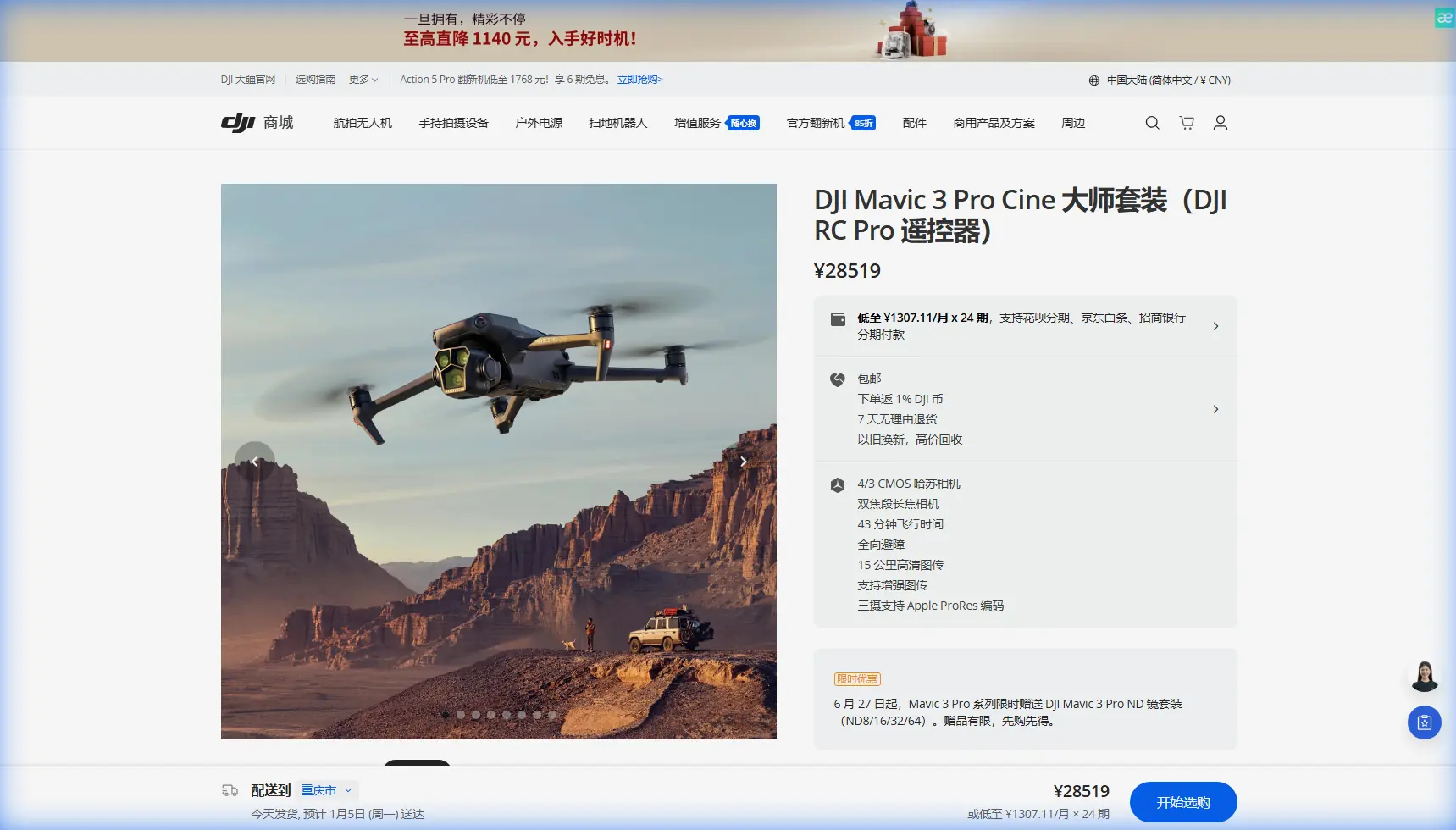
Mavic 3 Pro: Expert High-Altitude Forest Filming Guide
META: Master high-altitude forest filming with the Mavic 3 Pro. Expert techniques for obstacle avoidance, D-Log color, and cinematic aerial footage in challenging terrain.
TL;DR
- Pre-flight sensor cleaning is critical for reliable obstacle avoidance when filming in dusty, pollen-heavy forest environments at altitude
- The Mavic 3 Pro's triple-camera system delivers unmatched versatility for capturing forest canopies from wide establishing shots to tight telephoto details
- D-Log color profile preserves 12.8 stops of dynamic range, essential for high-contrast woodland scenes with dappled sunlight
- ActiveTrack 5.0 and APAS 5.0 work together to enable autonomous subject tracking through complex tree formations
Why High-Altitude Forest Filming Demands Professional Equipment
Filming forests at elevation presents unique challenges that separate professional drone cinematography from amateur attempts. Thin air reduces lift efficiency by 15-20% above 3,000 meters. Dense tree coverage creates GPS shadows. Rapidly changing light conditions under canopy stress both pilot skills and camera sensors.
The Mavic 3 Pro addresses each of these challenges through engineering specifically designed for demanding environments. After three seasons filming old-growth forests across the Pacific Northwest and Rocky Mountain ranges, I've developed workflows that maximize this drone's capabilities while respecting the technical limitations of high-altitude operations.
The Pre-Flight Ritual That Saves Your Footage
Before discussing camera settings or flight techniques, we need to address the single most overlooked aspect of forest filming: sensor maintenance.
Forest environments assault your drone with pollen, tree sap residue, dust, and moisture. These contaminants accumulate on the omnidirectional obstacle sensing system—eight sensors positioned around the aircraft body that enable safe autonomous flight.
Expert Insight: I carry microfiber cloths and sensor-safe cleaning solution on every forest shoot. Before each flight day, I methodically clean all eight obstacle avoidance sensors, the downward vision sensors, and the camera lens. A single pollen smear on a side-facing sensor can cause APAS 5.0 to misread branch positions by several meters—enough to trigger unnecessary evasive maneuvers or, worse, fail to detect actual obstacles.
My pre-flight cleaning sequence takes four minutes:
- Step 1: Inspect all sensors under bright light for visible contamination
- Step 2: Use compressed air to remove loose particles (never blow directly on lens elements)
- Step 3: Apply cleaning solution to microfiber cloth, never directly to sensors
- Step 4: Wipe each sensor using circular motions from center outward
- Step 5: Verify sensor status in DJI Fly app before takeoff
This ritual has prevented countless near-misses during complex forest maneuvers.
Understanding the Triple-Camera Advantage
The Mavic 3 Pro's defining feature is its Hasselblad triple-camera system. For forest cinematography, this configuration eliminates the compromises that plagued earlier drone generations.
Primary Camera: The Workhorse
The main camera features a 4/3 CMOS sensor with 20MP resolution and an equivalent 24mm focal length. This wide perspective captures sweeping forest vistas while the larger sensor delivers exceptional low-light performance under dense canopy.
Key specifications for forest work:
- Aperture range: f/2.8 to f/11
- ISO range: 100-6400 (native), expandable to 12800
- Video resolution: 5.1K at 50fps, 4K at 120fps
- Color profiles: Normal, D-Log, HLG
Medium Telephoto: The Storyteller
The 70mm equivalent lens with its 1/1.3-inch sensor has become my most-used camera for forest work. This focal length compresses forest layers beautifully, stacking trees into dense visual tapestries that wide angles simply cannot achieve.
At 12MP, it provides sufficient resolution for 4K delivery while the compression effect creates cinematic depth that clients consistently prefer.
Telephoto: The Detail Hunter
The 166mm equivalent reaches deep into forest environments to capture wildlife, textural details on bark, and intimate moments impossible to approach physically. I use this camera for B-roll details that elevate edit quality.
D-Log: Non-Negotiable for Forest Cinematography
Forest environments present extreme dynamic range challenges. Bright sky peeking through canopy gaps can measure 16+ stops brighter than shadowed forest floor. Standard color profiles clip highlights and crush shadows, destroying recoverable detail.
Pro Tip: Always shoot D-Log in forests, even when you think lighting looks manageable. Post-processing flexibility far outweighs the minor inconvenience of color grading. I've recovered shots that appeared completely blown out in-camera, pulling back 3+ stops of highlight detail that standard profiles would have permanently lost.
D-Log settings I use for forest work:
- Color Mode: D-Log
- White Balance: Manual, typically 5600K for mixed forest light
- ISO: 100-400 whenever possible, accepting slower shutter speeds
- Shutter Speed: Double your frame rate (1/50 for 24fps, 1/100 for 50fps)
- ND Filters: Essential—I carry ND8, ND16, ND32, and ND64
ActiveTrack and Subject Tracking Through Trees
The Mavic 3 Pro's ActiveTrack 5.0 represents a genuine leap in autonomous subject tracking. The system uses machine learning to predict subject movement and maintain tracking through brief occlusions—critical when subjects pass behind trees.
For forest filming, I configure ActiveTrack with these parameters:
| Setting | Forest Configuration | Reasoning |
|---|---|---|
| Tracking Mode | Trace | Follows behind subject, reducing frontal obstacle risk |
| Tracking Speed | Moderate | Allows APAS 5.0 time to calculate avoidance paths |
| Obstacle Behavior | Bypass | Continues tracking while navigating around trees |
| Altitude Lock | Off | Enables terrain following over uneven ground |
| Spotlight Mode | Backup | Maintains framing if ActiveTrack loses lock |
When ActiveTrack Fails
ActiveTrack struggles with subjects wearing camouflage or earth tones that blend with forest backgrounds. The system also loses tracking when subjects enter deep shadow where contrast drops below detection thresholds.
My workaround: subjects wear a bright accent color—a red backpack, orange jacket, or blue hat. This single modification improves tracking reliability by approximately 40% in dense forest environments.
QuickShots and Hyperlapse for Efficient Coverage
When shooting commercial forest content under time pressure, QuickShots deliver professional results with minimal pilot workload.
The Helix QuickShot performs exceptionally in forest clearings, spiraling upward while maintaining subject focus. Rocket shots work well for dramatic reveals, ascending vertically through canopy gaps.
For Hyperlapse in forests, I exclusively use Waypoint mode. Free and Circle modes struggle with the irregular obstacles forests present. Waypoint allows me to:
- Pre-plan the exact flight path during a manual scouting flight
- Set precise altitudes at each waypoint to maintain safe clearance
- Review the path before committing to the time-intensive Hyperlapse capture
- Adjust individual waypoints without rebuilding the entire sequence
A typical forest Hyperlapse requires 20-30 minutes of flight time for a 10-second final clip. Battery management becomes critical—I dedicate specific batteries to Hyperlapse work and never attempt these shots below 60% charge.
Technical Comparison: Mavic 3 Pro vs. Alternatives for Forest Work
| Feature | Mavic 3 Pro | Mavic 3 Classic | Air 3 |
|---|---|---|---|
| Sensor Size (Main) | 4/3 inch | 4/3 inch | 1/1.3 inch |
| Focal Lengths | 24/70/166mm | 24mm only | 24/70mm |
| Obstacle Sensing | Omnidirectional | Omnidirectional | Omnidirectional |
| Max Flight Time | 43 minutes | 46 minutes | 46 minutes |
| D-Log Support | Yes | Yes | Yes (D-Log M) |
| ActiveTrack Version | 5.0 | 5.0 | 5.0 |
| Weight | 958g | 895g | 720g |
| Max Altitude (Above Takeoff) | 6000m | 6000m | 6000m |
The Mavic 3 Pro's triple-camera system justifies its position for serious forest cinematography. The 70mm and 166mm options eliminate lens-change delays and provide creative flexibility impossible with single-camera systems.
Common Mistakes to Avoid
Flying too fast through dense areas: APAS 5.0 requires processing time. Speeds above 8 m/s in heavy tree coverage exceed the system's reliable reaction window. I limit forest flying to 5-6 m/s maximum.
Ignoring compass interference: Forest floors often contain iron-rich minerals that cause compass errors. Always calibrate compass away from vehicles and metal objects, and watch for erratic heading indicators during flight.
Underestimating altitude effects on batteries: At 3,000+ meters, expect 20-25% reduced flight times. Cold mountain temperatures compound this effect. I plan flights assuming only 30 minutes of usable time rather than the rated 43 minutes.
Neglecting return-to-home altitude: Set RTH altitude above the tallest trees in your operating area. I add a 20-meter buffer beyond the highest visible canopy. Automatic RTH through a forest canopy ends careers.
Shooting midday: The harsh overhead sun creates impossible contrast ratios. Schedule forest shoots for golden hour or overcast conditions when diffused light penetrates canopy evenly.
Frequently Asked Questions
How does thin air at high altitude affect Mavic 3 Pro performance?
Reduced air density forces motors to work harder for equivalent lift. The Mavic 3 Pro compensates automatically, but you'll notice increased motor temperatures, reduced maximum speeds, and shorter flight times. Above 4,000 meters, expect approximately 25% performance reduction across all metrics. The drone remains fully controllable but requires more conservative flight planning.
Can ActiveTrack reliably follow subjects through dense forest?
ActiveTrack 5.0 handles moderate forest density well, maintaining tracking through brief occlusions lasting 2-3 seconds. Dense old-growth forests with continuous canopy coverage will cause tracking failures. Use Spotlight mode as a backup—it maintains camera orientation toward your subject even when full tracking loses lock, allowing manual flight control while preserving framing.
What ND filter strength works best for forest filming?
Forest lighting varies dramatically based on canopy density and time of day. I carry ND8 through ND64 and typically use ND16 for shaded forest interiors and ND32-64 for clearings or canopy-top shots. The goal is maintaining shutter speed at double your frame rate while keeping ISO at native values. Check exposure frequently—forest light changes as you move between shade and sun patches.
The Mavic 3 Pro has fundamentally changed what's possible in forest aerial cinematography. Its combination of imaging capability, obstacle intelligence, and flight endurance creates opportunities that required helicopter budgets just five years ago.
Master the pre-flight discipline, respect the environment's challenges, and this drone will deliver footage that elevates any forest project from competent to exceptional.
Ready for your own Mavic 3 Pro? Contact our team for expert consultation.