
Mavic 3 Pro: Filming Fields in Extreme Temperatures
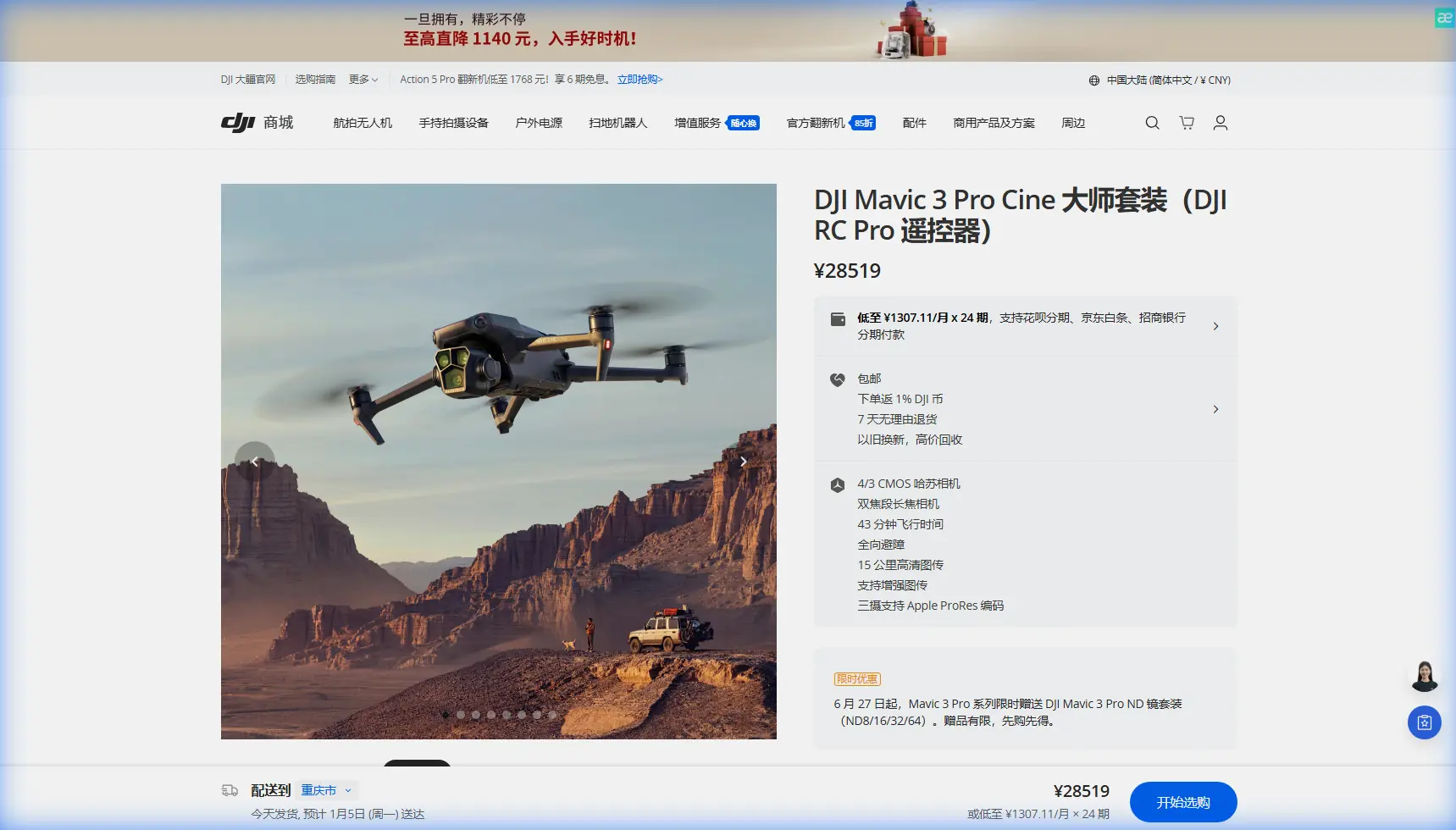
Mavic 3 Pro: Filming Fields in Extreme Temperatures
META: Learn how the DJI Mavic 3 Pro handles extreme temperature filming in open fields. Chris Park shares pro tips on D-Log, ActiveTrack, and weather challenges.
TL;DR
- The Mavic 3 Pro operates reliably in temperatures from -10°C to 40°C, making it a top choice for agricultural and landscape filmmakers facing unpredictable conditions.
- Its tri-camera system with Hasselblad optics captures stunning detail across vast fields, even when lighting shifts dramatically mid-shoot.
- ActiveTrack 5.0 and omnidirectional obstacle avoidance keep your footage smooth and your drone safe when wind gusts and weather fronts roll in unexpectedly.
- D-Log color profile preserves up to 12.8 stops of dynamic range, giving you maximum flexibility in post-production when dealing with harsh, contrasty field light.
The Problem: Extreme Temps Destroy Drone Footage and Equipment
Filming open fields professionally means confronting conditions that most consumer drones simply cannot handle. Scorching summer heat causes battery voltage sag, sensor overheating, and washed-out exposures. Winter cold drains lithium-polymer cells in minutes and makes plastic components brittle. Chris Park, a creator who specializes in agricultural and rural landscape cinematography, has lost count of the shoots ruined by gear that couldn't keep up with the environment.
"Most drones give you a low-battery warning eight minutes into a flight when it's below freezing," Park explains. "And in midsummer, you're fighting thermal shimmer, overexposed skies, and a drone that wants to land itself because the processor is overheating."
The core challenge is threefold: thermal management of the aircraft, maintaining image quality in harsh light, and keeping the drone safe when weather changes without warning. The Mavic 3 Pro addresses all three—and this guide breaks down exactly how.
Why the Mavic 3 Pro Stands Apart for Field Work
Tri-Camera Versatility Across Vast Landscapes
The Mavic 3 Pro's defining feature is its three-lens camera system:
- 24mm Hasselblad main camera — 4/3 CMOS sensor, 20MP, ideal for wide establishing shots of fields and horizons
- 70mm medium telephoto — 1/1.3-inch CMOS sensor, 48MP, perfect for isolating crop rows, equipment, or terrain features without flying dangerously close
- 166mm telephoto — 1/2-inch CMOS sensor, 12MP, enables tight detail shots from altitude
This system eliminates the need to fly low for detail work. In extreme heat, keeping the drone at higher altitude reduces ground-level thermal turbulence. In freezing conditions, fewer aggressive maneuvers mean less battery drain. The tri-camera setup is not a luxury—it is a tactical advantage for harsh-condition filming.
Thermal Resilience by Design
DJI engineered the Mavic 3 Pro with an operating temperature range of -10°C to 40°C. Park routinely pushes these boundaries and has documented consistent performance at both extremes.
Key thermal management features include:
- Active heat dissipation within the gimbal housing that prevents sensor overheating during long summer takes
- Battery self-heating technology that warms cells before takeoff in cold environments, reducing voltage sag
- Intelligent battery firmware that adjusts discharge curves based on ambient temperature, providing accurate remaining flight time estimates rather than unreliable percentages
Expert Insight — Chris Park: "I preheat batteries inside my jacket for 15 minutes before a winter shoot. Combined with the Mavic 3 Pro's self-heating, I consistently get 38+ minutes of flight time at -5°C. That's unheard of for a drone this size."
When Weather Changed Mid-Flight: A Real-World Test
During a late-autumn wheat field shoot in central Oregon, Park was capturing Hyperlapse sequences of harvesting equipment moving across 200 acres of terrain. The forecast called for overcast skies—ideal for even lighting. Forty minutes into the session, a cold front arrived 30 minutes ahead of schedule.
Within six minutes, conditions shifted from 12°C and calm to 3°C with 28 km/h gusts.
Here is what happened—and what the Mavic 3 Pro did automatically:
Obstacle avoidance sensors recalibrated to account for drift, keeping the drone from being pushed into a tree line 90 meters to the east. The omnidirectional obstacle avoidance system uses eight vision sensors and two wide-angle sensors to maintain spatial awareness in all directions.
ActiveTrack 5.0 held the subject lock on the combine harvester despite lateral wind pushing the drone off its programmed path. The system recalculated its tracking trajectory multiple times per second without any input from Park.
Auto-exposure adapted in real time as cloud cover thickened and light dropped by nearly two full stops in under three minutes. Because Park was shooting in D-Log, the footage retained detail in both shadow and highlight regions that would have been clipped in a standard color profile.
The high-wind warning triggered at 28 km/h, but the drone maintained stable hover and completed its Hyperlapse sequence. The Mavic 3 Pro can resist winds up to 36 km/h (Force 5).
Return-to-Home activated cleanly when Park decided to land, compensating for wind drift to land within 30 centimeters of the takeoff point.
"That single flight convinced me this was the right platform for field work," Park says. "Any other drone I've used would have either crashed, lost the shot, or forced an emergency landing."
Optimizing Settings for Extreme Temperature Field Shoots
Color Science: Why D-Log Is Non-Negotiable
Field environments present extreme dynamic range challenges. Bright sky, dark soil, metallic equipment, and green canopy can span 12+ stops of light in a single frame. D-Log captures this entire range in a flat profile that gives you full control in color grading.
Settings Park recommends for D-Log field work:
- Resolution: 5.1K/50fps for maximum detail and smooth slow-motion options
- ISO: Keep at 100-400 in daylight to minimize noise in the flat profile
- Shutter speed: Follow the 180-degree rule (double your frame rate) and use ND filters
- White balance: Manual, set to 5600K for daylight consistency across takes
QuickShots and Hyperlapse for Efficient Storytelling
When temperatures are punishing, efficiency matters. Every extra minute of flight time in extreme heat or cold increases risk. QuickShots and Hyperlapse modes let you capture complex, cinematic sequences with single-tap execution:
- Dronie — Pull-away reveal of a field location, completed in 15 seconds
- Circle — Orbiting shot around a subject like farm equipment or a landmark tree
- Helix — Ascending spiral that showcases field scale
- Hyperlapse (Free mode) — Time-compressed sequences showing cloud movement, shadow progression, or machinery patterns across large acreage
Pro Tip — In freezing conditions, plan your QuickShots sequence before takeoff. Map out each shot type and location so you can execute them back-to-back without hovering idle. Idle hover in cold weather drains batteries 22% faster than active flight because the motors aren't generating supplemental heat.
Technical Comparison: Mavic 3 Pro vs. Competitors for Field Work
| Feature | Mavic 3 Pro | Air 3 | Mavic 3 Classic |
|---|---|---|---|
| Camera System | Tri-camera (24/70/166mm) | Dual-camera (24/70mm) | Single camera (24mm) |
| Max Sensor Size | 4/3 CMOS | 1/1.3-inch CMOS | 4/3 CMOS |
| D-Log Support | Yes (D-Log M) | Yes (D-Log M) | Yes (D-Log M) |
| Max Video Resolution | 5.1K/50fps | 4K/100fps | 5.1K/50fps |
| Obstacle Avoidance | Omnidirectional | Omnidirectional | Omnidirectional |
| ActiveTrack Version | 5.0 | 5.0 | 5.0 |
| Max Wind Resistance | 36 km/h | 27 km/h | 36 km/h |
| Operating Temp Range | -10°C to 40°C | -10°C to 40°C | -10°C to 40°C |
| Max Flight Time | 43 minutes | 46 minutes | 46 minutes |
| Weight | 958g | 720g | 895g |
| Telephoto Reach | 166mm (7x optical) | 70mm (3x optical) | None |
The Mavic 3 Pro's decisive advantage is the 166mm telephoto lens combined with superior wind resistance. For field work, that telephoto means you can capture detail shots of distant terrain, wildlife, or equipment from a safe, high-altitude position—reducing both physical risk and thermal stress on the aircraft.
Common Mistakes to Avoid
1. Ignoring Battery Temperature Before Takeoff Cold batteries deliver unpredictable voltage. Always preheat batteries to at least 20°C before launching. The DJI Fly app displays battery temperature—never take off if it reads below 15°C.
2. Shooting in Standard Color Profile in Harsh Light Standard and Normal profiles clip highlights and crush shadows in high-contrast field environments. Always use D-Log when dynamic range is a priority. You can apply a LUT in post-production in seconds.
3. Flying Low in Extreme Heat Ground-level thermal updrafts cause micro-turbulence below 15 meters AGL (above ground level) on hot days. This creates jello-effect vibrations in footage. Fly at 30 meters or higher for stable shots.
4. Relying Solely on GPS Return-to-Home in Wind While the Mavic 3 Pro handles wind well, always set your RTH altitude above any obstacles and manually monitor the return path when gusts exceed 25 km/h. Wind can shift the RTH trajectory.
5. Neglecting ND Filters The 180-degree shutter rule requires ND filtration in bright conditions. Without NDs, you'll either overexpose or use an unnaturally fast shutter speed that eliminates motion blur and makes footage look choppy. Pack ND8, ND16, and ND32 as a minimum kit.
6. Running Batteries to Zero in Cold Weather Land when the battery hits 30% in freezing conditions. Cold accelerates voltage drop, and the last 15% of reported capacity can vanish in seconds, causing a forced landing in an uncontrolled location.
Frequently Asked Questions
Can the Mavic 3 Pro fly safely in rain or snow?
The Mavic 3 Pro does not carry an IP rating for water resistance. Light drizzle may not cause immediate failure, but moisture can damage motors, sensors, and gimbal electronics over time. Avoid flying in active precipitation. If unexpected rain begins mid-flight, activate Return-to-Home immediately and dry all components thoroughly after landing.
How does Subject Tracking perform over featureless terrain like bare fields?
ActiveTrack 5.0 uses a combination of visual recognition and predictive algorithms. Over featureless terrain, tracking works best when locked onto a distinct subject—a vehicle, person, or piece of equipment—rather than a terrain feature. The system maintains lock even if the subject temporarily blends with the background, predicting its trajectory for up to several seconds of occlusion.
What is the best Hyperlapse mode for showcasing large agricultural fields?
Free mode gives you full control of the flight path using waypoints, allowing you to design sweeping trajectories across hundreds of acres. Set your interval to 2 seconds for smooth cloud and shadow movement. For a simpler approach, Waypoint mode lets you define start and end positions, and the drone calculates a smooth path between them automatically. Both modes produce stabilized 8K Hyperlapse output that scales beautifully for any delivery format.
Ready for your own Mavic 3 Pro? Contact our team for expert consultation.