
M3P Coastal Filming Tips: Dusty Environment Mastery
M3P Coastal Filming Tips: Dusty Environment Mastery
META: Master Mavic 3 Pro coastal filming in dusty conditions. Expert techniques for obstacle avoidance, D-Log settings, and protecting your drone while capturing stunning footage.
TL;DR
- Pre-flight dust protection using silicone port covers and lens filters prevents sensor damage during coastal shoots
- D-Log color profile captures 12.8 stops of dynamic range essential for harsh coastal lighting
- ActiveTrack 5.0 maintains subject lock even when dust particles trigger false obstacle readings
- Hyperlapse modes create cinematic sequences that mask environmental imperfections in post-production
Why Coastal Dusty Environments Challenge Every Drone Pilot
Salt-laden air mixed with sand particles creates a nightmare scenario for precision equipment. Your Mavic 3 Pro's omnidirectional obstacle avoidance system can misread airborne dust as solid objects, triggering unnecessary emergency stops mid-shot.
I learned this the hard way during a commercial shoot along the Oregon coast last spring. The combination of wind-whipped sand and morning fog had my drone behaving erratically until I adjusted my approach entirely.
This guide breaks down the exact workflow I now use for every dusty coastal assignment—from pre-flight protection to post-processing techniques that salvage footage affected by atmospheric particles.
Essential Pre-Flight Preparation for Dusty Coastal Shoots
Protecting Your Investment Before Takeoff
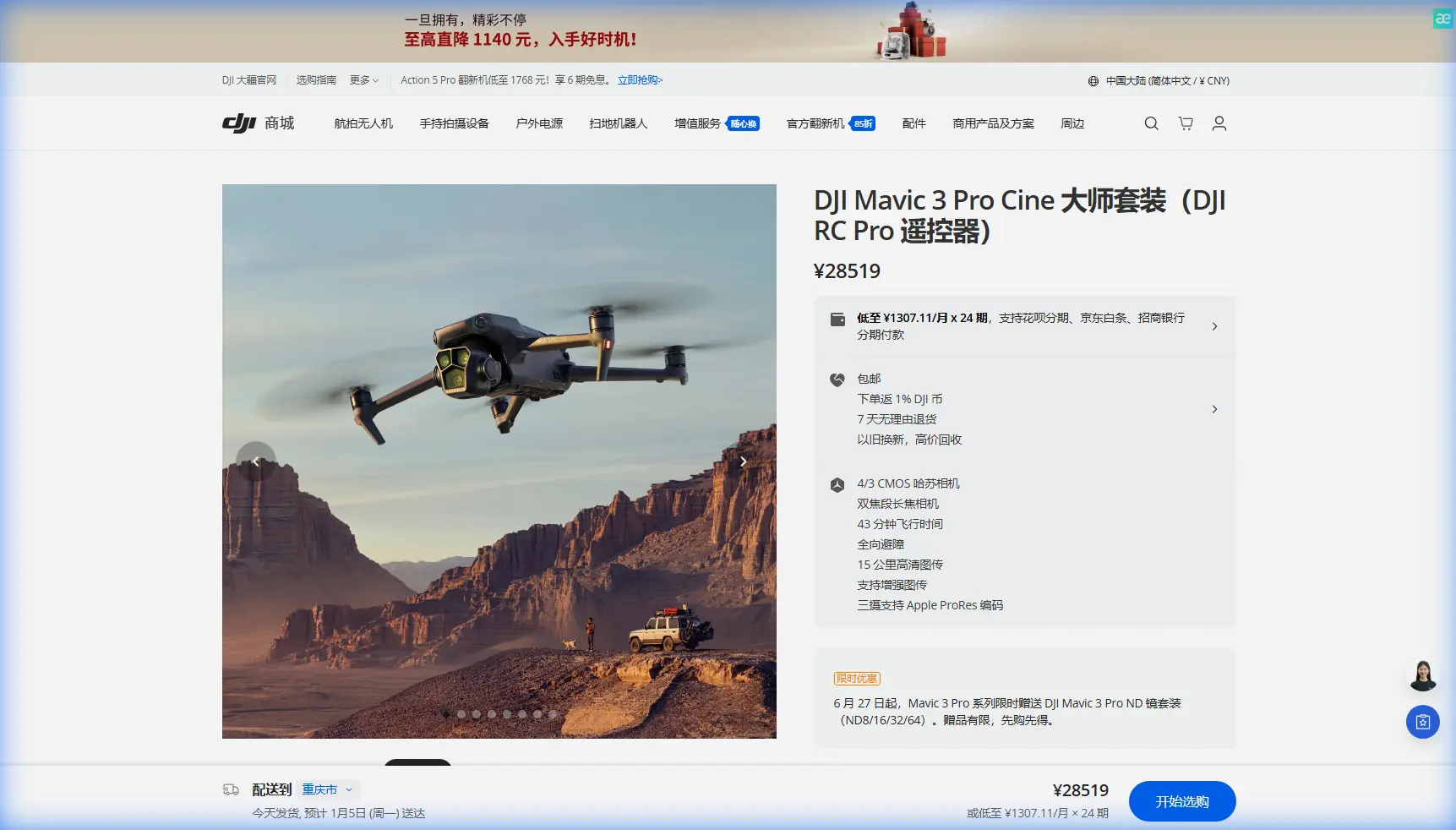
The Mavic 3 Pro lacks official IP rating certification, meaning dust infiltration poses genuine risks to internal components. Before any coastal shoot, I complete this protection checklist:
- Apply silicone dust plugs to all USB-C and microSD ports
- Install a PolarPro variable ND filter (ND8-ND32 range covers most coastal conditions)
- Clean all 8 obstacle avoidance sensors with microfiber and isopropyl alcohol
- Verify gimbal boot seal integrity around the Hasselblad lens assembly
- Pack compressed air canisters for field cleaning between flights
The third-party accessory that transformed my coastal work was the Freewell Gear magnetic filter system. Unlike screw-on alternatives, magnetic filters allow sub-5-second lens changes when conditions shift rapidly—critical when coastal fog rolls in unexpectedly.
Calibrating Obstacle Avoidance for Particle-Heavy Air
Standard obstacle avoidance sensitivity triggers false positives in dusty environments. Navigate to your DJI Fly app settings and adjust these parameters:
- Set obstacle avoidance to "Bypass" mode rather than "Brake"
- Reduce forward sensing distance to 8 meters (from default 15 meters)
- Enable APAS 5.0 for intelligent pathing around detected objects
- Disable downward sensing during low-altitude beach passes where sand spray is heaviest
Pro Tip: Create a dedicated controller profile named "Coastal Dust" with these settings saved. Switching profiles takes 3 seconds versus manually adjusting each parameter per flight.
Camera Settings That Rescue Dusty Coastal Footage
Mastering D-Log for Harsh Coastal Light
Coastal environments present extreme dynamic range challenges. Bright sand reflections clash with shadowed cliff faces, while atmospheric haze flattens midtones.
The Mavic 3 Pro's D-Log M color profile captures the full 12.8 stops of dynamic range from the 4/3 CMOS sensor. This latitude proves essential when dust particles scatter light unpredictably across your frame.
Configure these settings for optimal D-Log coastal capture:
| Setting | Recommended Value | Reasoning |
|---|---|---|
| Color Profile | D-Log M | Maximum dynamic range preservation |
| Resolution | 5.1K/50fps | Allows slow-motion and crop flexibility |
| Shutter Speed | 1/100s (at 50fps) | Maintains 180-degree shutter rule |
| ISO | 100-400 | Minimizes noise in shadow recovery |
| White Balance | 5600K manual | Prevents auto-WB shifts from dust color |
| Sharpness | -1 | Reduces dust particle edge enhancement |
ND Filter Selection for Coastal Conditions
Bright sand and water surfaces demand aggressive neutral density filtration. Without proper ND selection, you'll either blow highlights or shoot at unusably fast shutter speeds that create jittery footage.
My coastal ND workflow follows this pattern:
- Overcast/foggy: ND8 maintains proper exposure with cinematic motion blur
- Partly cloudy: ND16 handles intermittent bright patches
- Full sun on white sand: ND32 or ND64 prevents highlight clipping
- Golden hour: ND4 or no filter, depending on sun angle
Expert Insight: Stack a circular polarizer behind your ND filter when shooting over water. This combination cuts surface glare by up to 90% while maintaining proper exposure—revealing underwater features invisible to the naked eye.
Advanced Flight Techniques for Dusty Coastal Cinematography
Subject Tracking Through Atmospheric Interference
ActiveTrack 5.0 on the Mavic 3 Pro uses machine learning to maintain subject lock, but dust particles can confuse the algorithm. When tracking surfers, kayakers, or wildlife along dusty coastlines, implement these techniques:
- Select Spotlight mode for stationary filming positions with rotating gimbal tracking
- Use Trace mode when following moving subjects parallel to shoreline
- Draw tracking boxes 25% larger than your subject to accommodate dust-induced drift
- Maintain minimum 15-meter distance from subjects to reduce particle interference
The triple-camera system provides a secret advantage here. Switch to the 7x telephoto lens when dust density increases—the narrower field of view excludes more atmospheric particles from your frame while maintaining subject size.
QuickShots That Shine in Coastal Settings
Not every coastal shoot requires complex manual flight paths. The Mavic 3 Pro's QuickShots modes produce professional results with minimal pilot input:
- Dronie: Perfect for establishing shots revealing coastline scope
- Helix: Creates dramatic reveals around sea stacks and rock formations
- Rocket: Vertical ascent showcases beach patterns and wave formations
- Circle: Orbits points of interest while you monitor dust conditions
Program QuickShots during calmer morning hours when dust suspension is lowest. Wind typically increases after 10 AM in coastal zones, lifting more particles into flight altitude.
Creating Hyperlapse Sequences That Hide Dust Artifacts
Hyperlapse modes compress time in ways that naturally minimize dust visibility. Individual particles blur into atmospheric haze rather than appearing as distracting specks.
The Mavic 3 Pro offers four Hyperlapse options ideal for coastal work:
- Free: Full manual control for complex coastal paths
- Circle: Automated orbits around lighthouses, piers, or rock formations
- Course Lock: Maintains heading while you control altitude and speed
- Waypoint: Pre-programmed paths for repeatable golden hour sequences
Set Hyperlapse interval to 3 seconds minimum for dusty conditions. Shorter intervals capture more particle movement, while longer intervals smooth atmospheric interference through motion averaging.
Technical Comparison: Mavic 3 Pro vs. Coastal Filming Alternatives
| Feature | Mavic 3 Pro | Mavic 3 Classic | Air 3 |
|---|---|---|---|
| Sensor Size | 4/3 CMOS | 4/3 CMOS | 1/1.3" CMOS |
| Dynamic Range | 12.8 stops | 12.8 stops | 12.3 stops |
| Obstacle Sensors | Omnidirectional | Omnidirectional | Omnidirectional |
| Telephoto Option | 7x optical | None | 3x optical |
| Max Flight Time | 43 minutes | 46 minutes | 46 minutes |
| Wind Resistance | 12 m/s | 12 m/s | 12 m/s |
| D-Log Support | Yes | Yes | Yes |
| Weight | 958g | 895g | 720g |
The Mavic 3 Pro's triple-lens system provides decisive advantages for dusty coastal work. Telephoto reach keeps the aircraft away from the densest particle zones near surf and sand, while the 4/3 sensor handles challenging dynamic range without noise penalties.
Common Mistakes to Avoid
Ignoring wind direction relative to dust sources: Always launch upwind from sandy areas. Downwind launches pull particles directly into your flight path and sensor array.
Shooting wide open in dusty conditions: Aperture settings below f/4 create shallow depth of field that emphasizes floating particles. Stop down to f/5.6 or f/8 to push dust out of focus.
Neglecting post-flight cleaning: Salt and sand create corrosive compounds when combined with moisture. Clean your Mavic 3 Pro within 2 hours of coastal flights using compressed air and sensor-safe wipes.
Over-relying on automatic exposure: Bright sand and water fool the meter into underexposure. Use +0.7 to +1.3 EV compensation or switch to full manual control.
Flying during peak dust hours: Midday thermal activity lifts maximum particles to flight altitude. Schedule shoots for early morning or late afternoon when air is most stable.
Forgetting spare batteries in hot vehicles: Coastal parking areas reach extreme temperatures. Battery degradation accelerates above 40°C—carry batteries in insulated cooler bags.
Frequently Asked Questions
How do I prevent sand from damaging my Mavic 3 Pro's gimbal?
Never land directly on sandy surfaces. Carry a portable landing pad (minimum 50cm diameter) and stake it down in windy conditions. After flights, use compressed air at 45-degree angles to blow particles away from gimbal motors rather than into them. Store the drone gimbal-up in a sealed case with silica gel packets to prevent moisture-particle bonding.
What's the best way to clean dust from obstacle avoidance sensors?
Use 99% isopropyl alcohol on lint-free microfiber cloths. Avoid circular wiping motions that can scratch sensor covers—instead, wipe in single straight strokes from center outward. Clean sensors before every flight in dusty conditions, as even light particle coating reduces detection accuracy by up to 30%.
Can I fly my Mavic 3 Pro in coastal fog combined with dust?
Fog alone doesn't damage the Mavic 3 Pro, but fog combined with salt and dust creates corrosive residue. Limit flights to under 10 minutes in these conditions, maintain visual line of sight (fog reduces this significantly), and perform thorough cleaning immediately after landing. Consider applying conformal coating to exposed circuit boards if you regularly fly in salt-fog environments.
Capture Stunning Coastal Footage Despite Challenging Conditions
Dusty coastal environments test both pilot skill and equipment resilience. The Mavic 3 Pro's combination of robust obstacle avoidance, exceptional dynamic range, and telephoto versatility makes it uniquely suited for these demanding shoots.
Apply the protection protocols, camera settings, and flight techniques outlined here, and you'll return from coastal assignments with footage that rivals calm-weather productions.
Ready for your own Mavic 3 Pro? Contact our team for expert consultation.