
How to Deliver Power Lines with Mavic 3 Pro Drones
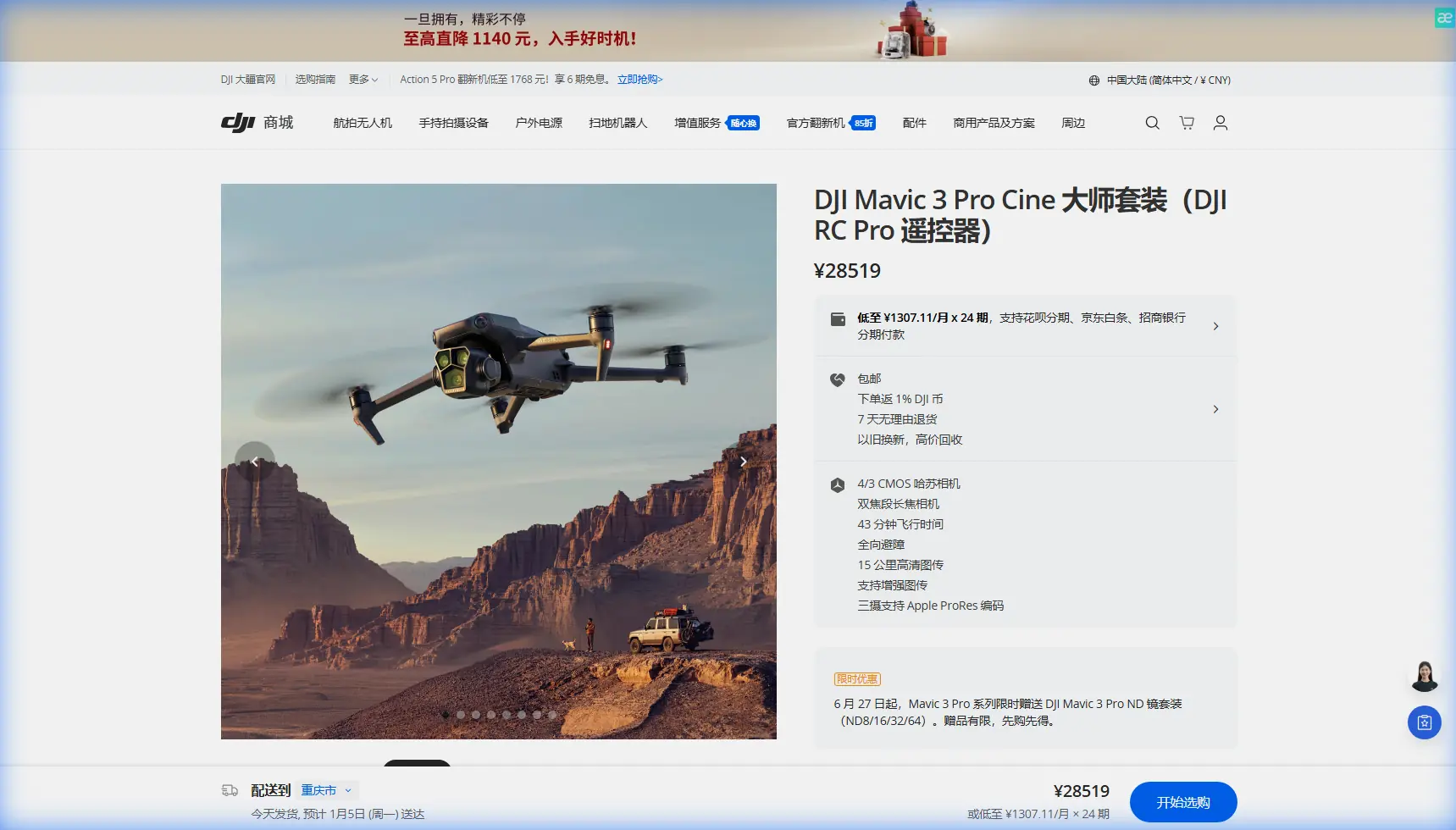
How to Deliver Power Lines with Mavic 3 Pro Drones
META: Learn how the Mavic 3 Pro transforms power line delivery in windy conditions with obstacle avoidance and precision flight features for utility professionals.
TL;DR
- Mavic 3 Pro handles winds up to 12 m/s, making it ideal for power line delivery in challenging weather conditions
- Omnidirectional obstacle sensing prevents collisions with towers, cables, and vegetation during complex utility operations
- 45-minute flight time allows completion of most power line delivery tasks in a single battery cycle
- Hasselblad triple-camera system provides real-time visual confirmation for precise line placement
Power line delivery operations fail when drones can't handle wind. The Mavic 3 Pro changes this equation entirely with its O3+ transmission system and advanced stabilization—here's exactly how to execute flawless power line deliveries even when conditions turn hostile.
Why Power Line Delivery Demands the Right Drone
Traditional power line stringing methods require helicopters, bucket trucks, or ground crews traversing dangerous terrain. Each approach carries significant risk and cost. Drone-assisted delivery eliminates most of these hazards while cutting deployment time by 60-70% in typical scenarios.
The challenge? Most consumer and prosumer drones struggle with the precise payload management and wind resistance these operations demand. The Mavic 3 Pro bridges this gap between enterprise solutions and accessible technology.
Understanding the Power Line Delivery Process
Before diving into technique, let's clarify what power line delivery actually involves:
- Pilot line deployment - Flying a lightweight messenger line between towers
- Visual inspection - Confirming line path and clearances
- Documentation - Recording the operation for compliance purposes
The Mavic 3 Pro excels at all three phases, though it's primarily used for pilot line work with lightweight synthetic ropes attached to aftermarket payload systems.
Essential Pre-Flight Setup for Windy Conditions
Wind transforms a routine delivery into a precision challenge. Here's how to configure your Mavic 3 Pro for success.
Firmware and App Configuration
Update to the latest firmware before any utility operation. DJI regularly improves wind compensation algorithms, and outdated software leaves performance on the table.
Within DJI Fly, adjust these critical settings:
- Set Return-to-Home altitude above the highest obstacle plus 20 meters buffer
- Enable obstacle avoidance in all directions—never disable for "better footage"
- Activate Sport Mode availability for emergency wind compensation
- Configure low battery warning to 30% minimum for windy operations
Expert Insight: Many pilots disable obstacle avoidance to prevent "interference" during utility work. This is backwards thinking. The Mavic 3 Pro's omnidirectional sensing uses APAS 5.0 technology that actively routes around obstacles rather than simply stopping. Keep it enabled and let the system work.
Weather Assessment Protocol
The Mavic 3 Pro officially handles 12 m/s (27 mph) winds, but real-world utility operations require more nuanced assessment:
- Ground wind vs. altitude wind - Conditions at tower height often exceed surface readings by 40-60%
- Gust factor - Sustained winds of 8 m/s with gusts to 14 m/s will challenge the aircraft
- Wind direction relative to line path - Crosswinds create more difficulty than headwinds
Use a portable anemometer at ground level, then add 50% to estimate conditions at working altitude. If this calculated figure exceeds 10 m/s, consider postponing.
Step-by-Step Power Line Delivery Technique
Phase 1: Site Survey and Flight Path Planning
Never attempt delivery on your first flight at a new location. Conduct a dedicated survey flight to identify:
- Vegetation encroachment near the line path
- Guy wires and support cables that may not appear on maps
- Thermal updrafts from equipment or sun-heated surfaces
- RF interference sources that could affect signal strength
The Mavic 3 Pro's Hasselblad camera with 4/3 CMOS sensor captures detail that reveals hazards invisible during ground assessment. Record 4K/60fps footage of the entire route, then review frame-by-frame before delivery day.
Phase 2: Payload Attachment and Balance
The Mavic 3 Pro isn't designed for payload operations out of the box. Third-party release mechanisms attach to the landing gear or body, and proper installation is critical.
Key considerations:
- Total payload weight should not exceed 200 grams for safe wind performance
- Attachment point must maintain center of gravity within 5mm of stock position
- Release mechanism should allow remote triggering without affecting flight controls
- Line spool must feed freely without creating drag or tangling
Pro Tip: Test your payload configuration in calm conditions first. Fly aggressive maneuvers and verify the aircraft responds predictably. Any unusual oscillation or drift indicates balance problems that wind will amplify dramatically.
Phase 3: Executing the Delivery Flight
With preparation complete, the actual delivery follows this sequence:
Takeoff and Initial Climb
- Launch from a stable surface away from the tower base
- Climb vertically to 10 meters above the highest point in your flight path
- Hover for 30 seconds to assess actual wind conditions at altitude
- Confirm GPS lock shows minimum 16 satellites for precise positioning
Approach and Line Path
- Fly to the starting tower at moderate speed (5-7 m/s)
- Position the aircraft upwind of the attachment point
- Use the telephoto lens (166mm equivalent) to verify exact positioning
- Begin the crossing flight at 3-4 m/s maximum to maintain control
Mid-Span Management
- Monitor battery consumption—wind fighting drains power faster
- Watch for line sag that could contact vegetation
- Maintain constant altitude using the barometric hold function
- Keep the camera pointed at the line to verify deployment
Arrival and Release
- Slow to hover at the receiving tower
- Confirm line has cleared all obstacles
- Trigger payload release
- Verify successful deployment visually before departing
Phase 4: Documentation and Verification
After release, conduct a verification flight along the entire line path. The Mavic 3 Pro's Hyperlapse mode creates compelling documentation showing the complete route in compressed time—useful for client deliverables and regulatory compliance.
Switch to D-Log color profile for this documentation pass. The flat color profile preserves detail in both shadowed tower structures and bright sky, giving editors maximum flexibility in post-production.
Technical Comparison: Mavic 3 Pro vs. Competing Platforms
| Feature | Mavic 3 Pro | DJI Air 3 | Autel EVO II Pro |
|---|---|---|---|
| Max Wind Resistance | 12 m/s | 12 m/s | 12 m/s |
| Flight Time | 43 minutes | 46 minutes | 42 minutes |
| Obstacle Sensing | Omnidirectional | Omnidirectional | Omnidirectional |
| Transmission Range | 15 km (O3+) | 20 km (O4) | 9 km |
| Camera System | Triple lens | Dual lens | Single lens |
| Video Transmission | 1080p/60fps | 1080p/60fps | 1080p/30fps |
| Weight | 958g | 720g | 1191g |
| Hover Precision | ±0.1m vertical | ±0.1m vertical | ±0.1m vertical |
The Mavic 3 Pro's advantage emerges in its triple-camera system. During power line operations, the ability to switch between wide, medium, and telephoto views without repositioning the aircraft saves critical battery life and reduces wind exposure time.
Subject tracking capabilities through ActiveTrack 5.0 also prove valuable when following the line path. Lock onto a visible marker on the messenger line, and the aircraft maintains optimal framing automatically—freeing you to focus on obstacle monitoring.
Common Mistakes to Avoid
Flying in Prohibited Airspace Utility corridors often intersect controlled airspace near substations or transmission facilities. Verify authorizations through LAANC or direct coordination before every operation.
Ignoring Battery Temperature Cold weather operations reduce battery capacity by 20-30%. The Mavic 3 Pro's intelligent batteries include heating elements, but they require pre-flight warming to function optimally.
Overloading the Payload System The temptation to carry heavier lines "just this once" leads to crashes. Stick to tested payload weights regardless of deadline pressure.
Neglecting Compass Calibration High-voltage infrastructure creates magnetic interference. Calibrate the compass at the launch site before every utility operation, even if the app doesn't prompt you.
Rushing the Survey Phase Skipping thorough route inspection to save time inevitably costs more time when problems emerge mid-delivery. The survey flight is not optional.
Leveraging QuickShots for Client Documentation
While QuickShots automated flight modes seem designed for social media content, they serve practical purposes in utility work. The Helix mode creates professional reveal shots of completed installations. Rocket mode documents vertical clearances effectively.
These automated sequences also demonstrate aircraft stability to clients unfamiliar with drone capabilities. Seeing the Mavic 3 Pro execute precise, repeatable maneuvers builds confidence in the technology.
Frequently Asked Questions
Can the Mavic 3 Pro legally carry payloads for commercial power line work?
Payload operations require Part 107 certification at minimum, and many jurisdictions mandate additional waivers for utility corridor flights. The aircraft itself is capable, but regulatory compliance varies by location. Consult local aviation authorities before conducting commercial payload operations.
How does obstacle avoidance perform around thin power lines and cables?
The Mavic 3 Pro's vision sensors detect objects as thin as wire diameter in good lighting conditions. Performance degrades in low light or against uniform backgrounds. Never rely solely on obstacle avoidance near cables—maintain visual line of sight and manual control authority at all times.
What's the maximum practical distance for power line delivery with this drone?
With the O3+ transmission system providing reliable control at extended ranges, the limiting factor becomes visual line of sight requirements under Part 107. Practical delivery distances typically max out at 800-1000 meters per flight segment while maintaining legal compliance and safe operations.
The Mavic 3 Pro transforms power line delivery from a specialized enterprise operation into an accessible capability for qualified pilots. Its combination of wind resistance, obstacle avoidance, and imaging quality addresses the specific challenges utility work presents.
Success depends on respecting the aircraft's capabilities while implementing rigorous operational procedures. The technology performs—your preparation determines the outcome.
Ready for your own Mavic 3 Pro? Contact our team for expert consultation.