
Mavic 3 Pro Tips for Capturing Venues in Dusty Conditions
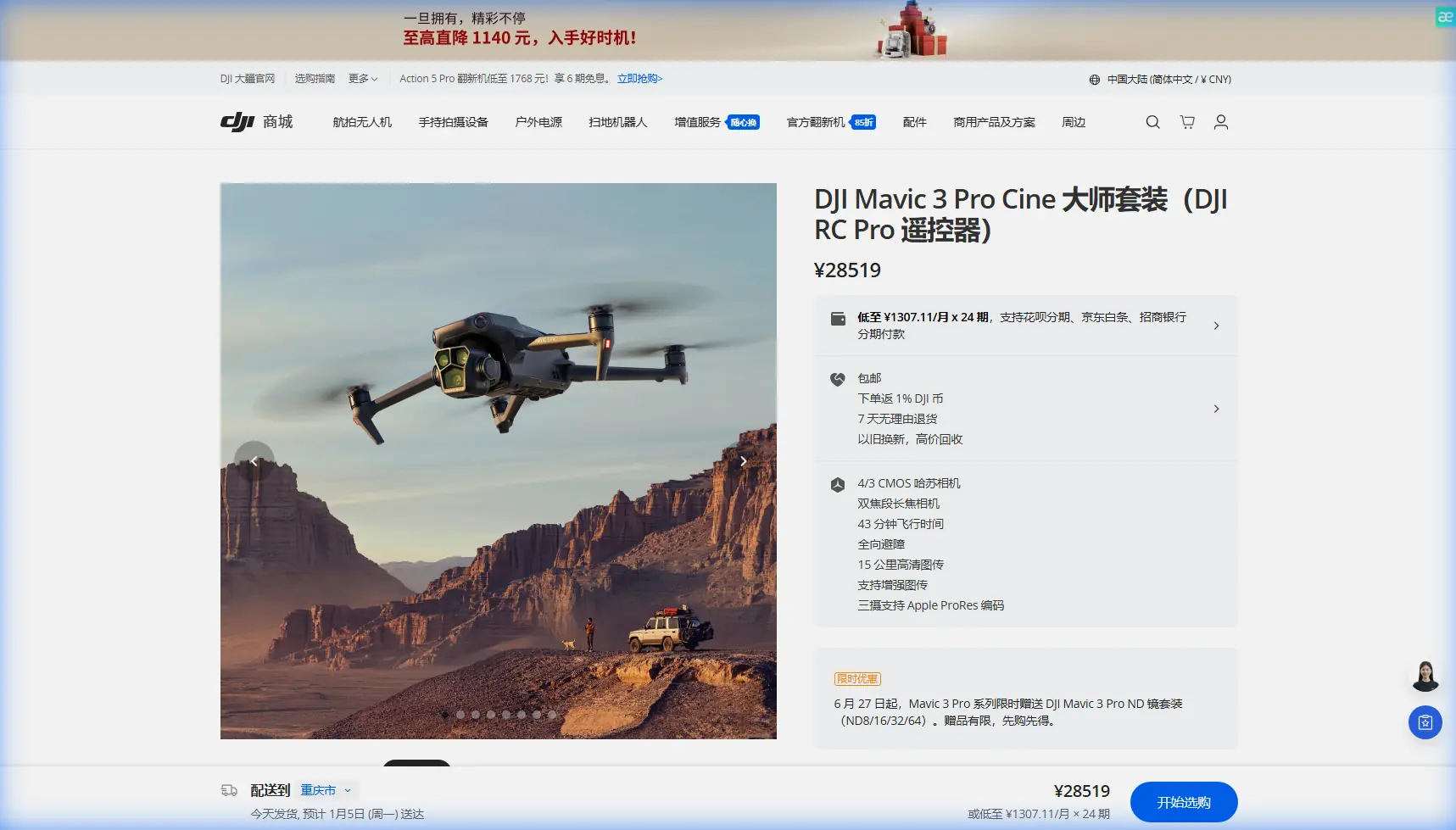
Mavic 3 Pro Tips for Capturing Venues in Dusty Conditions
META: Master dusty venue photography with Mavic 3 Pro. Learn optimal altitude settings, sensor protection, and pro techniques for stunning results every time.
TL;DR
- Fly at 15-25 meters altitude to minimize dust interference while maintaining cinematic composition options
- Enable APAS 5.0 obstacle avoidance in all directions to protect sensors from unexpected debris
- Use D-Log color profile to preserve detail in high-contrast dusty environments
- Clean sensors immediately post-flight to prevent permanent damage from particulate buildup
Dusty venues destroy drone footage and damage equipment faster than almost any other environmental challenge. The Mavic 3 Pro's triple-camera system and advanced sensors give you the tools to capture professional-quality content in these harsh conditions—but only if you know the specific techniques that protect your gear while maximizing image quality.
This guide covers everything from pre-flight preparation to post-processing workflows, ensuring you walk away with stunning venue footage without sacrificing your investment.
Understanding Dusty Environment Challenges for Drone Photography
Dust particles create three distinct problems for aerial cinematography. First, airborne particulates scatter light unpredictably, reducing contrast and creating unwanted haze in your footage. Second, fine dust infiltrates gimbal mechanisms and motor bearings, causing long-term mechanical issues. Third, dust settling on lens elements produces soft spots and artifacts that ruin otherwise perfect shots.
The Mavic 3 Pro handles these challenges better than most consumer drones thanks to its sealed motor design and advanced gimbal protection. However, understanding the specific threats helps you implement countermeasures that extend equipment life and improve results.
Optimal Flight Altitude Strategy
Here's the insight that separates amateur dusty-venue footage from professional work: maintain a baseline altitude of 15-25 meters for most establishing shots and venue overviews.
This altitude range accomplishes several critical objectives:
- Positions the drone above the densest dust concentration zone (typically 0-10 meters)
- Provides sufficient height for the 70mm telephoto lens to compress backgrounds effectively
- Allows smooth descent for detail shots without entering heavy particulate zones
- Maintains legal compliance for most venue filming scenarios
When you need lower shots, descend quickly, capture your footage, and ascend immediately. Minimize hover time below 10 meters where dust concentration peaks.
Pre-Flight Preparation for Dusty Conditions
Equipment Protection Setup
Before launching in any dusty environment, complete this preparation checklist:
- Install lens filters on all three cameras (ND8 minimum for dust haze reduction)
- Apply hydrophobic coating to exposed lens elements
- Verify gimbal cover removal and store it in a sealed bag
- Check all ventilation ports for existing debris
- Confirm battery contacts are clean and fully seated
Expert Insight: Carry microfiber cloths in sealed plastic bags. Dusty environments contaminate cleaning materials within minutes of exposure. Having protected backup cloths ensures you can clean lenses mid-session without introducing new scratches.
Camera Settings Optimization
Configure your Mavic 3 Pro's camera system before takeoff to minimize in-flight adjustments:
Primary Camera (Hasselblad 4/3 CMOS)
- Resolution: 5.1K/50fps or 4K/120fps for slow-motion options
- Color Profile: D-Log for maximum dynamic range recovery
- ISO: Lock at 100-400 to minimize noise in post-processing
- Shutter Speed: 1/100 minimum to freeze dust particles
Medium Telephoto (70mm equivalent)
- Ideal for compressed venue perspectives from safe altitude
- Same color profile and ISO settings as primary
- Use for architectural details without close approach
Exploration Camera (166mm equivalent)
- Reserve for distant subject isolation
- Higher compression reveals dust layers artistically
- Useful for capturing venue context from maximum safe distance
Flight Techniques for Dusty Venue Cinematography
Leveraging ActiveTrack in Challenging Visibility
The Mavic 3 Pro's ActiveTrack 5.0 system uses visual recognition algorithms that can struggle with dust-obscured subjects. Maximize tracking reliability with these adjustments:
- Select subjects with high contrast against dusty backgrounds
- Avoid tracking subjects moving through dust clouds
- Use Spotlight mode instead of full ActiveTrack when visibility drops below 500 meters
- Maintain 30+ meters distance from tracked subjects to prevent collision during visibility changes
QuickShots Modifications for Dusty Environments
Standard QuickShots presets require modification for dusty venue work:
| QuickShot Mode | Standard Use | Dusty Venue Modification |
|---|---|---|
| Dronie | Close subject pullback | Start 5m higher, reduce pullback distance by 30% |
| Helix | Spiral ascent around subject | Increase radius by 50% to avoid dust wake |
| Rocket | Vertical ascent | Excellent as-is; dust falls away from flight path |
| Boomerang | Oval flight path | Avoid; horizontal movement stirs ground dust |
| Asteroid | Sphere panorama | Increase altitude by 10m before initiating |
Hyperlapse Techniques for Venue Documentation
Hyperlapse captures transform dusty venues into dramatic visual stories. The Mavic 3 Pro's waypoint-based hyperlapse system excels in these conditions because it minimizes manual flight time in hazardous air.
Configure your hyperlapse with these dusty-environment parameters:
- Interval: 3-5 seconds between frames (longer intervals reduce total flight time)
- Duration: Calculate total sequence length and add 20% buffer for potential retakes
- Path: Prioritize ascending diagonal paths that move away from dust sources
- Speed: Slower movement (2-3 m/s) prevents prop wash from disturbing settled dust
Pro Tip: Schedule hyperlapse captures during the golden hour when low-angle sunlight illuminates dust particles as atmospheric elements rather than visual interference. This transforms a technical challenge into a cinematic advantage.
Obstacle Avoidance Configuration
The Mavic 3 Pro features omnidirectional obstacle sensing through its APAS 5.0 system. In dusty environments, this system requires specific configuration to balance safety with operational flexibility.
Recommended APAS Settings
- Forward/Backward Sensing: Always enabled; dust reduces visual pilot awareness
- Lateral Sensing: Enable in confined venues; disable in open spaces for smoother lateral movements
- Vertical Sensing: Enable upward; consider disabling downward for low-altitude detail shots
- Braking Distance: Increase to maximum setting to compensate for reduced sensor effectiveness
Dust particles can trigger false obstacle readings, causing unexpected stops during filming. If you experience frequent false triggers:
- Reduce sensitivity by one level in obstacle avoidance settings
- Clean all sensor surfaces with compressed air
- Increase minimum obstacle distance to 5 meters
Technical Comparison: Mavic 3 Pro vs. Alternatives in Dusty Conditions
| Feature | Mavic 3 Pro | Mavic 3 Classic | Air 3 |
|---|---|---|---|
| Sensor Protection Rating | IP43 equivalent | IP43 equivalent | IP42 equivalent |
| Obstacle Sensing Range | 200m forward | 200m forward | 32m forward |
| Lens Options | 3 cameras | 1 camera | 2 cameras |
| D-Log Support | Yes (10-bit) | Yes (10-bit) | Yes (10-bit) |
| Maximum Wind Resistance | 12 m/s | 12 m/s | 12 m/s |
| Gimbal Dust Sealing | Enhanced | Standard | Standard |
| Flight Time (dusty conditions) | 38-42 min | 40-44 min | 42-46 min |
The Mavic 3 Pro's triple-camera system provides significant advantages in dusty venues because you can capture wide, medium, and telephoto perspectives without repositioning—minimizing total flight time in hazardous conditions.
Post-Flight Maintenance Protocol
Immediately after landing in dusty conditions, follow this maintenance sequence:
- Do not fold arms until motors cool completely (5+ minutes)
- Use compressed air at 45-degree angles to blow dust away from motor housings
- Clean all six obstacle sensors with lens-safe microfiber
- Inspect gimbal rubber dampers for dust accumulation
- Remove and inspect battery contacts
- Store drone in sealed case with silica gel packets
Skipping post-flight cleaning after dusty venue work leads to cumulative damage. Motor bearings fail 3x faster when operated repeatedly in dusty conditions without proper maintenance.
Common Mistakes to Avoid
Landing in Active Dust Zones Never land where your prop wash will kick up dust directly onto the aircraft. Identify paved surfaces, vehicle hoods, or landing pads positioned upwind from dust sources.
Ignoring Wind Direction Changes Dusty venues often feature unpredictable wind patterns. A sudden gust can push your drone into a dust cloud or debris field. Monitor wind indicators constantly and maintain 50+ meter buffers from known dust sources.
Over-Relying on Subject Tracking ActiveTrack performs admirably in clear conditions but degrades rapidly as dust density increases. Always maintain manual control readiness and practice switching from autonomous to manual flight instantly.
Shooting Without ND Filters Bright, dusty environments create extreme dynamic range challenges. Without ND filters, you'll either blow out highlights or underexpose shadows. The ND8-ND32 range handles most dusty daylight scenarios effectively.
Neglecting Battery Temperature Dusty environments often correlate with hot conditions. Monitor battery temperature and land if readings exceed 45°C to prevent thermal damage and ensure safe return-to-home capability.
Frequently Asked Questions
How does dust affect Mavic 3 Pro's obstacle avoidance accuracy?
Fine dust particles can scatter the infrared signals used by obstacle sensors, reducing effective detection range by 15-30% in heavy dust conditions. The forward-facing sensors maintain better accuracy than lateral sensors due to their longer baseline range. Clean sensors before each flight and increase your manual safety margins when operating in visible dust.
Can I use ActiveTrack to follow vehicles in dusty venues?
Yes, but with significant limitations. Vehicle dust trails obscure the visual recognition system, causing tracking loss when subjects enter their own dust wake. Position the drone perpendicular to vehicle travel direction rather than directly behind, and maintain at least 40 meters of separation. Spotlight mode often outperforms full ActiveTrack in these scenarios.
What's the best time of day for dusty venue photography?
Early morning (6-8 AM) offers the best combination of settled dust, soft lighting, and minimal wind. Dust particles settle overnight, and morning calm provides a window before human activity and thermal winds disturb surface materials. Golden hour (1 hour before sunset) works well if you want dust as a visible atmospheric element in your footage.
Dusty venue photography demands respect for both your equipment and the environment. The Mavic 3 Pro provides the tools—triple cameras, advanced obstacle avoidance, and robust construction—but your technique determines whether you capture stunning content or damage expensive gear.
Master these altitude strategies, protection protocols, and flight techniques, and you'll consistently deliver professional results from the most challenging dusty locations.
Ready for your own Mavic 3 Pro? Contact our team for expert consultation.