
Mavic 3 Pro Forest Capturing Tips for Complex Terrain
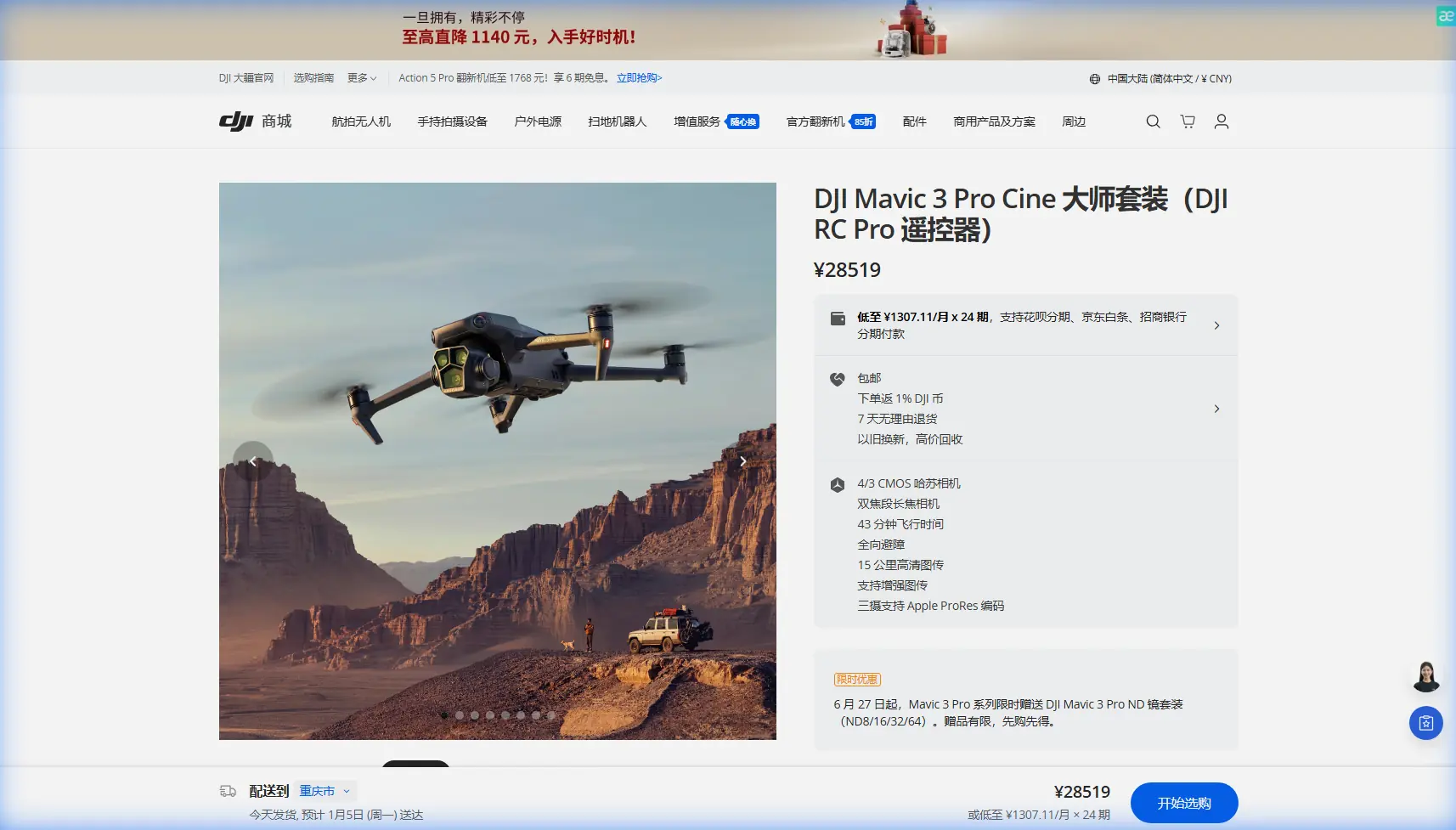
Mavic 3 Pro Forest Capturing Tips for Complex Terrain
META: Master forest cinematography with Mavic 3 Pro. Learn obstacle avoidance, D-Log settings, and ActiveTrack techniques for stunning woodland footage in challenging environments.
TL;DR
- Triple-camera system enables seamless focal length switching from canopy-wide shots to intimate wildlife details without repositioning
- Omnidirectional obstacle avoidance with APAS 5.0 provides confidence when navigating dense tree coverage and unpredictable terrain
- D-Log color profile captures 12.8 stops of dynamic range, preserving shadow detail under forest canopies while retaining highlight information
- 46-minute flight time allows extended shooting sessions to capture changing light conditions throughout golden hour
Why Forest Cinematography Demands More From Your Drone
Forests present the most unforgiving environment for aerial cinematography. Dense canopy coverage blocks GPS signals, unpredictable obstacles appear at every altitude, and extreme contrast between dappled sunlight and deep shadows destroys footage captured with lesser sensors.
I learned this the hard way during a commissioned project in the Pacific Northwest three years ago. My previous drone—a capable machine by most standards—produced footage so riddled with blown highlights and crushed shadows that the client requested a complete reshoot. The obstacle avoidance system, overwhelmed by the complexity of old-growth forest, triggered emergency stops every few seconds.
The Mavic 3 Pro changed everything about how I approach woodland environments. This technical review breaks down exactly how each feature translates to real-world forest shooting scenarios.
The Triple-Camera Advantage in Forested Environments
The Mavic 3 Pro's Hasselblad triple-camera system isn't merely a spec sheet talking point—it fundamentally transforms forest shooting workflows.
Primary Camera: 4/3 CMOS Sensor
The 20MP Four Thirds sensor with its 24mm equivalent focal length captures establishing shots that reveal the full scale of forest environments. The larger sensor size directly translates to:
- Superior low-light performance under dense canopy
- Reduced noise at higher ISO settings
- Greater dynamic range for high-contrast scenes
- Shallower depth of field options for cinematic separation
Medium Tele Camera: 70mm Equivalent
This 48MP sensor bridges the gap between wide environmental shots and detailed close-ups. For forest work, the 70mm focal length excels at:
- Isolating individual trees within a forest composition
- Compressing depth to emphasize layered canopy textures
- Capturing wildlife from non-intrusive distances
- Creating intimate portraits of forest details
Tele Camera: 166mm Equivalent
The 12MP telephoto reaches subjects that would otherwise require dangerous proximity flying. Dense forests often hide remarkable details—nesting birds, unique bark patterns, distant clearings—that this lens reveals without risking the aircraft.
Expert Insight: When shooting forests, I pre-plan my focal length transitions before takeoff. Starting wide at 24mm, I'll program waypoints that coincide with my switch to 70mm, then 166mm. This creates a natural "discovery" narrative that draws viewers deeper into the environment.
Mastering Obstacle Avoidance in Dense Woodland
The Mavic 3 Pro's omnidirectional obstacle sensing system uses 8 vision sensors and 2 wide-angle sensors to create a protective bubble around the aircraft. In forest environments, this system becomes your primary safety net.
APAS 5.0 Performance Analysis
Advanced Pilot Assistance System 5.0 represents a significant leap in autonomous navigation. The system processes obstacle data and calculates avoidance paths in real-time, enabling:
- Smooth path adjustments around unexpected branches
- Intelligent altitude changes when forward paths close
- Continued subject tracking even when obstacles intervene
- Reduced pilot workload during complex maneuvers
Optimal Settings for Forest Flying
Configure your obstacle avoidance system specifically for woodland conditions:
| Setting | Forest Configuration | Reasoning |
|---|---|---|
| Obstacle Avoidance | Bypass | Allows smooth path recalculation |
| Braking Distance | Maximum | Provides reaction time in cluttered environments |
| Return-to-Home Altitude | 50m above tallest trees | Ensures clear return path |
| Downward Vision | Enabled | Critical for landing in clearings |
| Horizontal Obstacle Avoidance | Enabled | Primary protection in forests |
Pro Tip: Before flying in a new forest location, perform a slow vertical ascent to your planned operating altitude. This reveals the obstacle density at different levels and helps you identify the safest flight corridors.
D-Log Color Science for Forest Footage
Forest environments present extreme dynamic range challenges. Bright sky visible through canopy gaps can measure 16+ stops brighter than shadowed forest floor. The Mavic 3 Pro's D-Log profile captures this range for post-production flexibility.
D-Log vs. Normal Color Profile
| Characteristic | D-Log | Normal |
|---|---|---|
| Dynamic Range | 12.8 stops | ~11 stops |
| In-Camera Look | Flat, desaturated | Punchy, saturated |
| Post-Processing Required | Yes | Minimal |
| Shadow Recovery | Excellent | Limited |
| Highlight Retention | Superior | Moderate |
| File Size | Larger | Smaller |
Recommended D-Log Settings for Forests
For consistent, grade-ready footage in woodland environments:
- ISO: 100-400 (native range for cleanest files)
- Shutter Speed: Double your frame rate (1/50 for 24fps)
- Aperture: f/2.8-f/5.6 (balance sharpness with light gathering)
- White Balance: Manual, 5600K for mixed forest light
- Color Profile: D-Log
The flat D-Log image may look underwhelming on your monitor, but it contains recoverable information in both shadows and highlights that normal profiles permanently discard.
Subject Tracking Through Complex Terrain
ActiveTrack 5.0 on the Mavic 3 Pro uses machine learning algorithms to maintain subject lock even when obstacles temporarily obscure the target. For forest cinematography, this enables shots previously impossible without a dedicated camera operator.
ActiveTrack Modes for Forest Shooting
Trace Mode: The drone follows behind or in front of your subject, maintaining set distance. Ideal for:
- Following hiking trails through forests
- Tracking vehicles on forest roads
- Documenting wildlife movement patterns
Parallel Mode: The aircraft maintains position beside the subject. Best for:
- Capturing subjects moving along treelines
- Filming alongside rivers through forested areas
- Creating dynamic reveal shots
Spotlight Mode: The drone holds position while the camera tracks the subject. Perfect for:
- Subjects moving through clearings
- Circular movements around a fixed point
- Maintaining composition during complex subject paths
QuickShots and Hyperlapse in Woodland Settings
Automated flight modes produce professional results with minimal pilot input—particularly valuable when navigating the cognitive load of forest flying.
QuickShots That Work in Forests
Not all QuickShots suit dense environments. Based on extensive testing:
| QuickShot Mode | Forest Suitability | Notes |
|---|---|---|
| Dronie | High | Vertical clearance usually available |
| Circle | Moderate | Requires clearing around subject |
| Helix | High | Ascending spiral clears obstacles |
| Rocket | High | Pure vertical movement |
| Boomerang | Low | Horizontal sweep risks obstacles |
| Asteroid | Moderate | Requires open sky above |
Forest Hyperlapse Techniques
Hyperlapse mode compresses time, revealing forest dynamics invisible to normal observation:
- Cloud shadows moving across canopy
- Fog rolling through valleys
- Light beams shifting through trees
- Seasonal changes (with repeated visits)
Set your Hyperlapse interval to 2-3 seconds for smooth results. The Mavic 3 Pro's 46-minute flight time allows extended Hyperlapse captures that shorter-endurance drones cannot achieve.
Common Mistakes to Avoid
Flying too fast through dense areas: The obstacle avoidance system needs processing time. Keep speeds below 8 m/s in cluttered environments to give APAS 5.0 adequate reaction time.
Ignoring magnetic interference: Forest floors often contain mineral deposits that affect compass accuracy. Always calibrate your compass away from the forest, in an open area, before entering woodland.
Underestimating canopy GPS blockage: Dense tree coverage can reduce GPS satellite connections from 20+ to fewer than 8. Enable visual positioning and be prepared for degraded position hold accuracy.
Shooting only in harsh midday light: Forest cinematography rewards patience. The two hours after sunrise and two hours before sunset produce dramatically superior footage with manageable contrast ratios.
Neglecting ND filters: Even with D-Log's expanded range, bright conditions require neutral density filtration to maintain proper shutter speeds. Pack ND8, ND16, and ND32 filters for forest work.
Frequently Asked Questions
Can the Mavic 3 Pro fly safely under dense forest canopy?
The Mavic 3 Pro can operate under canopy in clearings and along wide trails, but dense overhead coverage blocks GPS signals and limits the aircraft's position-holding accuracy. The omnidirectional obstacle avoidance provides protection, but pilots should maintain manual control readiness and fly conservatively. Clearings of at least 10 meters diameter provide adequate maneuvering space.
What's the best time of day for forest drone cinematography?
Golden hour—the first and last hours of direct sunlight—produces the most cinematic forest footage. Low-angle light creates defined shadows, illuminates atmospheric haze, and reduces the extreme contrast ratio between canopy gaps and forest floor. Overcast days also work well, providing soft, even illumination that the Mavic 3 Pro's sensor handles beautifully.
How do I maintain visual line of sight in forested areas?
Forest flying often challenges visual line of sight requirements. Position yourself in clearings with sightlines to your planned flight path. Use a visual observer when regulations permit. The Mavic 3 Pro's 15km video transmission range provides strong signal penetration through moderate tree coverage, but regulations—not technical capability—should determine your operating boundaries.
Final Thoughts on Forest Mastery
The Mavic 3 Pro represents the most capable tool currently available for serious forest cinematography. Its combination of sensor quality, obstacle intelligence, and flight endurance addresses the specific challenges that woodland environments present.
Every feature discussed here—from the triple-camera flexibility to the D-Log color science to the ActiveTrack subject recognition—works together to transform previously impossible shots into achievable creative goals.
Ready for your own Mavic 3 Pro? Contact our team for expert consultation.