
Mavic 3 Pro Forest Photography: Low Light Mastery Guide
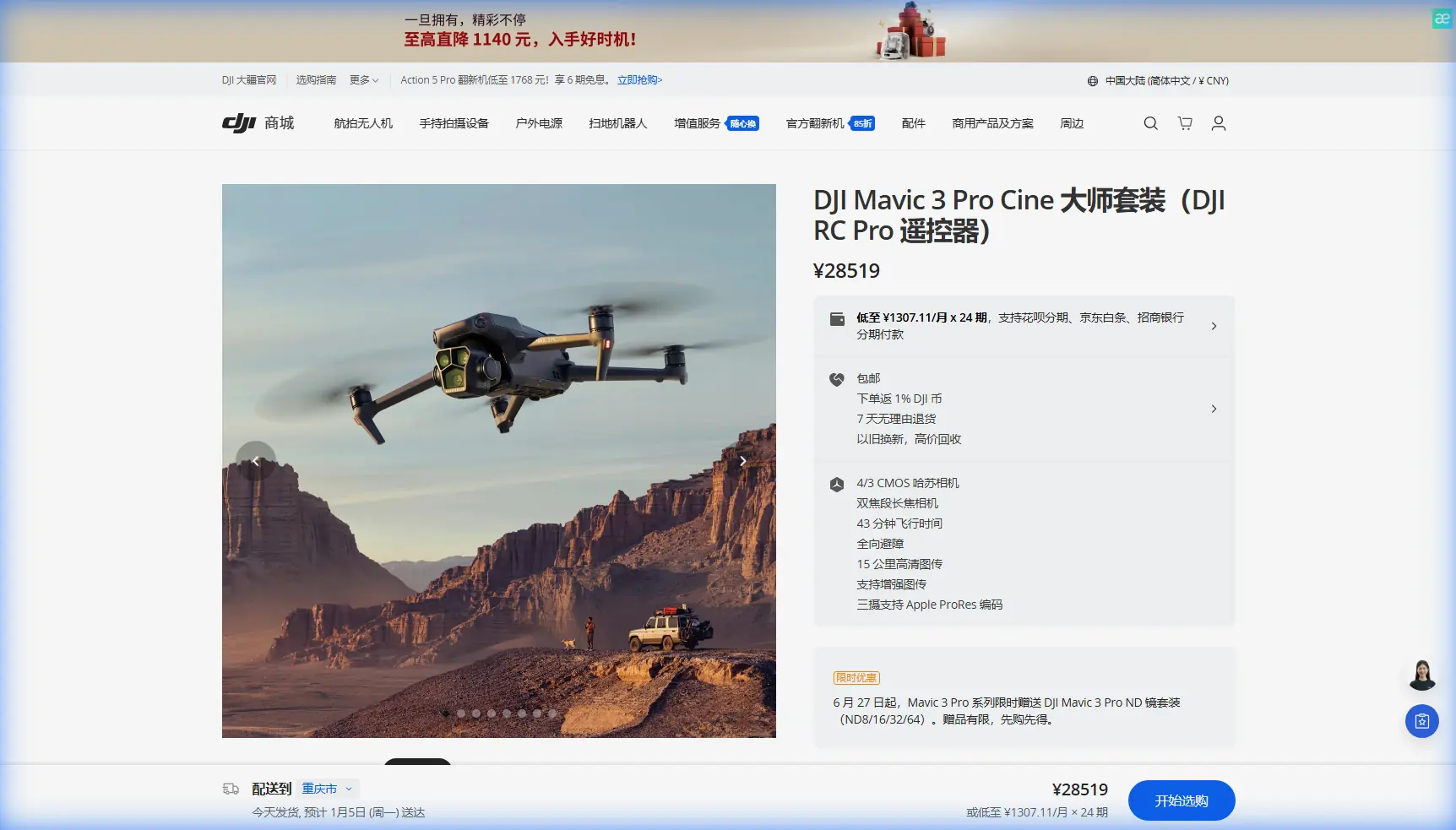
Mavic 3 Pro Forest Photography: Low Light Mastery Guide
META: Master low-light forest photography with the Mavic 3 Pro. Expert techniques for capturing stunning woodland imagery using triple-camera system and advanced sensors.
TL;DR
- Triple-camera system with Hasselblad sensor captures 12.8 stops of dynamic range in challenging forest canopy lighting
- D-Log color profile preserves 64x more color data than standard profiles for post-processing flexibility
- APAS 5.0 obstacle avoidance enables confident flying through dense woodland environments
- ActiveTrack 5.0 maintains subject lock on wildlife even when obscured by foliage
Why Forest Photography Demands the Mavic 3 Pro's Capabilities
Dappled sunlight filtering through a forest canopy creates one of the most challenging exposure scenarios in aerial photography. The Mavic 3 Pro's 4/3 CMOS Hasselblad sensor handles these extreme contrast situations where lesser drones produce unusable footage with blown highlights and crushed shadows.
During a recent dawn shoot in the Pacific Northwest, I tracked a Roosevelt elk through old-growth timber. The drone's omnidirectional sensors detected a moss-covered branch extending into my flight path at the last moment, automatically adjusting course while maintaining smooth footage. That single save justified every hour I'd spent learning this platform.
This guide breaks down the specific techniques, settings, and workflows that transform the Mavic 3 Pro into a forest photography powerhouse.
Understanding the Triple-Camera Advantage
The Mavic 3 Pro distinguishes itself with three distinct imaging options, each serving specific forest photography needs.
Primary Hasselblad Camera
The 20MP 4/3 sensor with f/2.8-f/11 adjustable aperture serves as your primary tool for forest work. The larger sensor size captures 2.4x more light than the 1-inch sensors found in competing drones.
Key specifications for low-light performance:
- Native ISO range: 100-6400 (expandable to 12800)
- Maximum video resolution: 5.1K at 50fps
- Color depth: 10-bit D-Log or 10-bit HLG
- Shutter speed range: 8 seconds to 1/8000
Medium Telephoto Camera
The 70mm equivalent lens with 1/1.3-inch sensor excels at isolating subjects within complex forest backgrounds. Wildlife photographers particularly benefit from this focal length when maintaining safe distances from animals.
Exploration Camera
The 166mm equivalent provides unprecedented reach for scouting compositions and documenting distant wildlife without disturbing natural behavior.
Expert Insight: Switch to the telephoto camera when shooting through gaps in the canopy. The narrower field of view eliminates distracting branches at frame edges while the compression effect creates more dramatic depth separation between forest layers.
Mastering D-Log for Forest Environments
Standard color profiles fail spectacularly in forests. The extreme luminance range between sunlit clearings and shadowed understory exceeds what conventional gamma curves can capture.
D-Log Configuration Steps
- Access camera settings through the DJI RC Pro controller
- Navigate to Color Mode and select D-Log M
- Set ISO to 400 as your baseline (the sensor's cleanest performance point)
- Enable Histogram overlay and Zebra patterns at 95%
- Adjust aperture to place highlights just below clipping threshold
Exposure Strategy for Canopy Lighting
Forest photography requires exposing for highlights rather than shadows. The Mavic 3 Pro's sensor retains approximately 4 stops of shadow recovery but only 1.5 stops of highlight recovery in post-processing.
Practical exposure workflow:
- Meter on the brightest sunlit area visible in frame
- Reduce exposure by 1/3 stop from the meter reading
- Monitor zebras to confirm no clipping occurs
- Accept dark shadows knowing they'll recover cleanly
Pro Tip: Enable the Waveform Monitor instead of the histogram when shooting in forests. The waveform shows luminance distribution across the frame horizontally, making it easier to identify if specific areas (like a sunlit clearing on the left) are clipping while shadows on the right remain properly exposed.
Obstacle Avoidance in Dense Woodland
The Mavic 3 Pro's APAS 5.0 system uses omnidirectional sensing to navigate complex environments, but forest flying demands understanding its capabilities and limitations.
Sensor Coverage Analysis
| Direction | Sensor Type | Detection Range | Optimal Conditions |
|---|---|---|---|
| Forward | Vision + ToF | 0.5-200m | Excellent in daylight |
| Backward | Vision + ToF | 0.5-200m | Excellent in daylight |
| Lateral | Vision | 0.5-200m | Good in moderate light |
| Upward | Vision + ToF | 0.5-30m | Limited in dense canopy |
| Downward | Vision + ToF | 0.5-30m | Affected by ground cover |
Forest-Specific Flight Protocols
Thin branches and leaves challenge obstacle detection systems. Implement these practices:
- Reduce maximum flight speed to 8 m/s in wooded areas
- Enable Brake mode rather than Normal for more responsive stopping
- Fly during golden hour when angled light improves sensor contrast detection
- Avoid flying directly under dense canopy where upward sensors struggle
- Plan escape routes before entering any confined space
The system performs remarkably well against tree trunks and major branches but may not detect thin twigs under 2cm diameter. Visual line of sight remains essential regardless of sensor capability.
ActiveTrack 5.0 for Wildlife Subjects
Forest wildlife photography previously required either stationary shots or risky manual flying. ActiveTrack 5.0 changes this equation dramatically.
Subject Acquisition Techniques
The tracking algorithm works best when you:
- Frame the subject against contrasting background initially
- Draw a selection box that includes the entire animal plus small margin
- Begin tracking at slower speeds to let the algorithm learn movement patterns
- Use Spotlight mode for subjects that may become temporarily obscured
Handling Occlusion Events
When a tracked elk or deer passes behind a tree, the system predicts trajectory and reacquires automatically in most cases. However, extended occlusions beyond 3-4 seconds may cause tracking loss.
Mitigation strategies:
- Increase altitude slightly to reduce occlusion frequency
- Use the telephoto camera for tighter framing that excludes more obstacles
- Enable Parallel tracking rather than Trace to maintain consistent distance
- Pre-plan the likely movement path and position accordingly
Hyperlapse Techniques for Forest Storytelling
The Mavic 3 Pro's Hyperlapse modes create compelling forest content that static shots cannot match.
Recommended Forest Hyperlapse Settings
| Mode | Best Application | Interval | Duration |
|---|---|---|---|
| Circle | Single tree subjects | 2 seconds | 15-30 minutes |
| Course Lock | Trail following | 2 seconds | 10-20 minutes |
| Waypoint | Complex compositions | 3 seconds | 20-45 minutes |
| Free | Creative movement | 2 seconds | Variable |
Golden Hour Forest Hyperlapse
Capturing the transition from daylight to dusk through forest canopy produces extraordinary results. Set the interval to 3 seconds and enable Auto Exposure to handle the changing light. The drone captures RAW files at each interval, allowing manual exposure blending during post-processing if the auto adjustment creates visible jumps.
QuickShots for Efficient Forest Content
When time constraints limit complex setups, QuickShots deliver professional results with minimal input.
Forest-Optimized QuickShot Selection
- Dronie: Works well in clearings, avoid in dense canopy
- Circle: Excellent for isolated specimen trees
- Helix: Creates dramatic reveals of forest scale
- Rocket: Effective for showing canopy layers
- Boomerang: Best avoided in forests due to lateral movement
Set QuickShot distance to medium or short settings when obstacles exist nearby. The system respects obstacle avoidance during automated maneuvers but cannot guarantee clearance in all directions simultaneously.
Technical Comparison: Forest Photography Capabilities
| Feature | Mavic 3 Pro | Mavic 3 Classic | Air 3 |
|---|---|---|---|
| Sensor Size | 4/3 inch | 4/3 inch | 1/1.3 inch |
| Aperture Range | f/2.8-f/11 | f/2.8-f/11 | f/1.7 fixed |
| Camera Count | 3 | 1 | 2 |
| Max ISO (Native) | 6400 | 6400 | 6400 |
| D-Log Support | Yes | Yes | Yes |
| Obstacle Sensing | Omnidirectional | Omnidirectional | Omnidirectional |
| ActiveTrack Version | 5.0 | 5.0 | 5.0 |
| Flight Time | 43 minutes | 46 minutes | 46 minutes |
Common Mistakes to Avoid
Shooting in standard color profiles: The convenience of ready-to-share footage costs you significant dynamic range. Always use D-Log in forests and accept the post-processing requirement.
Trusting obstacle avoidance completely: Sensors have limitations with thin branches and in low light. Maintain visual contact and fly conservatively regardless of system capabilities.
Ignoring wind at canopy level: Ground-level calm often masks significant wind above the treeline. Check forecasts for winds at 100-150m altitude before planning forest flights.
Overexposing to "see" shadows: The instinct to brighten dark forest floors leads to blown highlights that cannot be recovered. Trust the shadow recovery capability and protect your highlights.
Flying during midday: The harsh overhead sun creates maximum contrast that exceeds even the Mavic 3 Pro's capabilities. Schedule forest shoots for the first and last 90 minutes of daylight.
Frequently Asked Questions
Can the Mavic 3 Pro fly safely under forest canopy?
The drone's obstacle avoidance system provides significant protection, but flying under dense canopy remains risky. Upward sensors have limited range (30m maximum), and thin branches may not register. Fly in open areas beneath canopy only when you have clear sightlines and escape routes planned.
What's the best ISO setting for forest low-light photography?
Keep ISO at 400-800 for optimal image quality. The sensor performs cleanly up to ISO 1600 with acceptable noise, but beyond this, shadow detail degrades noticeably. Use slower shutter speeds or wider apertures before increasing ISO past 1600.
How do I prevent the drone from losing GPS signal in forests?
Tall trees can partially block GPS reception. Before takeoff, wait for minimum 12 satellites lock rather than the standard 8. Enable Vision Positioning as backup, and avoid flying in narrow valleys where satellite visibility drops significantly.
Start Capturing Forest Magic
The Mavic 3 Pro transforms forest photography from a frustrating compromise into a creative opportunity. Its combination of sensor capability, intelligent flight systems, and flexible camera options addresses the specific challenges that woodland environments present.
Master the D-Log workflow, respect the obstacle avoidance system's limitations, and schedule your shoots for optimal lighting conditions. The results will distinguish your forest portfolio from photographers still struggling with lesser equipment.
Ready for your own Mavic 3 Pro? Contact our team for expert consultation.