
Mavic 3 Pro Guide: Capturing Stunning Field Photography
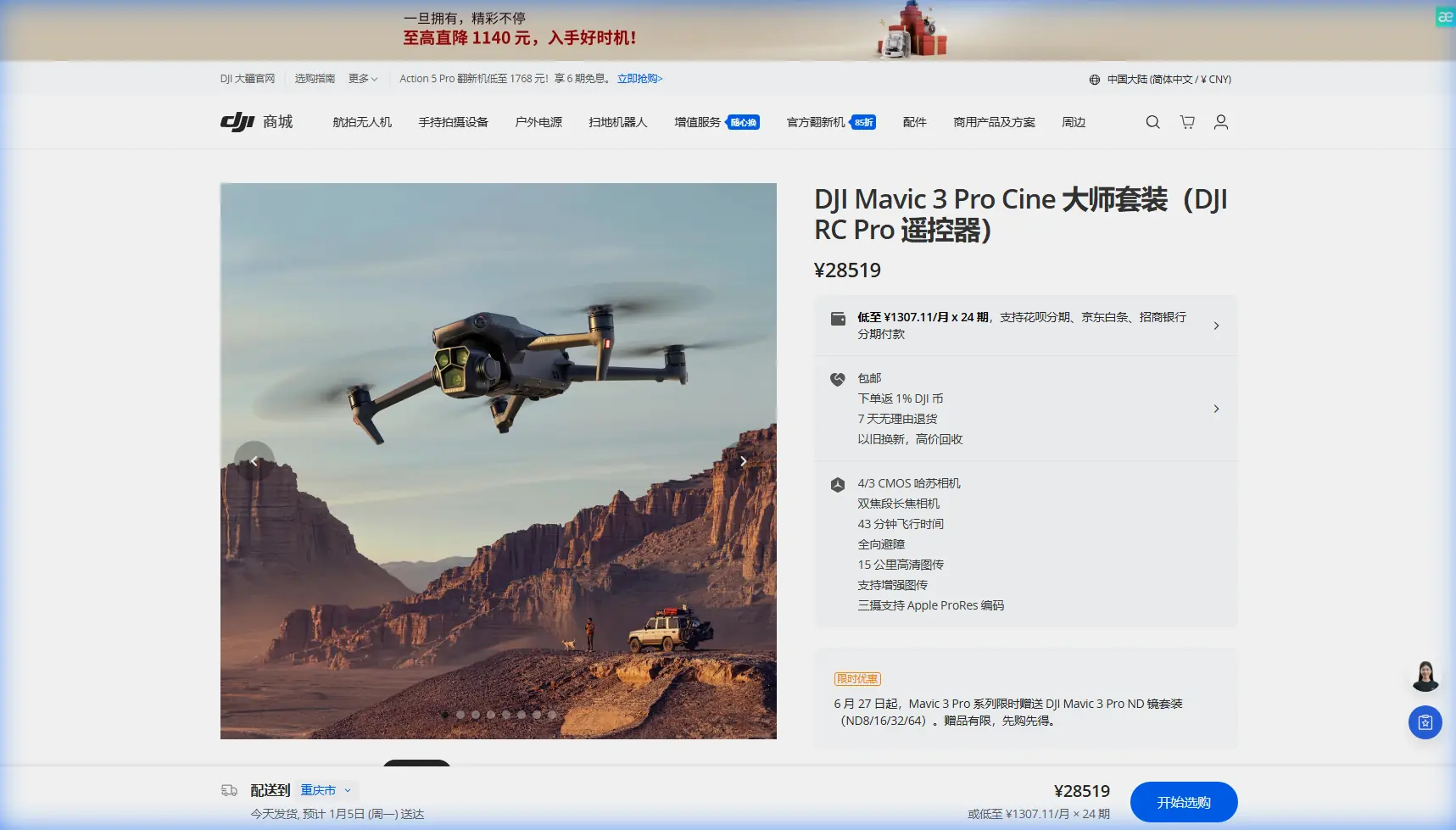
Mavic 3 Pro Guide: Capturing Stunning Field Photography
META: Master field photography with the Mavic 3 Pro. Learn expert techniques for dusty conditions, sensor navigation, and cinematic shots that transform agricultural landscapes.
TL;DR
- Triple-camera system enables seamless focal length switching from wide establishing shots to detailed crop inspection without landing
- APAS 5.0 obstacle avoidance navigates unpredictable field hazards including wildlife, equipment, and dust clouds
- D-Log color profile preserves maximum dynamic range in high-contrast agricultural lighting conditions
- 46-minute flight time covers extensive acreage in single sessions, reducing dust exposure from multiple takeoffs
Why Field Photography Demands Specialized Drone Capabilities
Dusty agricultural environments present unique challenges that separate professional-grade equipment from consumer drones. Particulate matter, unpredictable wildlife, and vast open spaces require a platform built for endurance and precision.
The Mavic 3 Pro addresses these challenges through its Hasselblad imaging system, omnidirectional sensing, and extended flight capabilities. Whether you're documenting crop health, creating promotional content for agricultural clients, or pursuing fine art landscape work, understanding this drone's capabilities transforms your field photography results.
I've spent three seasons photographing working farms across the Midwest, and the techniques in this guide come from real-world experience in conditions that would ground lesser equipment.
Understanding Your Triple-Camera Arsenal
The Mavic 3 Pro's three-camera system fundamentally changes how you approach field compositions.
Primary Camera: The Hasselblad Wide-Angle
The 4/3 CMOS sensor with 24mm equivalent focal length captures sweeping agricultural vistas with remarkable dynamic range. This camera excels at:
- Golden hour panoramas across wheat fields
- Dramatic storm clouds approaching farmland
- Wide establishing shots showing field patterns from altitude
- 12.8 stops of dynamic range preserving shadow and highlight detail
Medium Telephoto: The Versatile Middle Ground
The 70mm equivalent lens bridges the gap between environmental context and subject isolation. Use this camera for:
- Isolating specific crop sections without descending
- Compressing distant treelines against field foregrounds
- Creating intimate portraits of farm structures
- Reducing atmospheric haze effects in dusty conditions
Long Telephoto: Precision Detail Work
The 166mm equivalent reaches subjects impossible to approach closely. This lens proves invaluable for:
- Wildlife documentation without disturbance
- Detailed crop health assessment
- Equipment inspection from safe distances
- Compressed landscape layers with dramatic depth
Expert Insight: Switch between cameras during a single flight to build comprehensive shot sequences. Start wide at maximum altitude, descend while transitioning to medium telephoto, then capture details with the long lens. This workflow maximizes storytelling potential while minimizing dust-generating takeoffs.
Mastering Obstacle Avoidance in Open Fields
Open fields seem straightforward until a red-tailed hawk decides your drone resembles prey. During a sunrise shoot last autumn, the Mavic 3 Pro's APAS 5.0 system detected an approaching hawk at 38 meters and smoothly adjusted course while I was focused on framing a composition.
The omnidirectional sensing system uses eight vision sensors and two wide-angle sensors to create a protective bubble around the aircraft.
Configuring Sensors for Field Work
Navigate to Safety settings and adjust these parameters:
- Set Obstacle Avoidance Behavior to "Bypass" rather than "Brake" for smoother footage
- Enable APAS in Normal and Cine modes
- Adjust Braking Distance to maximum when working near equipment
- Keep Downward Vision enabled despite flat terrain—irrigation equipment and hay bales create unexpected hazards
Common Field Obstacles the Sensors Navigate
- Power lines crossing fields (detected at 15+ meters)
- Irrigation pivot systems and their support cables
- Grain bins and storage structures
- Trees along field boundaries
- Wildlife including birds, deer, and livestock
The ActiveTrack system integrates with obstacle avoidance, allowing you to follow moving farm equipment while the drone independently navigates around fence posts and other hazards.
Shooting Techniques for Dusty Conditions
Dust presents both technical challenges and creative opportunities. Fine particulates scatter light beautifully during golden hour while threatening your equipment throughout the day.
Pre-Flight Dust Mitigation
Prepare your launch site before powering on:
- Clear a 3-meter radius of loose material
- Position yourself upwind of the launch point
- Use a portable landing pad on bare soil
- Avoid launching immediately after vehicle traffic
In-Flight Dust Management
The Mavic 3 Pro's sealed motor design handles moderate dust, but smart flying extends equipment life:
- Gain altitude quickly after takeoff to escape ground-level particulates
- Avoid hovering over active equipment or livestock
- Use Cine mode for slower, smoother movements that don't stir air currents
- Land on the pad, never directly on soil
Creative Dust Photography
Backlit dust creates atmospheric depth impossible to replicate in post-processing. Position your drone with the sun at 15-30 degrees above the horizon, shooting toward the light source. The D-Log color profile preserves highlight detail in bright dust clouds while maintaining shadow information in foreground subjects.
Pro Tip: Schedule shoots during or immediately after field work. Combines and tractors create dust plumes that add dramatic atmosphere and sense of scale. The Mavic 3 Pro's Subject tracking locks onto moving equipment, maintaining composition while you focus on timing.
Leveraging Intelligent Flight Modes
QuickShots for Efficient Content Creation
Field photography often requires delivering volume alongside quality. QuickShots automate complex maneuvers:
| QuickShot Mode | Best Field Application | Duration |
|---|---|---|
| Dronie | Revealing field scale from subject | 15-30 sec |
| Rocket | Dramatic vertical reveals | 10-20 sec |
| Circle | Equipment or structure showcases | 15-40 sec |
| Helix | Combining reveal with orbit | 20-45 sec |
| Boomerang | Dynamic back-and-forth energy | 15-25 sec |
| Asteroid | Unique spherical perspective | 20-30 sec |
Hyperlapse for Agricultural Storytelling
The Hyperlapse function transforms hours of field activity into compelling sequences. Four modes serve different creative needs:
Free Mode: Manual control during capture for customized paths across irregular field boundaries.
Circle Mode: Orbits a fixed point—ideal for grain bins, barns, or equipment.
Course Lock: Maintains heading while you adjust altitude and lateral position.
Waypoint Mode: Pre-programs complex multi-point paths for repeatable results across shooting days.
Set intervals between 2-5 seconds for smooth motion. Longer intervals suit slow-moving subjects like cloud shadows crossing fields; shorter intervals capture equipment movement effectively.
Technical Comparison: Camera Settings by Scenario
| Scenario | Camera | Aperture | ISO | Shutter | Color Profile |
|---|---|---|---|---|---|
| Golden hour wide | Main (24mm) | f/2.8 | 100-400 | 1/60-1/120 | D-Log |
| Midday crop detail | Tele (166mm) | f/4.4 | 100 | 1/500+ | Normal |
| Dust backlit | Main (24mm) | f/5.6 | 100-200 | 1/250 | D-Log |
| Equipment tracking | Medium (70mm) | f/2.8 | Auto | 1/120 | HLG |
| Storm approach | Main (24mm) | f/4 | 400-800 | 1/60 | D-Log |
| Twilight fields | Main (24mm) | f/2.8 | 800-1600 | 1/30 | Normal |
Common Mistakes to Avoid
Ignoring Wind Patterns Across Open Fields
Fields lack wind breaks, exposing your drone to stronger gusts than indicated at ground level. Check wind speed at your intended altitude using the DJI Fly app's real-time telemetry. The Mavic 3 Pro handles Level 6 winds but footage quality suffers above Level 4.
Overlooking Magnetic Interference
Farm equipment, buried irrigation lines, and metal structures create compass interference. Always calibrate when moving to new field sections, and watch for compass warnings during flight.
Shooting Only at Maximum Altitude
Regulations permit 120 meters in most areas, but compelling field photography often happens between 15-45 meters. This altitude range reveals crop textures, equipment scale, and terrain undulation invisible from higher positions.
Neglecting ND Filters in Bright Conditions
Achieving cinematic 180-degree shutter angle requires ND filtration in daylight. Pack ND8, ND16, and ND32 filters for field work. Dusty conditions often reduce light enough that ND8 suffices even at midday.
Rushing Battery Swaps in Dusty Environments
Exposed battery compartments attract particulates. Move to your vehicle or a clean area before swapping batteries. Carry a soft brush to clean contacts between flights.
Frequently Asked Questions
How does the Mavic 3 Pro handle extreme temperature variations common in field environments?
The Mavic 3 Pro operates reliably between -10°C and 40°C. Early morning field shoots in cold conditions may require battery warming—keep spares inside your vehicle until needed. Hot afternoon sessions benefit from allowing 5-minute cooling periods between flights. The intelligent battery system monitors cell temperature and will limit performance if thermal thresholds approach.
Can ActiveTrack follow fast-moving farm equipment reliably?
ActiveTrack maintains lock on subjects moving up to 28 mph in optimal conditions. Combines and tractors typically operate well within this range. Dust clouds may temporarily interrupt tracking—the system reacquires subjects once visibility improves. For critical shots, use Spotlight mode which keeps subjects framed without autonomous following, giving you full flight control.
What maintenance schedule extends drone life in dusty agricultural environments?
After each field session, use compressed air to clear vents and gimbal mechanisms. Inspect propellers for particulate buildup affecting balance. Clean camera lenses with appropriate optical cloths before each flight. Monthly, check motor responsiveness and listen for bearing noise indicating dust infiltration. The Mavic 3 Pro's sealed design reduces maintenance frequency compared to previous generations, but agricultural environments still demand attention.
Transform Your Field Photography Today
The Mavic 3 Pro's combination of imaging capability, intelligent obstacle avoidance, and environmental resilience makes it the definitive tool for agricultural and landscape photography. From navigating unexpected wildlife encounters to capturing dust-filtered golden hour light, this platform handles conditions that challenge both pilot and equipment.
Master the techniques in this guide, respect the environmental demands of field work, and your aerial photography will reveal perspectives that ground-based cameras simply cannot achieve.
Ready for your own Mavic 3 Pro? Contact our team for expert consultation.