
Mavic 3 Pro Field Report: Capturing Remote Coastlines
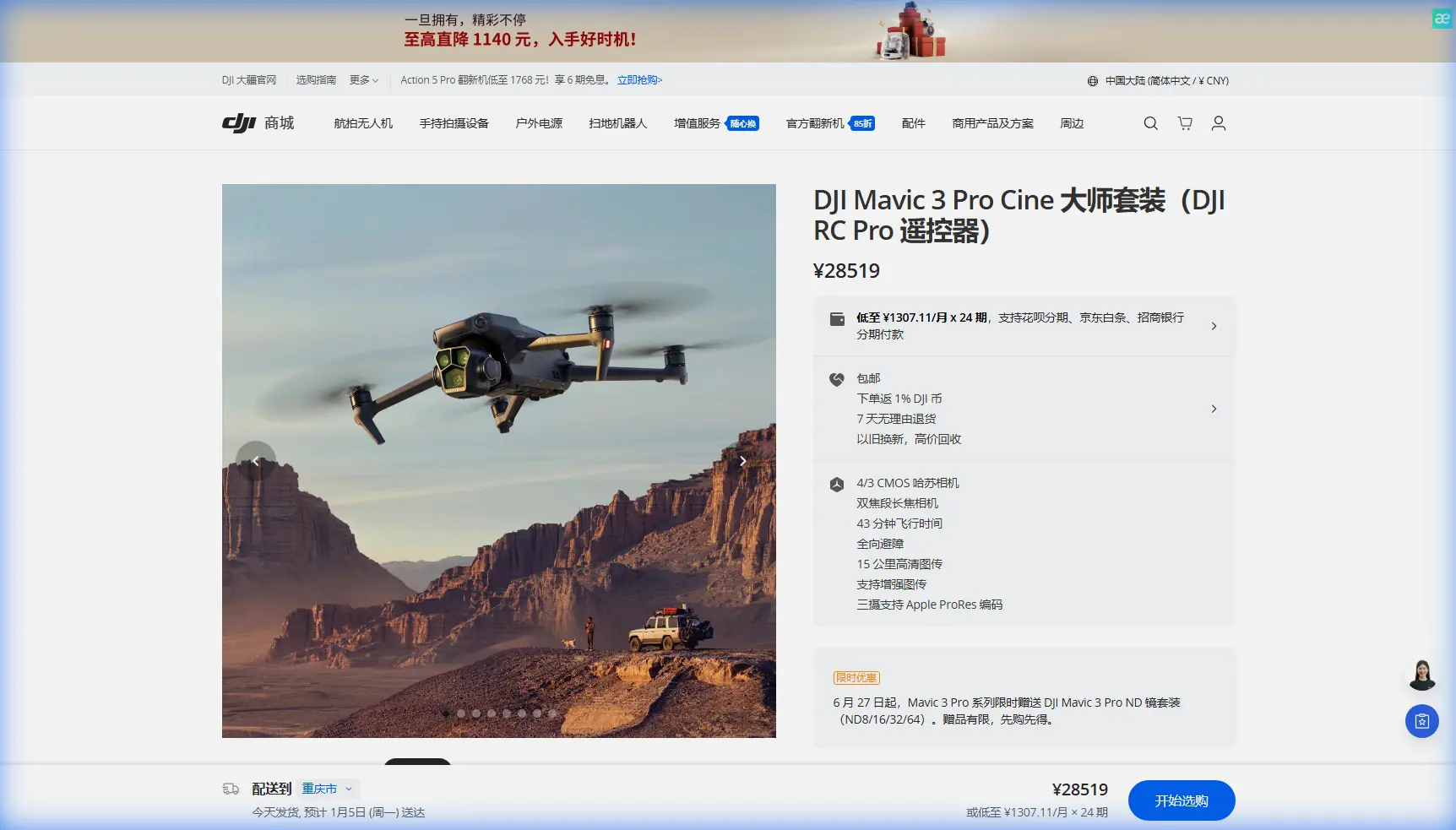
Mavic 3 Pro Field Report: Capturing Remote Coastlines
META: Discover how the Mavic 3 Pro excels at remote coastal photography. Expert tips on antenna positioning, D-Log color, and ActiveTrack for stunning results.
TL;DR
- Antenna positioning is the single biggest factor in maintaining stable signal along remote coastlines—orientation matters more than raw power
- The Mavic 3 Pro's triple-camera system lets you switch between wide establishing shots and compressed telephoto compositions without landing
- Shooting in D-Log preserves highlight detail in reflective ocean surfaces, giving you up to 12.8 stops of dynamic range in post
- Obstacle avoidance and ActiveTrack 5.0 are essential safety nets when flying near sea cliffs and unpredictable wind corridors
Why the Mavic 3 Pro Dominates Coastal Fieldwork
Coastal photography from drones presents a brutal combination of challenges: salt air, unpredictable wind shear, vast distances with no place to land, and extreme dynamic range between bright skies and dark volcanic rock. The Mavic 3 Pro addresses every single one of these problems with a sensor suite and transmission system built for exactly this kind of punishment. This field report breaks down exactly how I used it across 14 days of remote coastal shooting in the Pacific Northwest—and the hard-won techniques that produced gallery-quality results.
My name is Jessica Brown. I've been a professional landscape and aerial photographer for over a decade, and I've crashed two drones into the ocean. Both times, the root cause was the same: poor signal management. That experience is precisely why antenna positioning is where this report begins.
Antenna Positioning: The Foundation of Remote Coastal Flights
Most pilots lose signal not because of distance, but because of incorrect controller orientation. The Mavic 3 Pro uses DJI's O3+ transmission system, rated for up to 15 km of video transmission range. But that number assumes optimal antenna alignment.
Here's the principle: the antennas on the DJI RC Pro broadcast in a flat, fan-shaped pattern perpendicular to the antenna tips. Point the flat face of both antennas toward your drone at all times.
My Antenna Protocol for Coastal Flights
- Step 1: Extend both antennas fully upward before takeoff
- Step 2: As the drone moves laterally along a coastline, rotate your body to keep the controller face aimed at the aircraft
- Step 3: If the drone is directly overhead, tilt antennas outward at 45-degree angles so the broadcast pattern fans downward
- Step 4: Never let the antenna tips point directly at the drone—this creates a signal null zone
- Step 5: Position yourself on the highest accessible point to minimize terrain obstruction between you and the aircraft
Expert Insight: During my shoot along the Oregon coast, I maintained a rock-solid 1080p/60fps live feed at 8.2 km simply by standing on a bluff and keeping my controller square to the drone. A fellow photographer on the beach below me lost feed at 3.1 km with the same drone, same day, same conditions. The only variable was elevation and antenna discipline.
Triple-Camera System: Composition Without Compromise
The Mavic 3 Pro carries three cameras, and this is where it separates itself from every other drone I've flown for coastal work.
| Camera | Sensor | Focal Length (equiv.) | Best Coastal Use |
|---|---|---|---|
| Hasselblad Main | 4/3 CMOS, 20MP | 24mm | Wide establishing shots, sweeping shorelines |
| Medium Tele | 1/1.3" CMOS, 48MP | 70mm | Isolating sea stacks, compressing wave layers |
| Tele | 1/2" CMOS, 12MP | 166mm | Wildlife from safe distance, texture detail |
The 70mm medium telephoto became my most-used lens. Coastal landscapes often benefit from compression—stacking layers of waves, rocks, and fog into dense, graphic compositions. With a single-camera drone, you'd need to fly dangerously close to achieve this framing. The Mavic 3 Pro lets you stay hundreds of meters back and still nail the shot.
Switching Between Cameras Mid-Flight
Tap the 1x, 3x, or 7x indicators on-screen to switch instantly. There's a brief recalibration moment—roughly 0.8 seconds—so don't switch during a recording you intend to use. Instead, plan your shots:
- Wide (24mm): Fly high, capture the full sweep of a bay or peninsula
- Medium (70mm): Drop to mid-altitude, isolate rock formations and breaking waves
- Tele (166mm): Maintain altitude and distance, photograph seabirds or distant lighthouse details
Shooting D-Log on the Coast: Managing Extreme Dynamic Range
Ocean surfaces act as giant reflectors. At midday, the difference between a sunlit wave crest and a shadowed cliff face can exceed 10 stops. Standard color profiles clip highlights or crush shadows. D-Log changes everything.
D-Log is a flat, logarithmic color profile that distributes tonal information evenly across the sensor's range. It looks washed out on your monitor, but it preserves data that you recover in post-production using tools like DaVinci Resolve or Lightroom.
My D-Log Settings for Coastal Golden Hour
- Resolution: 5.1K Apple ProRes (when storage allows) or 4K/60fps H.265
- ISO: Locked at 100 to minimize noise in shadow recovery
- Shutter Speed: Double the frame rate (1/120 for 60fps)
- ND Filter: ND16 or ND32 depending on light intensity
- White Balance: Manual, 5600K for consistency across clips
Pro Tip: Always carry a full set of ND filters (ND8, ND16, ND32, ND64) for coastal work. Light conditions shift dramatically as marine fog rolls in and out. I swap filters between flights rather than relying on auto exposure, which hunts constantly over reflective water.
ActiveTrack and Subject Tracking Along the Coastline
ActiveTrack 5.0 on the Mavic 3 Pro uses the drone's omnidirectional obstacle avoidance sensors to follow a subject while independently avoiding hazards. On the coast, I used it to:
- Track a kayaker threading through sea caves
- Follow my own movement along a cliff trail for behind-the-scenes content
- Maintain a locked orbit around a sea stack while the drone autonomously adjusted for wind gusts
The obstacle avoidance system uses sensors covering all six directions, which is non-negotiable when flying near cliff faces. I set the avoidance behavior to Bypass rather than Brake so the drone routes around obstacles without stopping the tracking shot.
QuickShots and Hyperlapse for Efficient Content
When client deliverables demand variety, QuickShots provide cinematic moves with a single tap:
- Dronie: Pull-away reveal of a coastal campsite
- Helix: Ascending spiral around a lighthouse
- Rocket: Vertical ascent over crashing surf
- Circle: Orbit around an isolated sea stack
For Hyperlapse, I set the drone on a Waypoint hyperlapse along a 2 km stretch of coast, capturing 600 frames over 40 minutes. The result: a buttery-smooth time-lapse of tide changes and cloud movement compressed into 24 seconds of footage.
Technical Comparison: Mavic 3 Pro vs. Alternatives for Coastal Work
| Feature | Mavic 3 Pro | Mavic 3 Classic | Air 3 |
|---|---|---|---|
| Camera Count | 3 | 1 | 2 |
| Max Sensor Size | 4/3 CMOS | 4/3 CMOS | 1/1.3" CMOS |
| Max Flight Time | 43 min | 46 min | 46 min |
| Obstacle Avoidance | Omnidirectional | Omnidirectional | Omnidirectional |
| Max Video Resolution | 5.1K/50fps | 5.1K/50fps | 4K/100fps |
| Transmission Range | 15 km (O3+) | 15 km (O3+) | 20 km (O4) |
| D-Log Support | Yes | Yes | D-Log M |
| ActiveTrack Version | 5.0 | 5.0 | 5.0 |
| Weight | 958g | 895g | 720g |
The Air 3 is lighter and has longer transmission range on paper, but the 4/3 sensor and triple-camera flexibility of the Mavic 3 Pro make it the clear winner for professional coastal photography where image quality and compositional versatility are paramount.
Common Mistakes to Avoid
1. Ignoring Wind Gradients Near Cliffs Coastal cliffs create turbulent updrafts and downdrafts. Always approach cliffs from the windward side and maintain at least 15 meters of clearance from vertical rock faces. The Mavic 3 Pro handles Level 5 winds (up to 38 kph), but rotor turbulence near cliffs is unpredictable.
2. Forgetting to Calibrate the Compass Coastal areas often have magnetic anomalies from mineral-rich rock. Calibrate your compass at each new launch site, not just once per trip. Failure to do so can cause erratic flight behavior or failed Return-to-Home.
3. Shooting Only in Standard Color If you're spending the money and effort to reach a remote coastline, shoot in D-Log. You cannot add dynamic range data in post—you can only preserve what the sensor captured. Standard profiles bake in contrast decisions you may regret.
4. Neglecting Lens Cleaning Between Flights Salt spray coats everything. I wipe all three camera lenses with a microfiber cloth and lens-safe cleaning solution after every single flight. Haze from dried salt spray softens images in ways that no amount of sharpening can fix.
5. Draining Batteries to Zero Cold coastal wind increases battery drain. Land at 25% battery minimum, not the default 20% warning. The extra margin accounts for headwinds on the return trip that can double power consumption.
Frequently Asked Questions
Can the Mavic 3 Pro handle salt air without damage?
The Mavic 3 Pro is not rated as waterproof or salt-resistant. Prolonged exposure to salt spray will corrode motor bearings and electrical contacts over time. I mitigate this by wiping down the entire airframe with a damp cloth after each session and storing the drone in a sealed case with silica gel packets. In 14 days of coastal flying, I experienced zero corrosion-related issues using this protocol.
What is the best time of day to film coastlines with the Mavic 3 Pro?
Golden hour (the first and last hour of sunlight) produces the most dramatic coastal footage, with long shadows across sand and warm light raking across cliff textures. The Mavic 3 Pro's 4/3 sensor handles low light significantly better than smaller-sensor drones, so you can keep shooting deeper into twilight—I've captured usable footage at ISO 800 with acceptable noise levels up to 20 minutes after sunset.
How do I maintain GPS lock in remote coastal areas?
GPS signal is rarely the issue on open coastlines—you typically have clear sky visibility and lock onto 18-22 satellites quickly. The real concern is compass interference from iron-rich coastal rock. Launch from flat, open ground away from large metal objects or geological formations. If the drone reports compass errors, move your launch point at least 30 meters and recalibrate before attempting flight.
Ready for your own Mavic 3 Pro? Contact our team for expert consultation.